The nurse in the outpatient clinic is triaging a 19-year-old client with reports of auditory hallucinations, paranoia, and alterations in speech. The nurse's assessment shows the client is apathetic, and she reports quitting her job from a lack of motivation. The nurse suspects that this client is at highest risk for
The nurse in the outpatient clinic is triaging a 19-year-old client with reports of auditory hallucinations, paranoia, and alterations in speech. The nurse's assessment shows the client is apathetic, and she reports quitting her job from a lack of motivation. The nurse suspects that this client is at highest risk for
A. bipolar disorder.
[10%]
B. paranoid personality disorder.
[13%]
C. schizophrenia.
[75%]
D. obsessive-compulsive disorder.
[1%]
Statistics
Subject/Lesson
Subject
Mental Health
Lesson
Mental Health
Client Need
Test Plan
Psychosocial Integrity
Related Topic
Mental Health Concepts
Item Type
Item Type
Analysis
Explanation
Choice C is correct. These signs and symptoms are highly suggestive of schizophrenia. If not already done, the nurse should speak with the healthcare team about the concerns and request a psychiatric consultation. The client is demonstrating both positive and negative manifestations of schizophrenia. The positive features the client has includes hallucinations and paranoia (delusion). The negative symptoms the client is exhibiting include avolition (lack of motivation) and apathy.
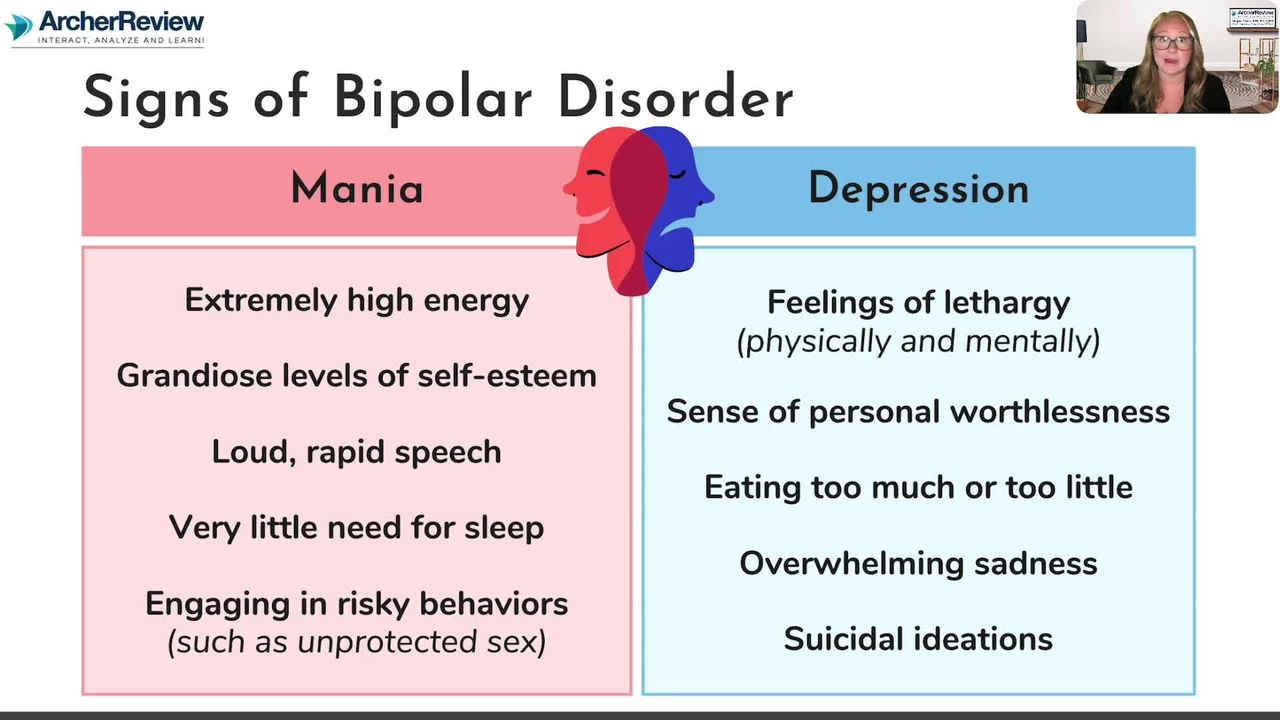
Choices A, B, and D are incorrect. Bipolar disorder may have psychotic features during mania. However, nothing in the client's symptomatology, such as pressured speech, mood lability, and affect, suggests this disorder. Paranoid personality disorder is not a psychotic disorder and does not feature hallucinations or negative symptoms such as apathy. Paranoid personality disorder is likely to manifest with an individual being jealous, hostile, and mistrustful towards others, and feeling as if certain life events may be a conspiracy. OCD is an anxiety-related disorder and causes a client to have recurring thoughts and acts such as washing their hands multiple times or insisting on symmetry of objects.
Related Videos
2 Key Topics
Schizophrenia
32.3 Major Psychiatric Disorders
Additional Info
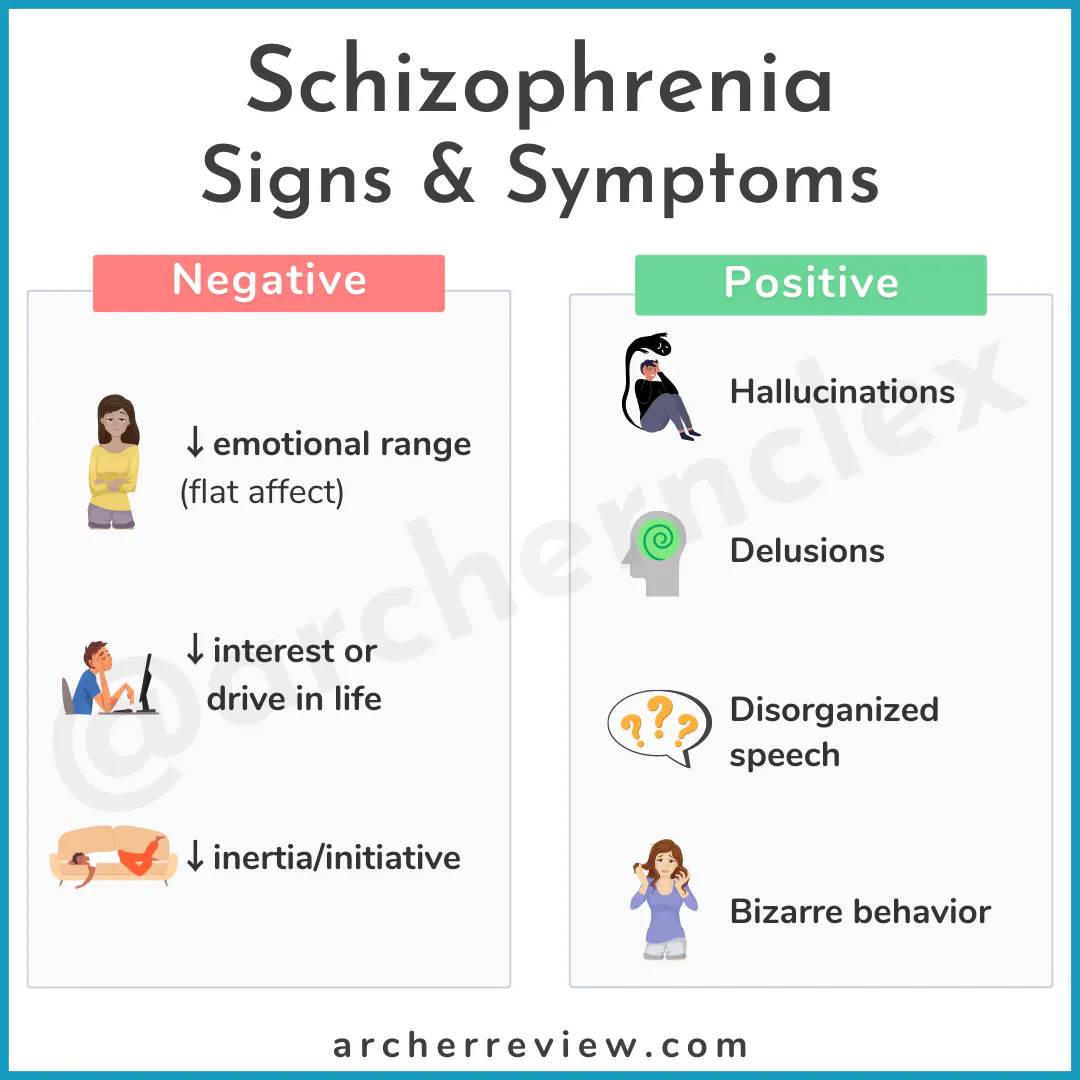
Schizophrenia symptoms are divided into positive or negative symptoms
✓ Positive symptoms include things that add something to the client. They include:
- Hallucinations: Experiences involving the apparent perception of something not present
- They can include any five senses: touch, taste, smell, sight, or hearing
- Auditory hallucinations, when the client hears something that is not present, are common in schizophrenia
- Delusions: Fixed, false beliefs that conflict with reality
- Types of delusions include persecution, grandeur, and jealousy
- Thought and speech disorganization
✓ Negative symptoms are things that take something away from the client. They include:
- Apathy: A lack of interest, enthusiasm, or concern
- Alogia: Also known as 'poverty of speech,' alogia is difficulty with speaking or the tendency to speak little due to brain impairment
- Anhedonia: The inability to feel pleasure
- Avolition: A total lack of motivation that makes it hard to get anything done
- Flattened affect
