The nurse is assessing a client suspected of having anorexia nervosa.
Which assessment findings would support a diagnosis of anorexia nervosa?
The nurse is assessing a client suspected of having anorexia nervosa.
Which assessment findings would support a diagnosis of anorexia nervosa?
A. Intense relationships with friends
[1%]
B. Ravenous appetite despite satiety
[18%]
C. Overt hostility with others
[2%]
D. Rigorous exercise regimen
[78%]
Statistics
Subject/Lesson
Subject
Mental Health
Lesson
Mental Health
Client Need
Test Plan
Psychosocial Integrity
Related Topic
Chemical and Other Dependencies/Substance Abuse Disorder
Item Type
Item Type
Application
Explanation
Choice D is correct. Clients with anorexia nervosa often engage in compulsive or excessive exercise to control weight and burn calories, even when underweight. This behavior is characteristic of the disorder and contributes to physical deterioration.
Choice A is correct. Clients with anorexia often exhibit social withdrawal and strained interpersonal relationships rather than intense, close friendships.
Choice B is correct. This is more typical of bulimia nervosa or binge-eating disorder. Clients with anorexia typically restrict intake and may deny hunger altogether.
Choice C is correct. These are nonspecific emotional behaviors and not hallmark traits of anorexia nervosa. These features are common in individuals with paranoid personality disorder.
Related Videos
2 Key Topics
Anorexia Nervosa
32.4 Eating Disorders
Additional Info
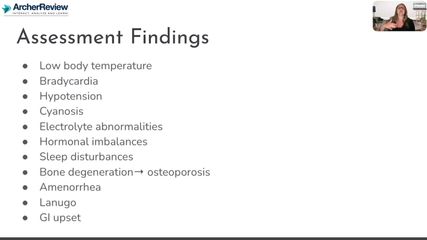
Assessment findings associated with anorexia nervosa
- Distorted body image
- Intense fear of gaining weight
- Obsessive rituals
- Excessive exercise
- Denial of hunger
- Perfectionism
- Significantly low body weight (BMI <18.5)
- Bradycardia
- Orthostatic hypotension
- Hypothermia
- Amenorrhea
- Lanugo
- Dry skin and brittle hair/nails
- Constipation and abdominal discomfort
- Pancytopenia
