The nurse in the behavioral health unit is caring for a client with severe depression and experiencing suicidal ideations. The client refuses to take their prescribed venlafaxine.
Which of the following responses would be appropriate for the nurse to make?
The nurse in the behavioral health unit is caring for a client with severe depression and experiencing suicidal ideations. The client refuses to take their prescribed venlafaxine.
Which of the following responses would be appropriate for the nurse to make?
A. "I will talk to your doctor about other treatment options. Several other medications are available."
[40%]
B. "How do you expect to get better if you do not take the prescribed medication?"
[8%]
C. "This medication is designed to treat your condition. I will offer it to you later in the day."
[31%]
D. "This medication will help you get better. I recommend you take it.”
[21%]
Statistics
Subject/Lesson
Subject
Mental Health
Lesson
Mental Health
Client Need
Test Plan
Psychosocial Integrity
Related Topic
Therapeutic Communication
Item Type
Item Type
Application
Explanation
Choice C is correct. This response acknowledges the client's autonomy while reinforcing the therapeutic purpose of the medication. Offering the medication later respects the client's right to refuse treatment without pressuring or shaming, while keeping the door open for therapeutic adherence, a core principle in behavioral health nursing. It demonstrates empathy, preserves trust, and aligns with trauma-informed and client-centered care.
Choice A is incorrect. This prematurely suggests altering the treatment plan without first supporting the client in understanding the current medication's purpose or exploring the reasons behind their refusal. It also bypasses the opportunity for therapeutic conversation.
Choice B is incorrect. This confrontational and shaming response can damage the therapeutic alliance and escalate resistance. It lacks empathy and does not facilitate open communication.
Choice D is incorrect. While this shows encouragement, it is directive and does not address the client's refusal or promote shared decision-making. It lacks the therapeutic neutrality needed in behavioral health.
Learning Objective
Demonstrate appropriate therapeutic communication strategies when a client with major depressive disorder and suicidal ideation refuses prescribed medication, in alignment with principles of client autonomy and trauma-informed care.
Related Videos
2 Key Topics
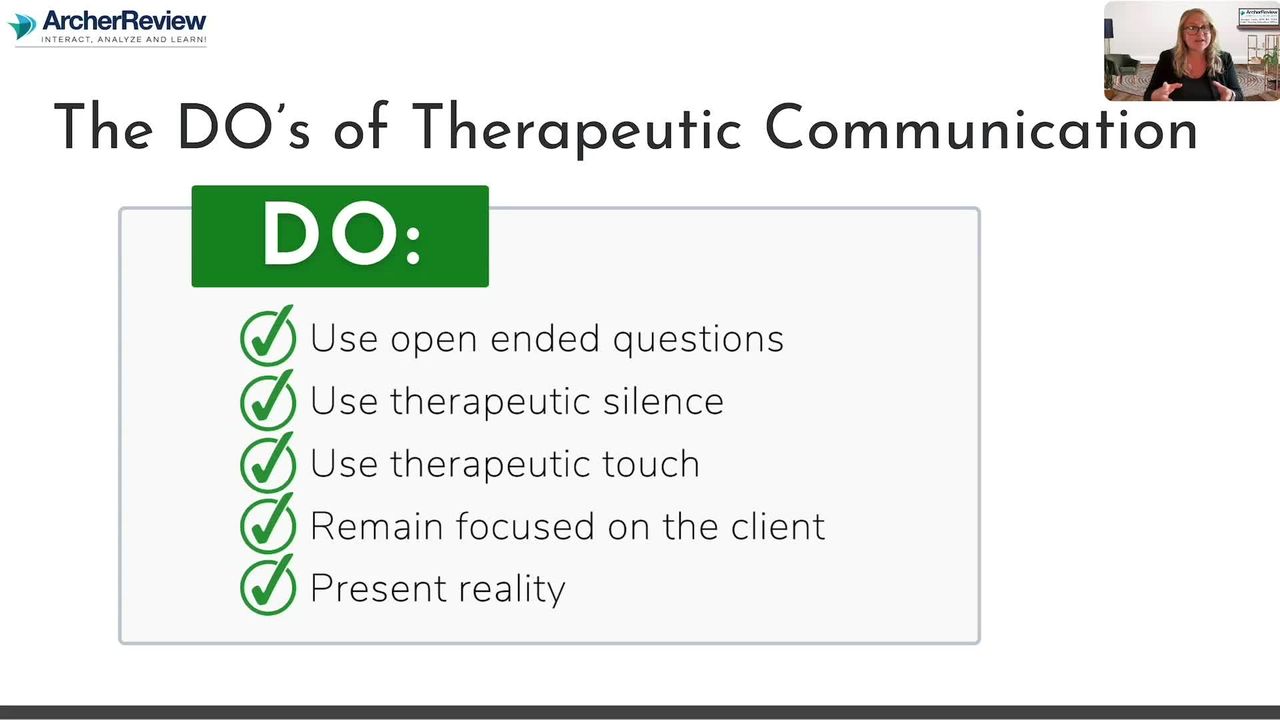
Therapeutic communication
13.3 Therapeutic Communication & Environment
Additional Info
Strategies for clients refusing prescribed medication(s) and treatments
✓ Assess the reason for refusal
- Use open-ended, nonjudgmental questions to understand the client’s concerns or misconceptions.
✓ Acknowledge and respect autonomy.
- Recognize the client’s legal right to refuse (unless under court-ordered treatment or in specific emergencies).
- If possible, come back and offer the medication at another time.
✓ Provide therapeutic education
- Explain the purpose, benefits, and potential consequences of not taking the medication in understandable, non-coercive terms.
✓ Avoid confrontation or coercion.
- Maintain a neutral and empathetic tone; avoid shaming or argumentative language.
- It is okay for the nurse to persuade the client, but the nurse should never coerce them.
