The nurse has attended a staff education program about dialectical behavioral therapy (DBT).
Which of the following statements by the nurse would indicate a correct understanding of the teaching?
The nurse has attended a staff education program about dialectical behavioral therapy (DBT).
Which of the following statements by the nurse would indicate a correct understanding of the teaching?
A. "This therapy helps individuals who have sustained a past trauma and relieves associated symptoms."
[14%]
B. "This therapy emphasizes a structured and therapeutic environment that supports healing."
[27%]
C. "The goal of this therapy is to identify and change inaccurate core perceptions of themselves."
[23%]
D. "This therapy focuses on impulse control and self-regulation."
[35%]
Statistics
Subject/Lesson
Subject
Mental Health
Lesson
Mental Health
Client Need
Test Plan
Psychosocial Integrity
Related Topic
Behavioral Interventions
Item Type
Item Type
Knowledge/Comprehension
Explanation
Choice D is correct. DBT is a form of cognitive-behavioral therapy specifically developed for individuals with borderline personality disorder and others who struggle with emotional dysregulation, impulsivity, and self-harming behaviors. It emphasizes mindfulness, emotional regulation, distress tolerance, and interpersonal effectiveness.
Choice A is incorrect. This describes trauma-focused therapies such as EMDR (Eye Movement Desensitization and Reprocessing) or prolonged exposure therapy, not DBT.
Choice B is incorrect. While DBT is structured, this description aligns more with milieu therapy, commonly used in inpatient psychiatric settings.
Choice C is incorrect. This is a primary goal of cognitive therapy, particularly cognitive restructuring, which is used in CBT (cognitive behavioral therapy), not DBT specifically.
Related Videos
4 Key Topics
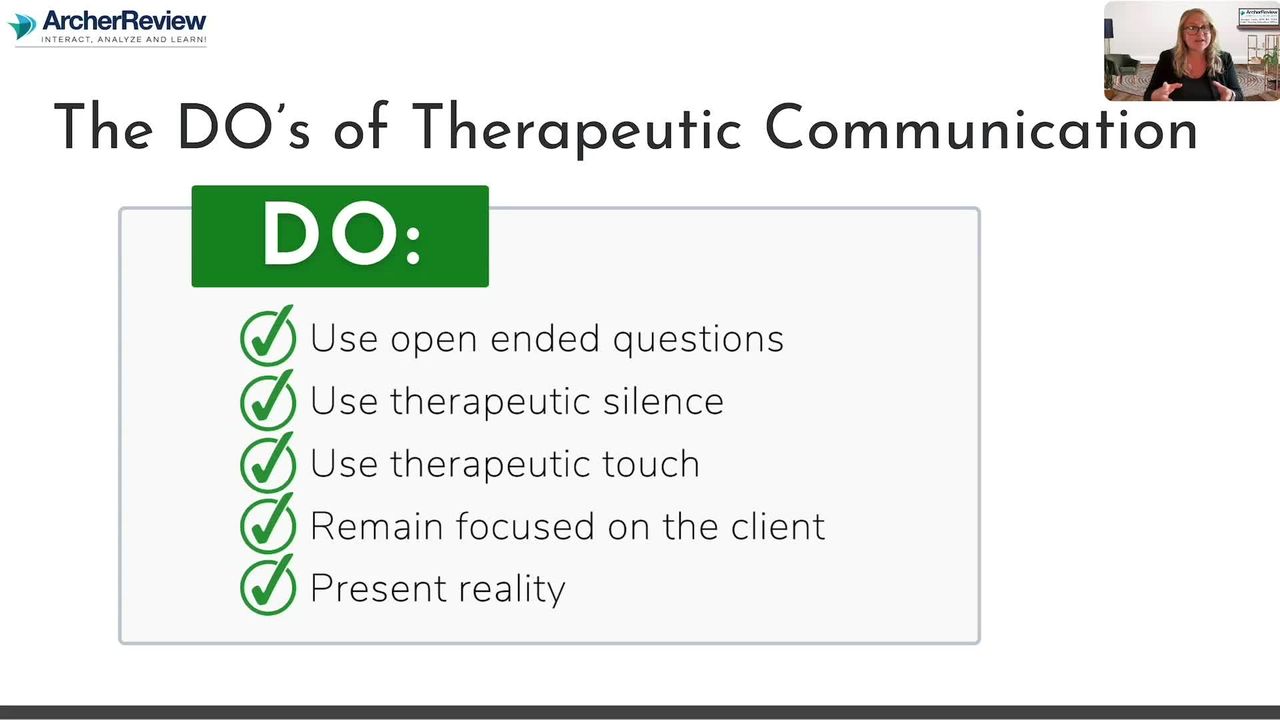
Therapeutic communication
13.3 Therapeutic Communication & Environment
Therapeutic environment
13.3 Therapeutic Communication & Environment
Additional Info
✓ Dialectical Behavior Therapy (DBT) is a form of psychotherapy used in mental health settings to support clients experiencing significant difficulties with emotional regulation, particularly those with borderline personality disorder.
✓ DBT incorporates skills training, mindfulness practices, and ongoing monitoring with interventions for crises that may arise.
✓ Sessions are usually held multiple times per week and may be supplemented with additional contact between sessions as needed.
