A nurse is caring for a client with bipolar disorder who is experiencing a manic episode and disrupting the unit's therapeutic environment.
Which action should the nurse take to promote a therapeutic milieu?
A nurse is caring for a client with bipolar disorder who is experiencing a manic episode and disrupting the unit's therapeutic environment.
Which action should the nurse take to promote a therapeutic milieu?
A. Assign a staff member to stay with the client at all times.
[12%]
B. Isolate the client in a separate room until the manic episode subsides.
[26%]
C. Develop a structured daily schedule with clear expectations and goals.
[53%]
D. Encourage the client to engage in group therapy sessions with peers.
[9%]
Statistics
Subject/Lesson
Subject
Mental Health
Lesson
Mental Health
Client Need
Test Plan
Psychosocial Integrity
Related Topic
Therapeutic Environment
Item Type
Item Type
Application
Explanation
Choice C is correct. Individuals experiencing manic episodes may benefit from structure and routine to help manage their symptoms. By establishing a structured daily schedule, the nurse can provide stability, maintain boundaries, and promote a sense of control for the client. Clear expectations and goals can help the client focus and redirect their energy in a positive way.
Choice A is incorrect. While continuous supervision might be necessary for clients who pose a risk to themselves or others, it is not the most appropriate action for promoting a therapeutic milieu in this scenario. It does not address the disruptive behavior or help create a supportive environment for all clients.
Choice B is incorrect. Isolating the client can be counterproductive and may exacerbate feelings of isolation, frustration, and agitation.
Choice D is incorrect. While group therapy can be beneficial for clients with bipolar disorder, during a manic episode, the client's disruptive behavior may make it difficult to actively participate in group sessions. It is important to address the disruptive behavior first. Mania can lead to significant disruptions in thinking, perception, and behavior. These symptoms can disrupt the flow and dynamics of a group therapy session, making it challenging for other participants to engage and benefit from the therapy process. Mania can sometimes lead to heightened agitation, impulsivity, or aggressive behaviors. In a group therapy setting, this can pose risks to the safety and well-being of both the individual experiencing the symptoms and other group members.
Related Videos
4 Key Topics
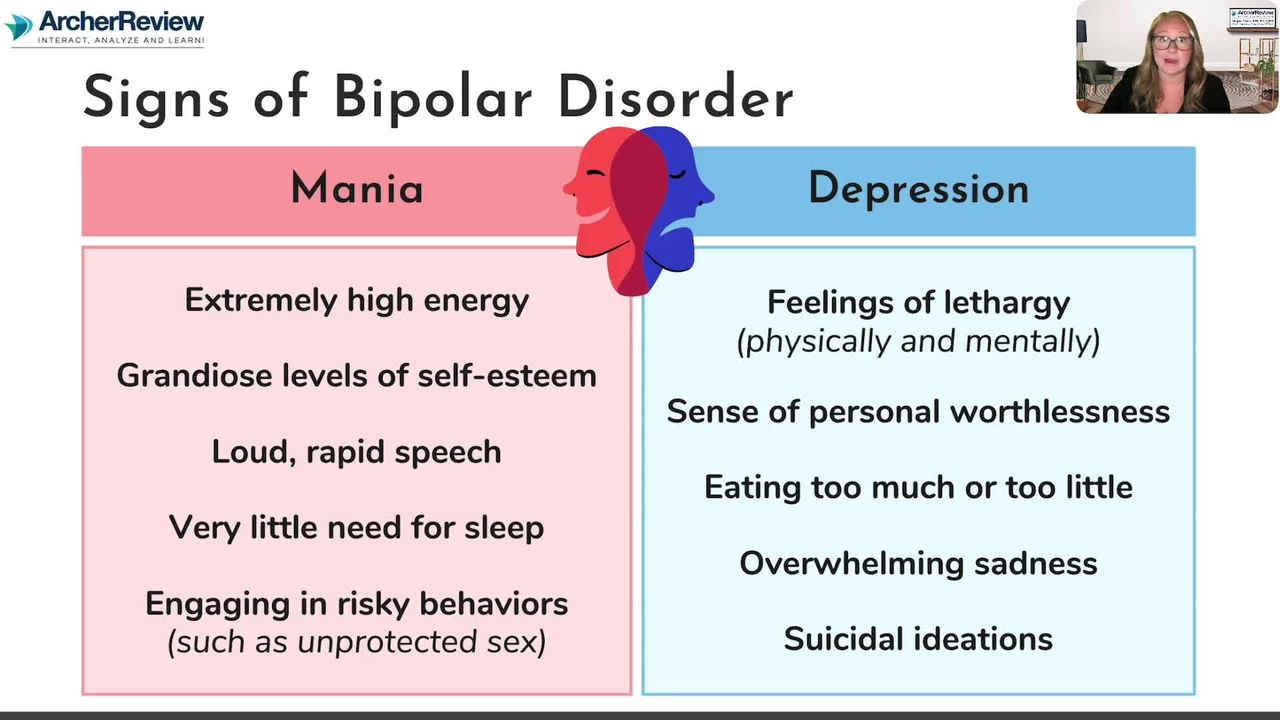
Bipolar Disorder
32.3 Major Psychiatric Disorders
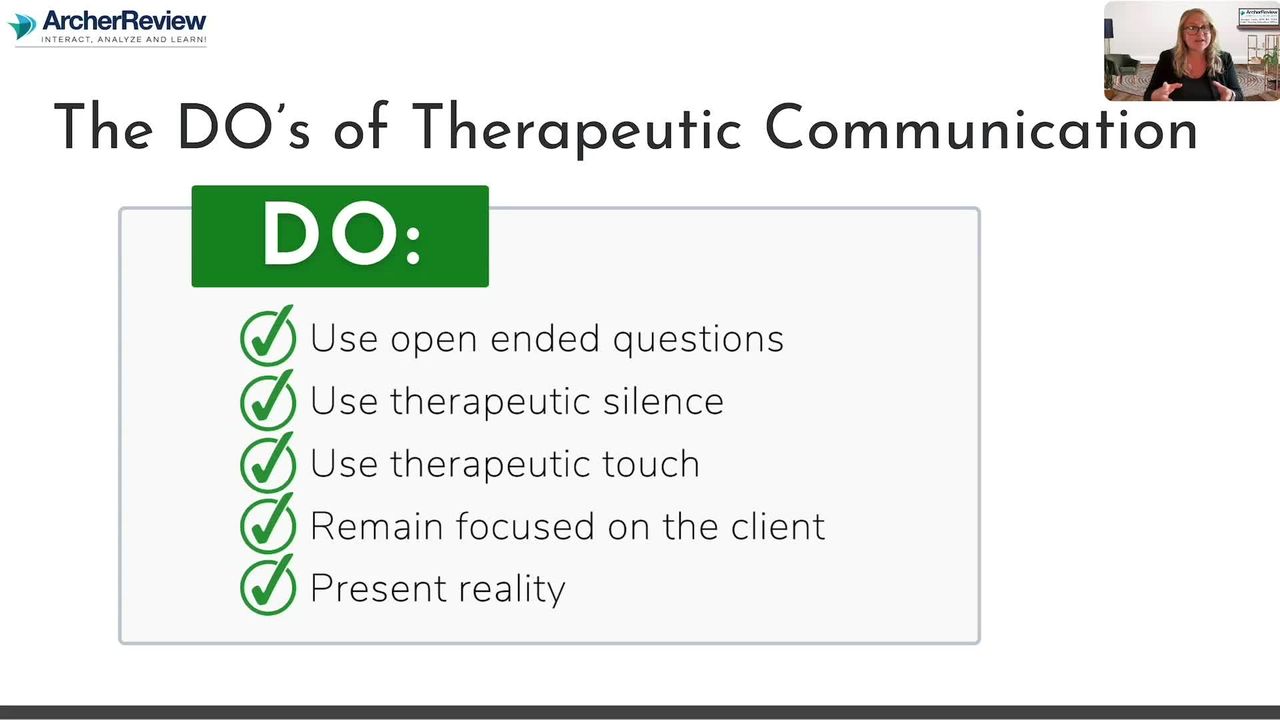
Therapeutic environment
13.3 Therapeutic Communication & Environment
Additional Info
✓ The nurse’s priority is to protect the client and others from harm. Other nursing interventions may include providing a structured and calm environment and establishing a therapeutic relationship.
✓ Mood stabilizers, antipsychotics, and benzodiazepines are medications that may be prescribed to help treat and manage a client who experiences mania.
✓ Some common manifestations of mania include:
- Elevated Mood
- Increased Energy and Activity
- Rapid and Pressured Speech
- Racing Thoughts
- Grandiosity
- Decreased Need for Sleep
- Impulsivity and Risky Behavior
- Irritability and Agitation
- Disorganized Behavior
