The nurse is assessing a client with post-traumatic stress disorder (PTSD). Which assessment finding would be expected?
The nurse is assessing a client with post-traumatic stress disorder (PTSD). Which assessment finding would be expected?
A. Delusions of grandeur
[7%]
B. Hypervigilance
[76%]
C. Circumstantial speech
[9%]
D. Flight of ideas
[7%]
Statistics
Subject/Lesson
Subject
Mental Health
Lesson
Mental Health
Client Need
Test Plan
Psychosocial Integrity
Related Topic
Mental Health Concepts
Item Type
Item Type
Analysis
Explanation
Choice B is correct. PTSD is characterized by an individual who has experienced (or witnessed) a traumatic event such as sexual assault, combat, violence, or medical illness. The client then experiences significant cognitive, affective, and behavioral responses to stimuli reminding them of the trauma they experienced. This chronic psychiatric condition causes a client to experience manifestations such as night terrors, avoidance of anything that may trigger trauma memories, being easily startled, decreased concentration, hypervigilant, and sleep disturbances. This may cause the client to feel 'always on edge.' Dissociative symptoms may occur with PTSD, such as derealization or depersonalization.
Choices A, C, and D are incorrect. Delusions of grandeur (false self-inflated view of themselves), circumstantial speech (speech pattern that takes a long time to get to the point), and flight of ideas (flood of unrelated ideas) are all manifestations associated with mania that may be found in bipolar disorder. These are not features of PTSD as the client may become more affectively constricted and socially retract.
Related Videos
2 Key Topics
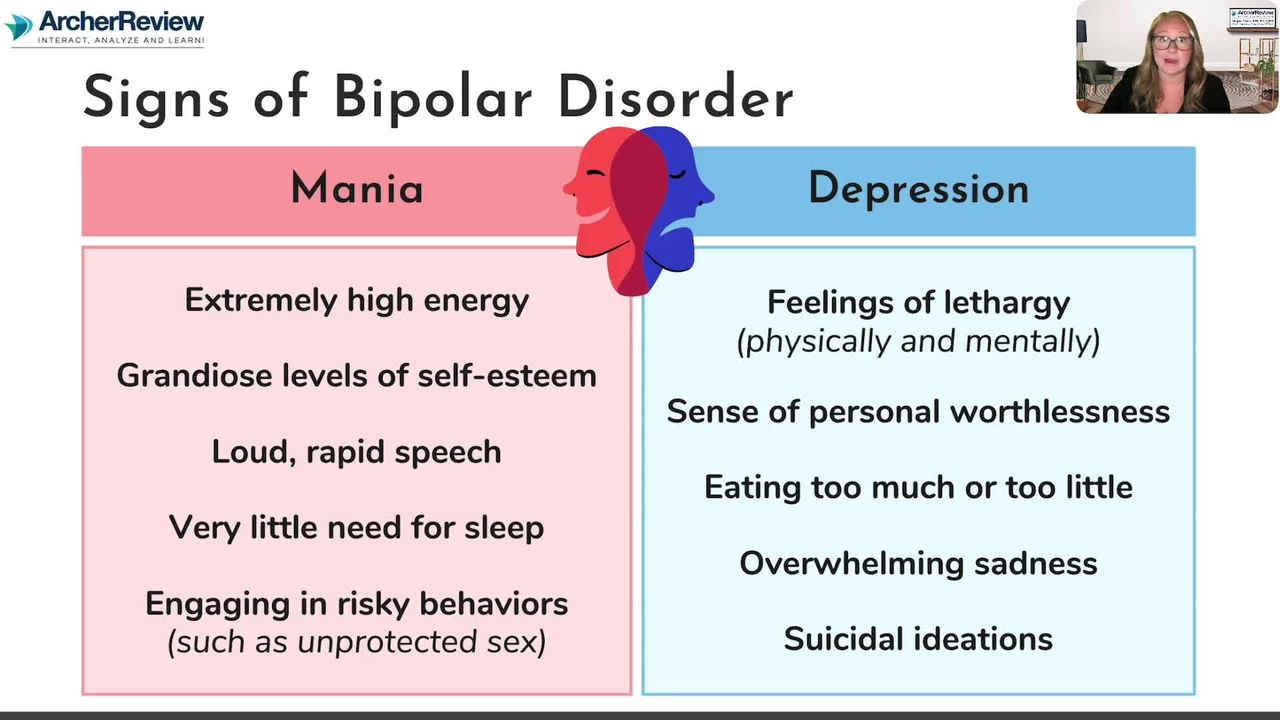
Post Traumatic Stress Disorder
32.3 Major Psychiatric Disorders
Additional Info
✓ PTSD is a condition that requires trauma leading to intrusive symptoms, avoidance of particular stimuli, alterations in mood, and hyperactivity.
✓ Clinical features include hyperarousal, social retraction, hypervigilance, night terrors, and potentially dissociative symptoms.
✓ This is a chronic disorder that responds favorably to psychotherapy.
✓ Other treatments include prazosin for night terrors and SSRIs (such as citalopram) for mood symptoms.
✓ Nursing care aims to build and maintain a therapeutic rapport with the client, encourage the verbal expression of feelings, and provide opportunities for therapeutic group therapy.
