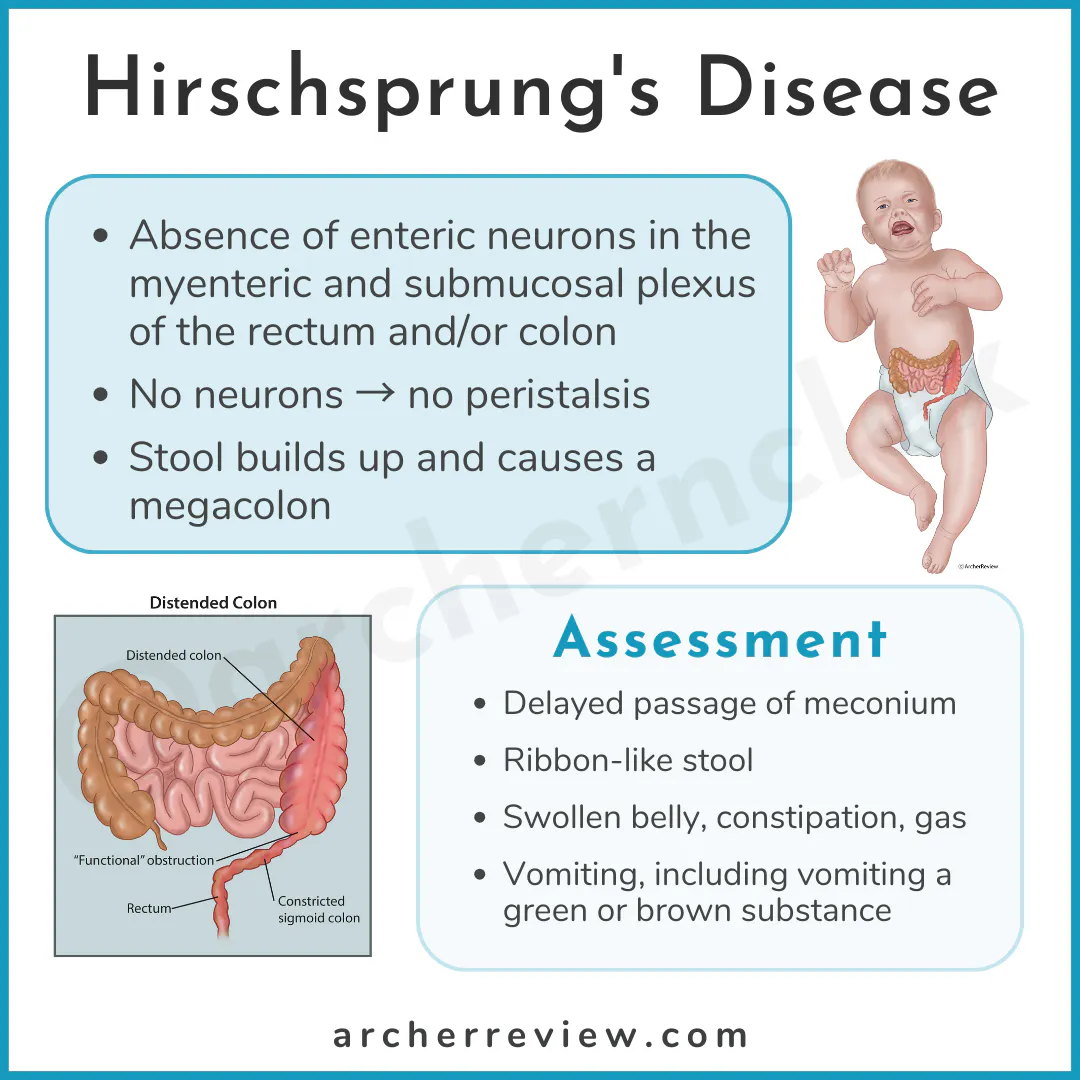
The nurse is caring for four newborns during their shift in the unit. After performing an assessment, which newborn should the nurse see first?
The nurse is caring for four newborns during their shift in the unit. After performing an assessment, which newborn should the nurse see first?
A. A 48-hour old newborn that has not yet passed meconium.
[80%]
B. A 3-day old infant with mild jaundice and a bilirubin of 3 mg/dL [0.3-1 mg/dL, 3–17 µmol/L].
[15%]
C. A 3-hour old infant that has just passed meconium.
[1%]
D. A 5-day old infant with a positive Babinski reflex.
[3%]
Statistics
Subject/Lesson
Subject
Maternal & Newborn Health
Lesson
Newborn
Client Need
Test Plan
Management of Care
Related Topic
Establishing Priorities
Item Type
Item Type
Analysis
Explanation
Choice A is correct. A newborn that has not yet passed meconium within 24 to 48 hours after birth should be evaluated for Hirschsprung’s disease.
Choice B is incorrect. An infant with slight jaundice after the first 24 to 48 hours of life should not cause concern to the nurse because this represents physiological jaundice. However, if jaundice occurs within the early 24 hours, the nurse should notify the primary healthcare provider to evaluate if the jaundice is pathological. Hemolytic jaundice of the newborn can present within the first 24 hours of life. Jaundice is pathologic if it presents within the first 24 hours after birth, the total serum bilirubin level rises by more than 5 mg/dL/day or absolute level at anytime higher than 17 mg/dL, or an infant has signs and symptoms suggestive of serious illness.
Choice C is incorrect. Meconium is expected to be passed within the first 24 hours of the child’s life.
Choice D is incorrect. The Babinski reflex is a primitive reflex that is present in newborns because the corticospinal tracts are not yet fully myelinated. The nurse should not be concerned about this assessment finding. The Babinski reflex disappears with the maturation of the central nervous system. It may disappear as early as six months of age but can be considered normal up to 24 months (2 years). If present beyond 24 months, a positive Babinski indicates an upper motor neuron lesion.
Learning Objective
Understand that the newborn should pass meconium within the first 24 - 48 hours of life. Failure to pass meconium within 48 hours should raise the suspicion of intestinal obstruction from anatomic or neuromuscular causes, such as Hirschsprung's disease.
Related Videos
4 Key Topics
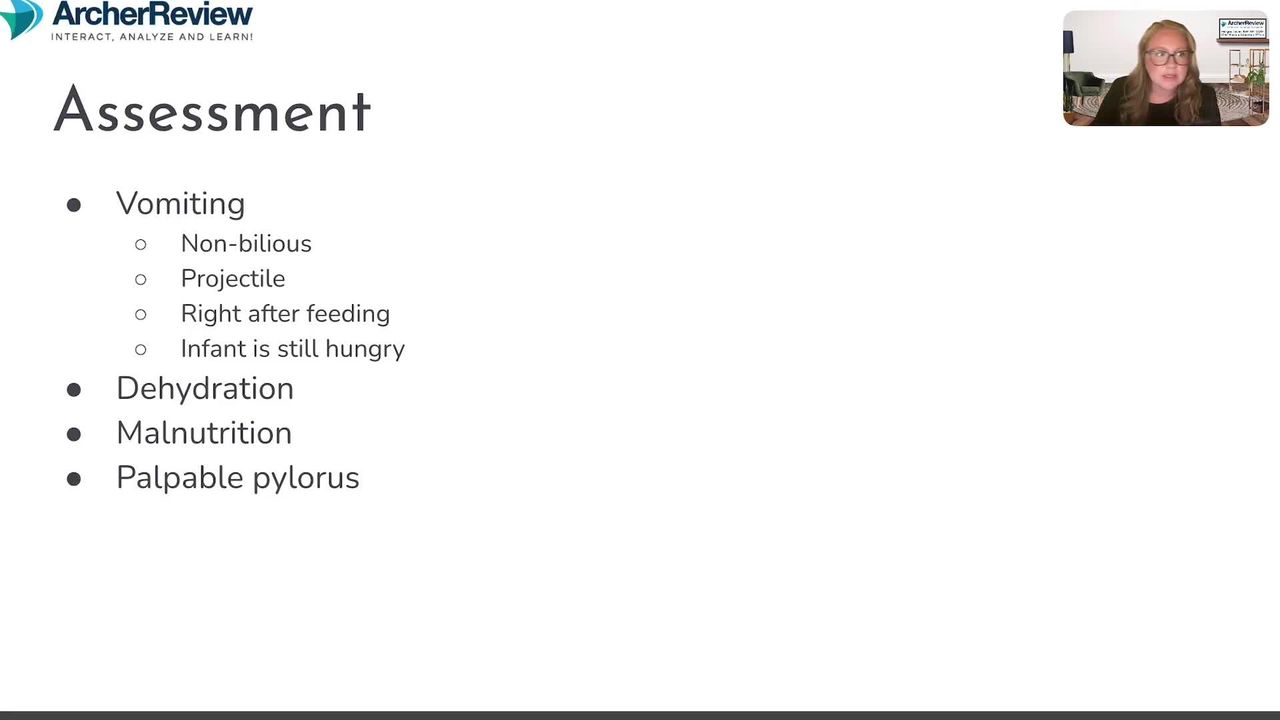
Hirschsprung's
31.11 GI Obstructions & Abdominal Wall Defects

Spectrum of Stability
15.5 Prioritization Part 1
Additional Info
✓ Nurses should educate parents and caregivers about the normal progression of meconium passage in newborns within the first 24 hours. Providing clear information about expected physiological changes, such as jaundice, and distinguishing them from concerning signs can help alleviate parental concerns.
✓ Nurses need to be skilled in assessing newborns for various signs and symptoms, including jaundice and abnormal reflexes. Regular assessments are essential to identify any deviations from normal and promptly initiate appropriate interventions or consultations with healthcare providers.
✓ Jaundice is a common condition in newborns, affecting approximately 60-80% of full-term infants and 80-90% of premature babies. It occurs due to the accumulation of bilirubin, a yellow pigment resulting from the breakdown of red blood cells, causing the skin and eyes to appear yellow.
✓ Meconium is the first stool passed by a newborn baby. It is a thick, greenish-black, sticky substance that is usually expelled within the first 24 to 48 hours after birth. Meconium is composed of materials the baby ingested while in the womb, including amniotic fluid, mucus, skin cells, and other substances.