The nurse is caring for a client in the second stage of labor. The fetal heart monitor shows late decelerations.
The nurse should initially
The nurse is caring for a client in the second stage of labor. The fetal heart monitor shows late decelerations.
The nurse should initially
A. notify the physician.
[17%]
B. encourage the client deep-breathe slowly.
[3%]
C. reposition the client to a left side-lying position.
[76%]
D. obtain a prescription for intravenous isotonic fluids.
[3%]
Statistics
Subject/Lesson
Subject
Maternal & Newborn Health
Lesson
Labor/Delivery
Client Need
Test Plan
Management of Care
Related Topic
Establishing Priorities
Item Type
Item Type
Application
Explanation
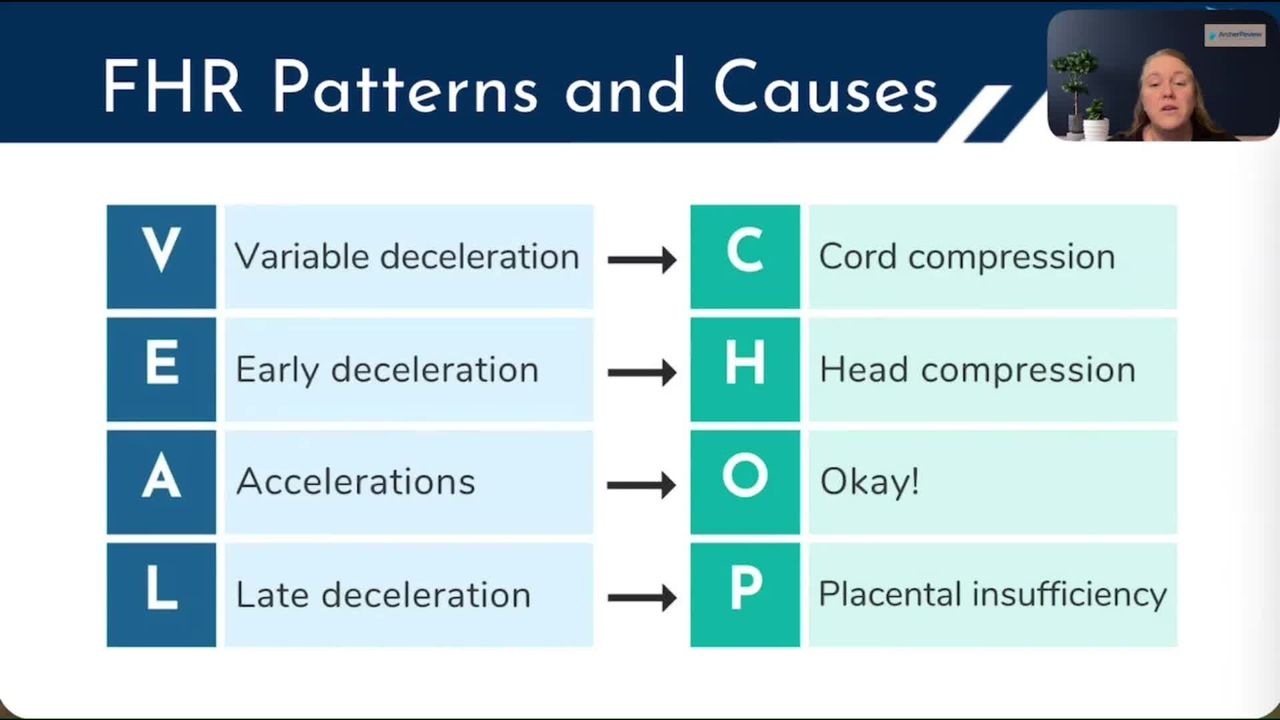
Choice C is correct. The left lateral position improves the fetus's placental blood flow and oxygen supply. This should be the nurse's first intervention because the fetus's compression causes the fetus to experience late decelerations caused by compression of the inferior vena cava.
Choice A is incorrect. Late decelerations occur due to a lack of oxygen supply to the fetus. Before calling the physician, The nurse should initiate positional changes to increase the fetus's blood supply.
Choice B is incorrect. When there is a late deceleration, the nurse's priority is to increase the blood supply to the fetus by repositioning the client, administering oxygen, and, if applicable, stopping an oxytocin infusion. Deep breathing may help decrease the mother's anxiety, but restoring fetal blood flow is a priority.
Choice D is incorrect. Administering isotonic fluids is also an intervention that may be taken during late decelerations. This prescribed intervention will restore maternal blood volume. However, repositioning the client is key in terminating late decelerations and restoring perfusion to the fetus.
Related Videos
6 Key Topics

Decelerations
29.1 Fetal Monitoring Basics
Nursing Interventions for Nonreassuring
29.2 Interpretation & Nursing Response
Additional Info
✓ Variable decelerations are often caused by cord compression, such as a prolapsed cord, and would be an emergency requiring quick nursing intervention.
✓ Late decelerations, or dips in the fetal heart rate after a contraction, are a non-reassuring sign on a fetal heart rate strip. Anytime the nurse notes late decelerations, the nurse should lay the client on her left side, increase IV fluids, administer oxygen via face mask, and notify the healthcare provider quickly.
✓ Late decelerations are due to uteroplacental insufficiency and require intervention by the nurse.