The nurse is caring for a client in labor. The nurse observes a fetal heart rate (FHR) pattern showing variable decelerations.
The nurse recognizes that this FHR pattern could be caused by
The nurse is caring for a client in labor. The nurse observes a fetal heart rate (FHR) pattern showing variable decelerations.
The nurse recognizes that this FHR pattern could be caused by
A. fetal movement.
[11%]
B. fetal head compression.
[20%]
C. compression of the maternal vena cava.
[12%]
D. prolapsed umbilical cord.
[57%]
Statistics
Subject/Lesson
Subject
Maternal & Newborn Health
Lesson
Labor/Delivery
Client Need
Test Plan
Health Promotion and Maintenance
Related Topic
Ante/Intra/Postpartum and Newborn Care
Item Type
Item Type
Knowledge/Comprehension
Explanation
Choice D is correct. A prolapsed umbilical cord is a serious finding that may lead to fetal hypoxia. The nurse must act quickly if this is suspected. Common fetal heart rate patterns observed during a prolapsed umbilical cord include variable decelerations, sustained bradycardia, or prolonged decelerations. All of these patterns are non-reassuring.
Choice A is incorrect. Fetal movement would cause an acceleration, which is a reassuring FHR pattern. This would not be a cause of variable decelerations.
Choice B is incorrect. Fetal head compression would cause early decelerations, which are benign.
Choice C is incorrect. Compression of the maternal vena cava would cause a client to develop late decelerations because this causes uteroplacental insufficiency.
Related Videos
4 Key Topics

Decelerations
29.1 Fetal Monitoring Basics
Additional Info
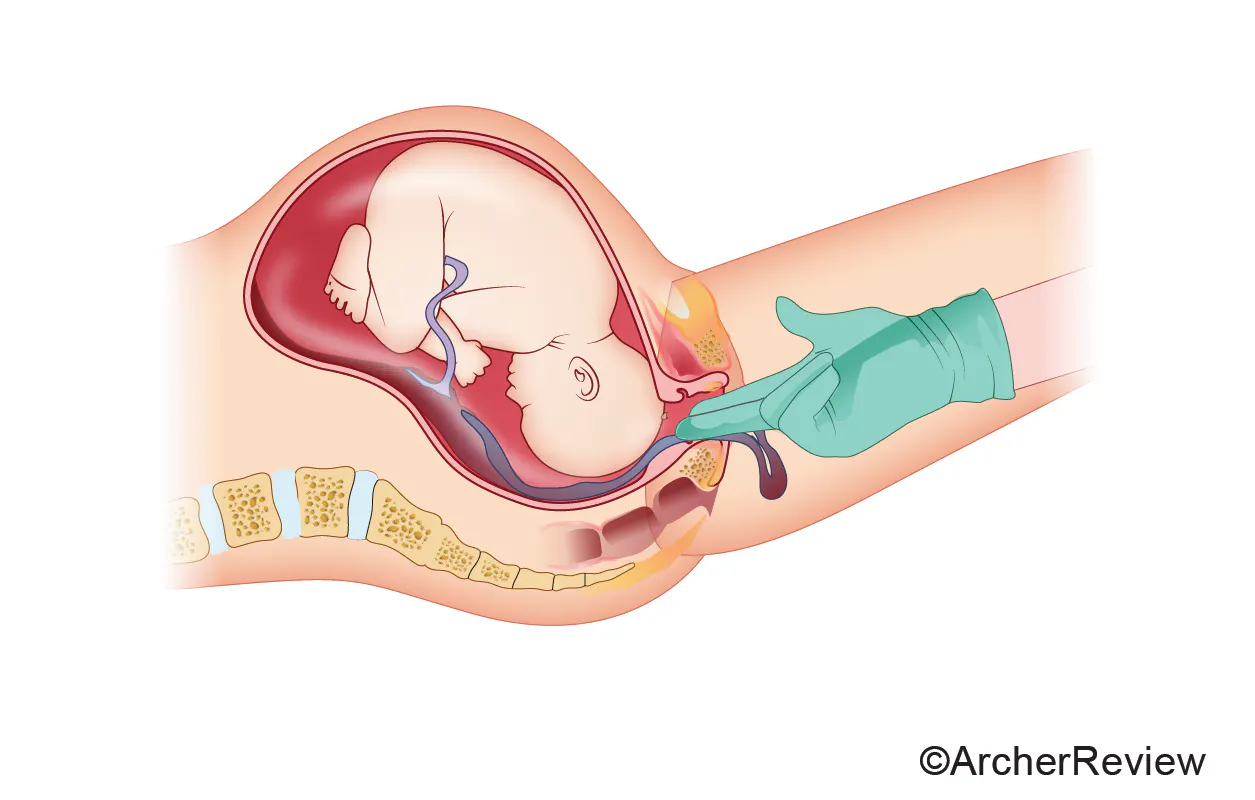
✓ A prolapsed umbilical cord is a medical emergency
✓ The prolapse may be hidden or complete
✓ This condition should be suspected if the fetal heart monitor should show sustained bradycardia, variable decelerations or prolonged deceleration
✓ The nurse should reposition the client with the intent to position the woman’s hips higher than her head to shift the fetal presenting part
✓ Acceptable positions include knee-chest, Trendelenburg, or hips elevated with pillows, with side-lying position maintained
✓ The nurse should shout for help, pause oxytocin infusion, and provide oxygen via face mask at 8-10 liters/minute
✓ Provide and maintain vaginal elevation of the presenting part using a gloved hand
✓ An emergency cesarean section is likely
