The nurse is caring for a client in labor. During a contraction, the nurse notes a decrease in fetal heart rate from 150 to 120 bpm. The heart rate slows for about 10 seconds and increases back to 150 bpm as the contraction ends.
Which of the following correctly classifies this observation?
The nurse is caring for a client in labor. During a contraction, the nurse notes a decrease in fetal heart rate from 150 to 120 bpm. The heart rate slows for about 10 seconds and increases back to 150 bpm as the contraction ends.
Which of the following correctly classifies this observation?
A. Late deceleration
[21%]
B. Moderate variability
[23%]
C. Early deceleration
[44%]
D. Marked variability
[12%]
Statistics
Subject/Lesson
Subject
Maternal & Newborn Health
Lesson
Labor/Delivery
Client Need
Test Plan
Health Promotion and Maintenance
Related Topic
Ante/Intra/Postpartum and Newborn Care
Item Type
Item Type
Analysis
Explanation
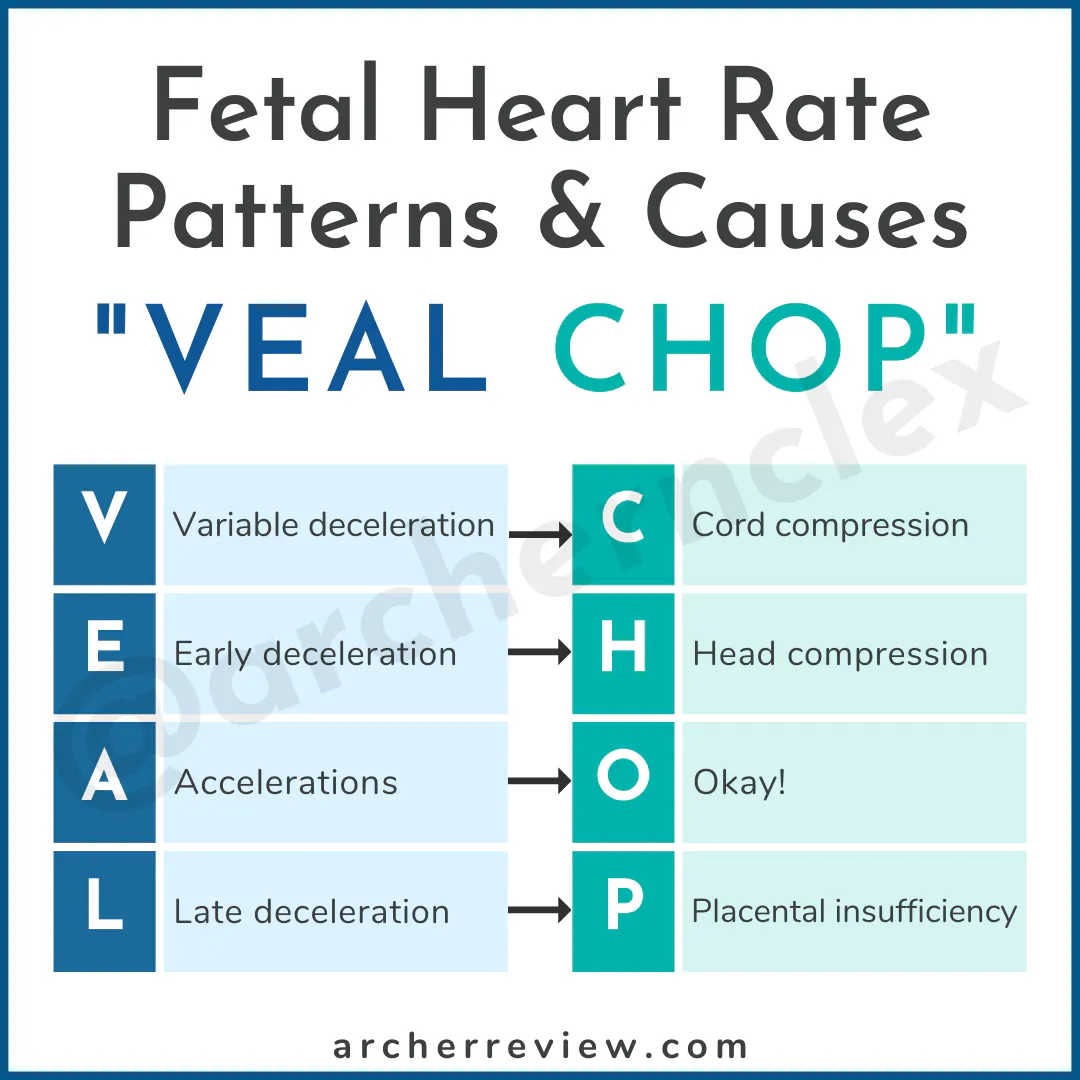
Choice C is correct. Early decelerations occur when the fetal heart rate decreases at the same time as a contraction. In this question, the nurse noted a decrease from 150 to 120 bpm with the contraction and then a return to baseline. This occurs due to the pressure of the fetus's head on the pelvis or soft tissue, and no intervention is required by the nurse after an early deceleration.
Choice A is incorrect. Late decelerations are a decrease in the fetal heart rate that occurs after a contraction. They are a non-reassuring sign on a fetal heart rate strip. In this question, the nurse noticed an early deceleration because it occurred with a contraction, not after.
Choice B is incorrect. Fetal heart rate variability is defined as fluctuations from baseline. A moderate amount of variability is expected and considered a reassuring sign. This question does not mention the variability of the fetal heart rate; instead, it notes an early deceleration.
Choice D is incorrect. Variability in a fetal heart rate is defined as the fluctuations in the fetal heart rate from the baseline. Marked variability is a dramatically increased amount of these fluctuations. This question does not mention the variability of the fetal heart rate; instead, it notes an early deceleration.
Related Videos
2 Key Topics

Decelerations