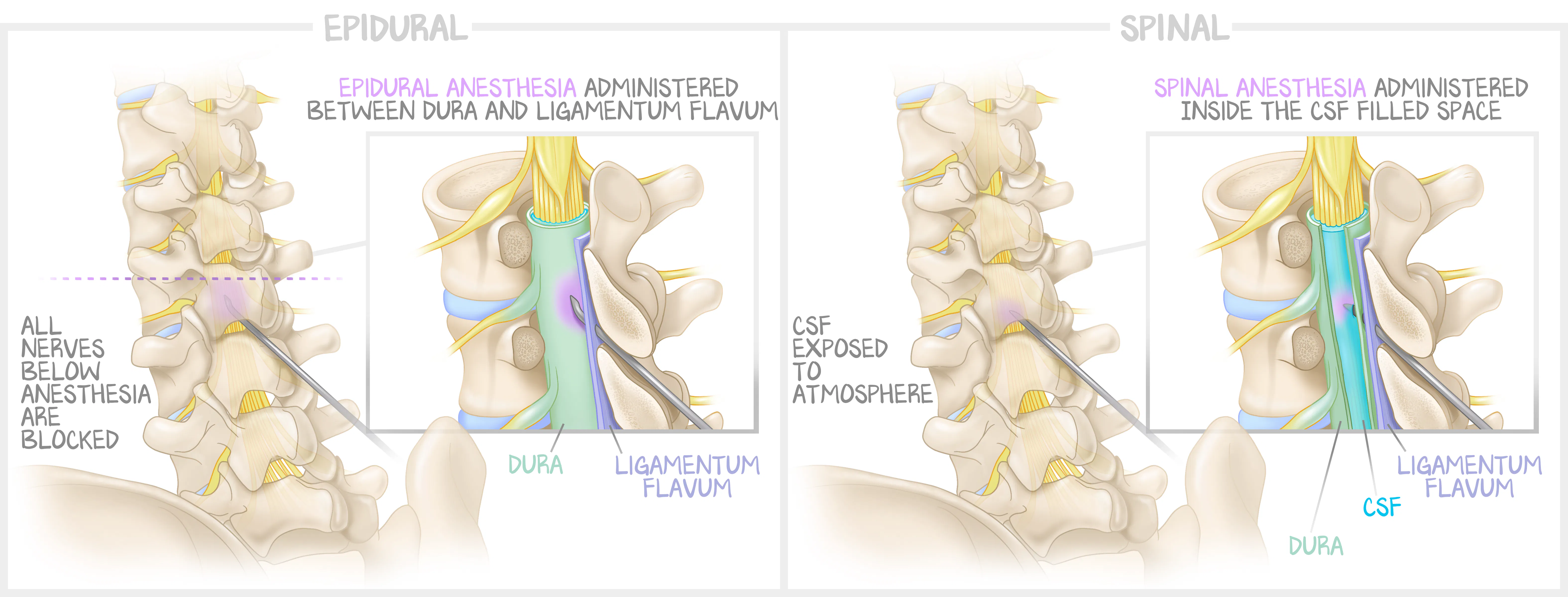
The nurse is caring for a client in the first stage of labor receiving epidural analgesia
Item 1 of 1
- Flow Sheet
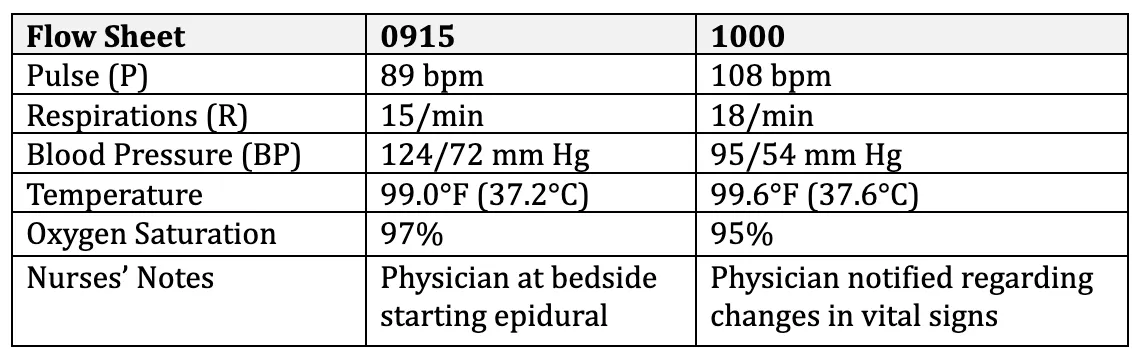
The nurse reviews the clinical data from 0915 and 1000. The nurse notifies the physician at 1000.
Click to highlight the 1000 vital signs that require attention from the physician.
The nurse reviews the clinical data from 0915 and 1000. The nurse notifies the physician at 1000.
Click to highlight the 1000 vital signs that require attention from the physician.
| Flow Sheet | Result |
|---|---|
Blood pressure | 95/54 mm Hg |
Pulse | 108 |
Respirations | 18 |
Oral temperature | 99.6° F (37.6° C) |
Oxygen saturation | 95% |
Nurses’ Notes | Physician notified regarding changes in vital signs |
Statistics
Subject/Lesson
Subject
Maternal & Newborn Health
Lesson
Labor/Delivery
Client Need
Test Plan
Health Promotion and Maintenance
Related Topic
Ante/Intra/Postpartum and Newborn Care
Item Type
Item Type
RecognizeCues
Explanation
- The client is receiving epidural analgesia. Epidural analgesia has a strong propensity for causing hypotension.
- The nurse should note the client's dramatic reduction in blood pressure compared to the initial vital signs. Additionally, the client's pulse is elevated (tachycardia), signaling that the client has significant hypovolemia.
- The client's temperature of 99.6° F (37.6° C) is within normal limits. Normal temperature during pregnancy is 36.6°C to 37.6°C (97.8°F to 99.6°F). This does not need to be reported to the physician. The priority focus is the client's dramatic reduction in blood pressure and tachycardia.
- The other vital signs are within normal limits.
Related Videos
2 Key Topics
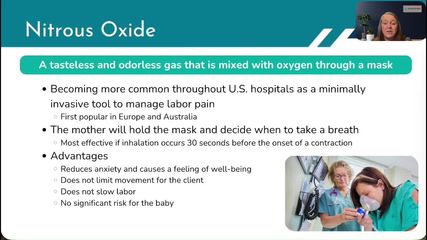
Pain Control in Labor
30.3 Labor Management & Pain Control
Additional Info
✓ For lumbar epidural analgesia, the common site selected is between L3 and L4.
✓ This procedure requires informed consent.
✓ Prior to the initiation of an epidural, the physician orders isotonic fluids to prevent maternal hypotension.
✓ Essential monitoring parameters include the area for signs of infection, blood pressure (may cause hypotension), and urinary output (may cause urinary retention).
✓ The nurse should inform the client that they are at risk for falling because of the reduced distal sensation.