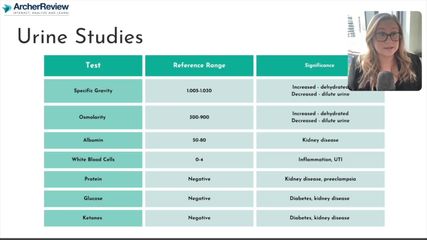
At the initial prenatal visit, and often the subsequent visits, the health care provider will obtain a urine specimen to look for all of the following, except:
At the initial prenatal visit, and often the subsequent visits, the health care provider will obtain a urine specimen to look for all of the following, except:
A. Ketones
[6%]
B. Sexually transmitted infections
[16%]
C. Glucose
[7%]
D. Testosterone levels
[71%]
Statistics
Subject/Lesson
Subject
Maternal & Newborn Health
Lesson
Antepartum
Client Need
Test Plan
Health Promotion and Maintenance
Related Topic
Ante/Intra/Postpartum and Newborn Care
Item Type
Item Type
Knowledge/Comprehension
Explanation
Choice D is correct. Testosterone is not typically measured in prenatal clients. If a testosterone level needs to be measured, it will be estimated via a blood draw rather than a urinalysis.
Choice A is incorrect. The presence of ketones in the urine can indicate issues with glucose metabolism, such as gestational diabetes or inadequate carbohydrate intake, which are relevant to prenatal care.
Choice B is incorrect. Urine samples can be used to screen for certain sexually transmitted infections (STIs) like chlamydia and gonorrhea, which are important to identify and treat during pregnancy to prevent complications.
Choice C is incorrect. Monitoring glucose levels in the urine is crucial for detecting gestational diabetes, a condition that can develop during pregnancy and requires careful management.
Related Videos
4 Key Topics
Urine Studies
2.5 Urine Studies
Routine Exams
28.3 Routine Prenatal Screening
Additional Info
✓ Explain the purpose of the urine sample and its relevance to prenatal care. Emphasize the importance of accurate sample collection for monitoring the client's health and the health of the developing fetus.
✓ Be culturally sensitive and respectful of the client's beliefs and practices related to personal hygiene and modesty during urine collection. Accommodate any cultural preferences if possible.
✓ Accurately document the collection process, including the date and time of collection, any relevant client information, and the specific tests or assessments ordered by the healthcare provider.
