A nurse in the prenatal clinic assesses a client who is at 32 weeks of gestation and reports a sudden onset of severe abdominal pain, vaginal bleeding, and decreased fetal movement.
Which of the following findings supports a diagnosis of placental abruption?
A nurse in the prenatal clinic assesses a client who is at 32 weeks of gestation and reports a sudden onset of severe abdominal pain, vaginal bleeding, and decreased fetal movement.
Which of the following findings supports a diagnosis of placental abruption?
A. Firm, board-like uterus on palpation
[59%]
B. Fetal heart rate of 150 bpm with moderate variability
[2%]
C. Soft, non-tender uterus with bright red bleeding
[25%]
D. Gradual onset of lower abdominal cramping and backache
[14%]
Statistics
Subject/Lesson
Subject
Maternal & Newborn Health
Lesson
Antepartum
Client Need
Test Plan
Health Promotion and Maintenance
Related Topic
Ante/Intra/Postpartum and Newborn Care
Item Type
Item Type
Analysis
Explanation
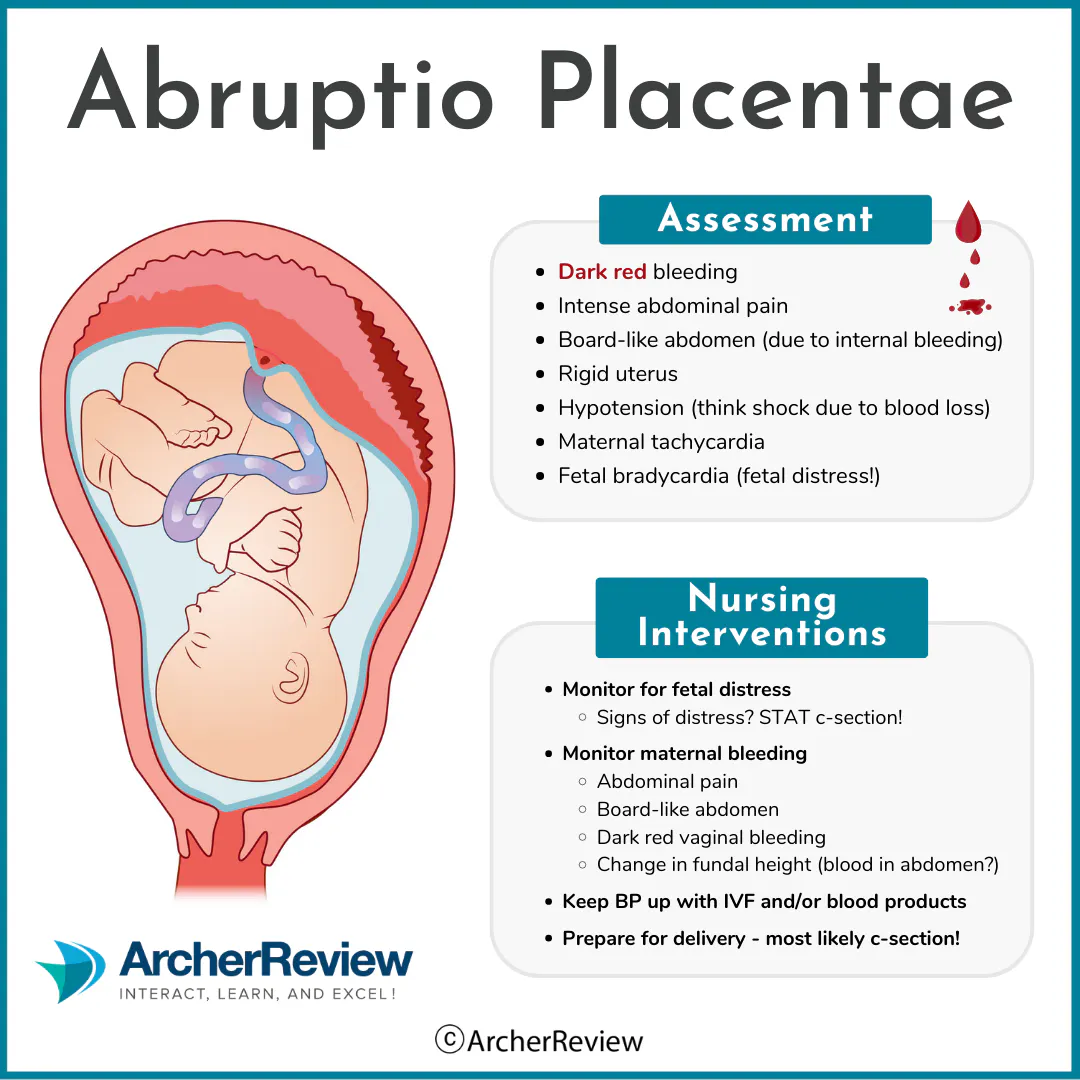
Choice A is correct. A tense, rigid uterus with sudden pain and vaginal bleeding suggests placental abruption, in which the placenta prematurely separates from the uterine wall. This is an obstetric emergency requiring prompt action to reduce the risk of fetal and maternal compromise.
Choice B is incorrect. This reassuring fetal heart rate pattern does not support placental abruption, which is typically associated with nonreassuring fetal signs like bradycardia or late decelerations.
Choice C is incorrect. More consistent with placenta previa, not abruption. Placenta previa presents with painless bleeding and a soft uterus.
Choice D is incorrect. This pattern is more suggestive of preterm labor, not an acute abruption.
Related Videos
2 Key Topics
Abruptio Placentae