The nurse is caring for a client with the below laboratory result. Which early vital sign change would the nurse expect to support this finding? See the image below.

The nurse is caring for a client with the below laboratory result. Which early vital sign change would the nurse expect to support this finding? See the image below.
A. Tachycardia
[55%]
B. Bradycardia
[6%]
C. Hypotension
[32%]
D. Bradypnea
[6%]
Statistics
Subject/Lesson
Subject
Critical Care
Lesson
Critical Care Concepts
Client Need
Test Plan
Reduction of Risk Potential
Related Topic
Changes/Abnormalities in Vital Signs
Item Type
Item Type
Analysis
Explanation
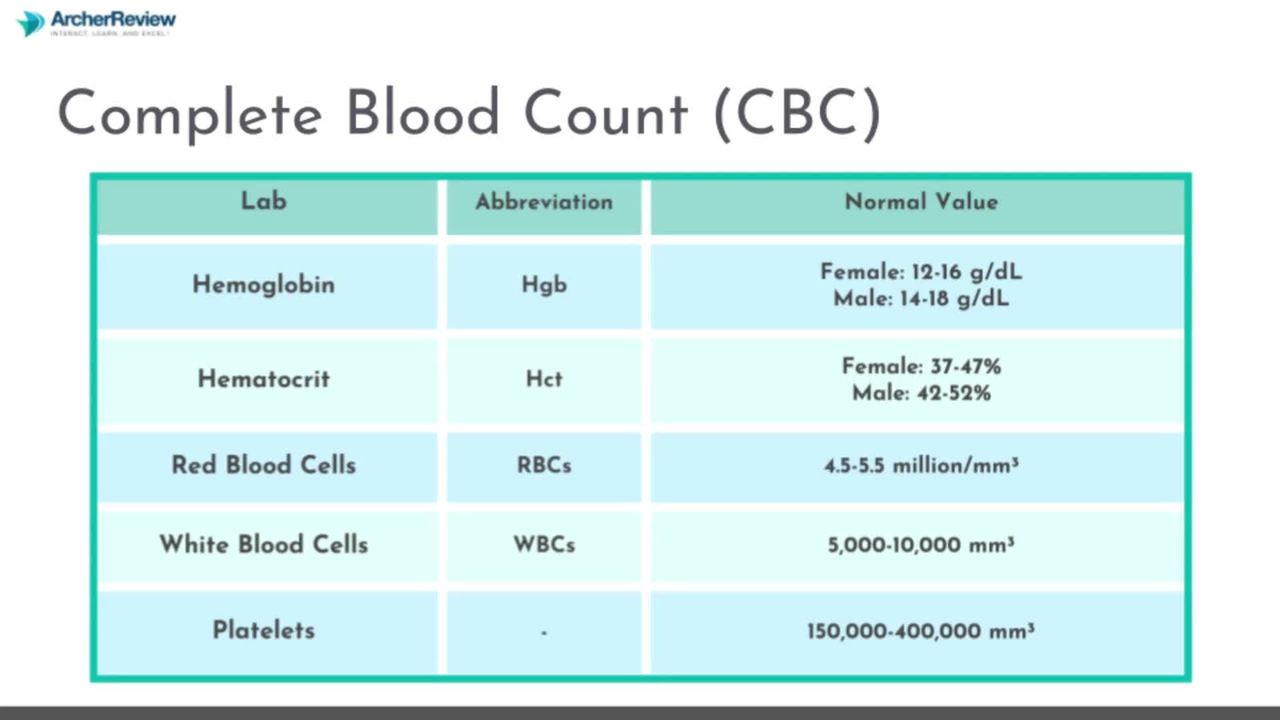
Choice A is correct. The hemoglobin and hematocrit are critically low in this client. When critically low hemoglobin is evident, the nurse will likely see the client demonstrate tachycardia as a compensatory mechanism for the low blood volume. Tachycardia is the most reliable and earliest sign of hypovolemic shock.
Choices B, C, and D are incorrect. Hypotension is not an early sign of hypovolemic shock. The first changes in vital signs seen in hypovolemic shock include increased diastolic blood pressure with narrowed pulse pressure. As volume status continues to decrease, systolic blood pressure drops. Bradypnea is a late sign of shock.
Related Videos
4 Key Topics
CBC- Lab Values
2.1 Hematology & Coagulation Labs
Hypovolemic Shock
27.5 Shock
Additional Info
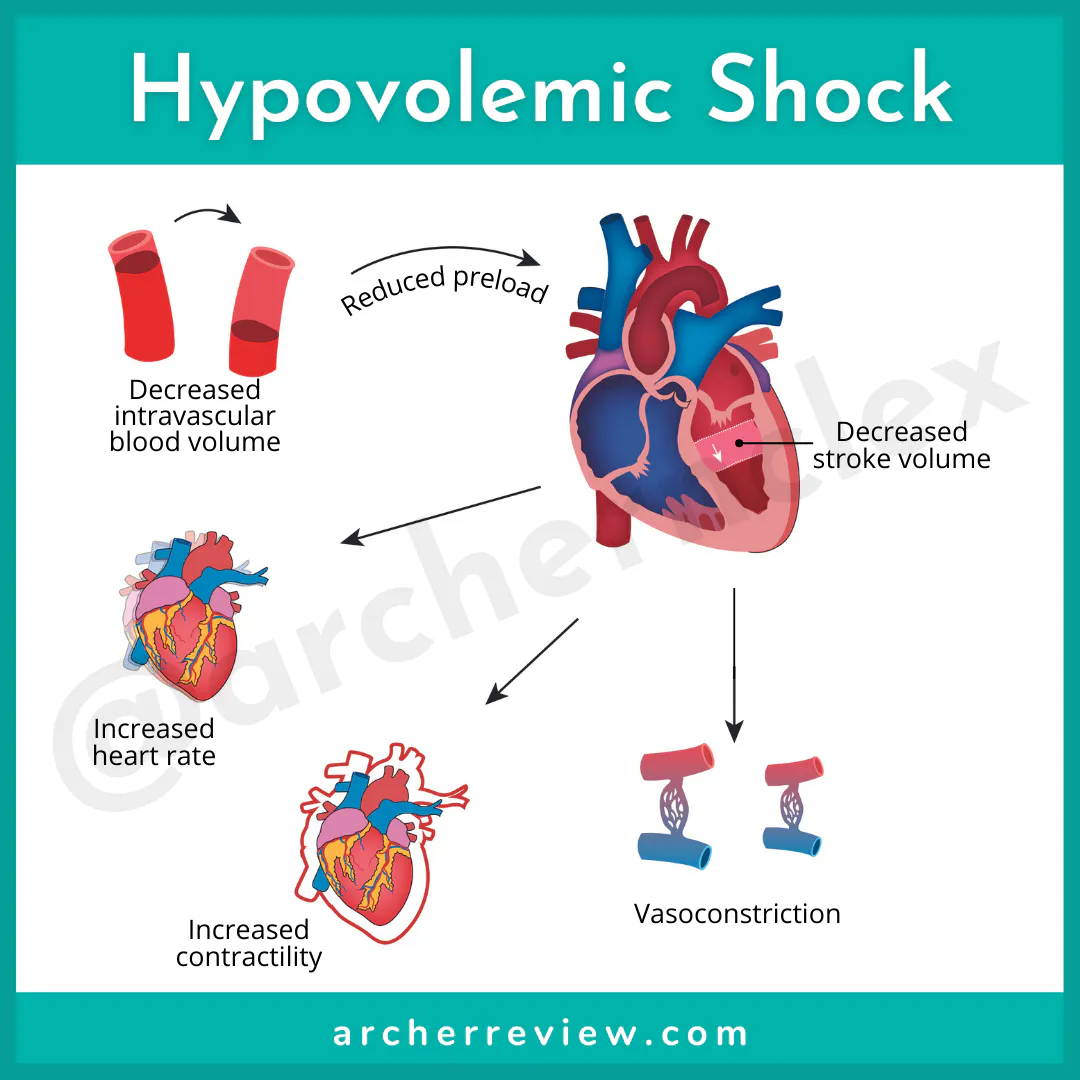
The first changes in vital signs seen in hypovolemic shock include restlessness, tachycardia, and increased diastolic blood pressure with narrowed pulse pressure. As volume status continues to decrease, systolic blood pressure drops. In the case of hypovolemic shock caused by blood loss, the nurse would expect a prescription for packed red blood cells. One unit of packed red blood cells will raise the hemoglobin by 1 g/dL.
