The nurse is caring for a client who was extubated within the last hour. What assessment finding should be reported to the primary healthcare provider (PHCP) immediately?
The nurse is caring for a client who was extubated within the last hour. What assessment finding should be reported to the primary healthcare provider (PHCP) immediately?
A. Slightly pink sputum
[5%]
B. A hoarse voice or sore throat
[8%]
C. Respiratory rate of 22
[3%]
D. Stridor
[83%]
Statistics
Subject/Lesson
Subject
Critical Care
Lesson
Critical Care Concepts
Client Need
Test Plan
Physiological Adaptation
Related Topic
Alterations in Body Systems
Item Type
Item Type
Analysis
Explanation
Choice D is correct. Stridor, a high-pitched, noisy breathing sound heard during inspiration, is a concerning sign of upper airway obstruction. It is usually heard with the stethoscope over the trachea. It can indicate laryngeal edema, vocal cord dysfunction, or other potentially life-threatening complications, especially after endotracheal tube removal. Stridor requires immediate medical attention, as it may indicate impending airway compromise and necessitate emergency airway management.
Choice A is incorrect. Slightly pink-tinged sputum may indicate minor trauma or irritation to the respiratory tract, which can be expected after endotracheal tube removal.
Choice B is incorrect. A sore throat and hoarse voice are normal for a few days after the removal of the endotracheal tube. These symptoms are generally mild and may improve over time without intervention.
Choice C is incorrect. While a respiratory rate of 22 breaths per minute should be monitored, the doctor does not need to be notified immediately.
Related Videos
2 Key Topics
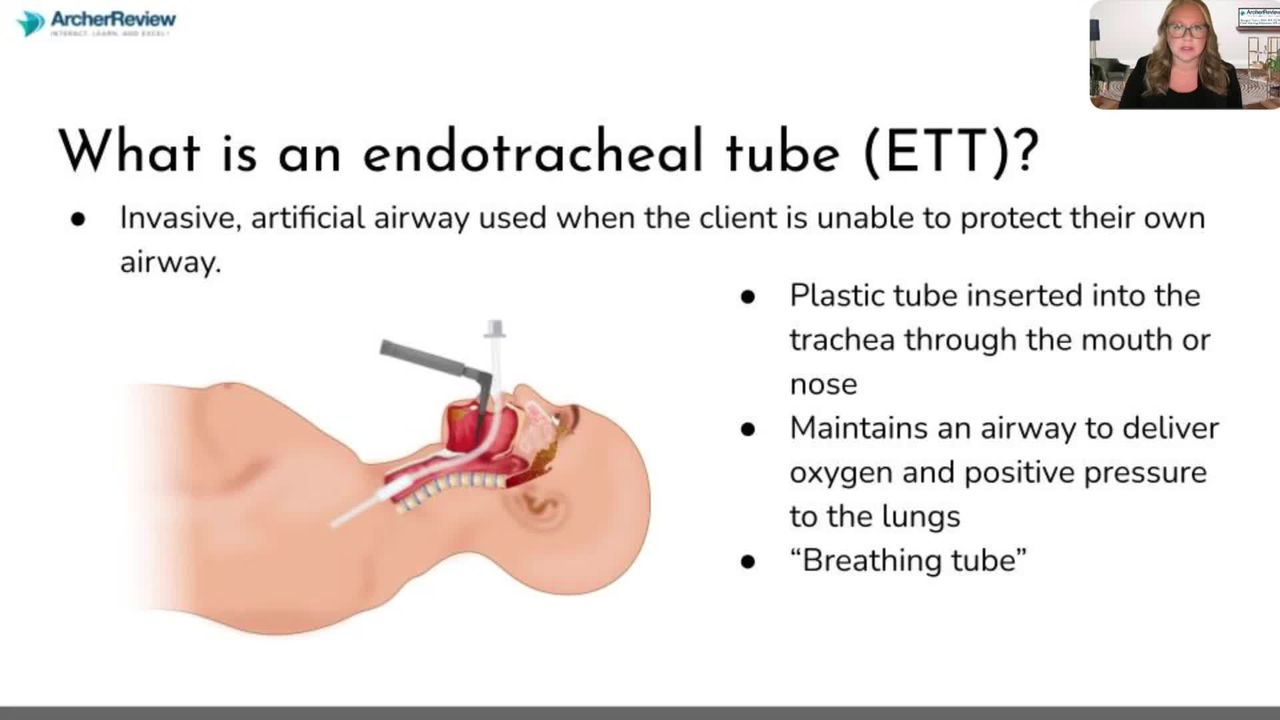
Endotracheal Tubes
27.1 Critical Care Respiratory System
Additional Info
✓ Frequent/continuous monitoring of respiratory status, including respiratory rate, oxygen saturation, breath sounds, and effort, is essential following endotracheal tube removal.
✓ Studies have reported extubation failure rates ranging from 10% to 20% in critically ill clients. Factors associated with extubation failure include inadequate airway clearance, respiratory muscle weakness, and underlying respiratory conditions.
✓ The incidence of post-extubation stridor, a potentially serious complication characterized by high-pitched breathing sounds due to upper airway obstruction, ranges from 6% to 24% in adult populations. Risk factors for post-extubation stridor include prolonged intubation, female gender, and older age.
