A nurse is caring for a client in the intensive care unit who had a central venous catheter (CVC) removed. Minutes later, the client becomes short of breath and reports chest pain.
Which action should the nurse take first?
A nurse is caring for a client in the intensive care unit who had a central venous catheter (CVC) removed. Minutes later, the client becomes short of breath and reports chest pain.
Which action should the nurse take first?
A. reposition the client in high Fowler’s position and apply pressure over the catheter site
[28%]
B. place the client in left lateral Trendelenburg position and administer oxygen as needed
[57%]
C. notify the primary health care provider and request a stat chest X-ray
[14%]
D. administer a fluid bolus and monitor the client’s blood pressure
[1%]
Statistics
Subject/Lesson
Subject
Critical Care
Lesson
Critical Care Concepts
Client Need
Test Plan
Reduction of Risk Potential
Related Topic
Potential for Complications of Diagnostic Tests/Treatments/Procedures
Item Type
Item Type
Application
Explanation
Choice B is correct. The nurse should first position the client in the left lateral Trendelenburg position to trap any existing air in the right atrium. This reduces the risk of the air embolism traveling to the pulmonary circulation. The nurse should then administer oxygen as needed and obtain additional assistance without leaving the client.
Choice A is incorrect. Placing the client in a high Fowler’s position is inappropriate in this situation. Upright positioning could facilitate air movement into the pulmonary vasculature, increasing the risk of embolic complications. Pressure should be applied if the site is bleeding or after initially removing the catheter. An occlusive dressing should be maintained after the catheter is removed to prevent air entry.
Choice C is incorrect. Notifying the provider and requesting diagnostic imaging are necessary steps, but they are not the first priority. Immediate action is needed to prevent additional air from entering the circulation and to position the client to minimize embolic spread.
Choice D is incorrect. Administering IV fluids and monitoring blood pressure are supportive interventions that may be appropriate if hypotension develops, but they are not the first actions to take when an air embolism is suspected.
Learning Objective
Identify and implement the immediate nursing interventions required to manage a suspected air embolism in a client with a central venous catheter (CVC).
Related Videos
4 Key Topics
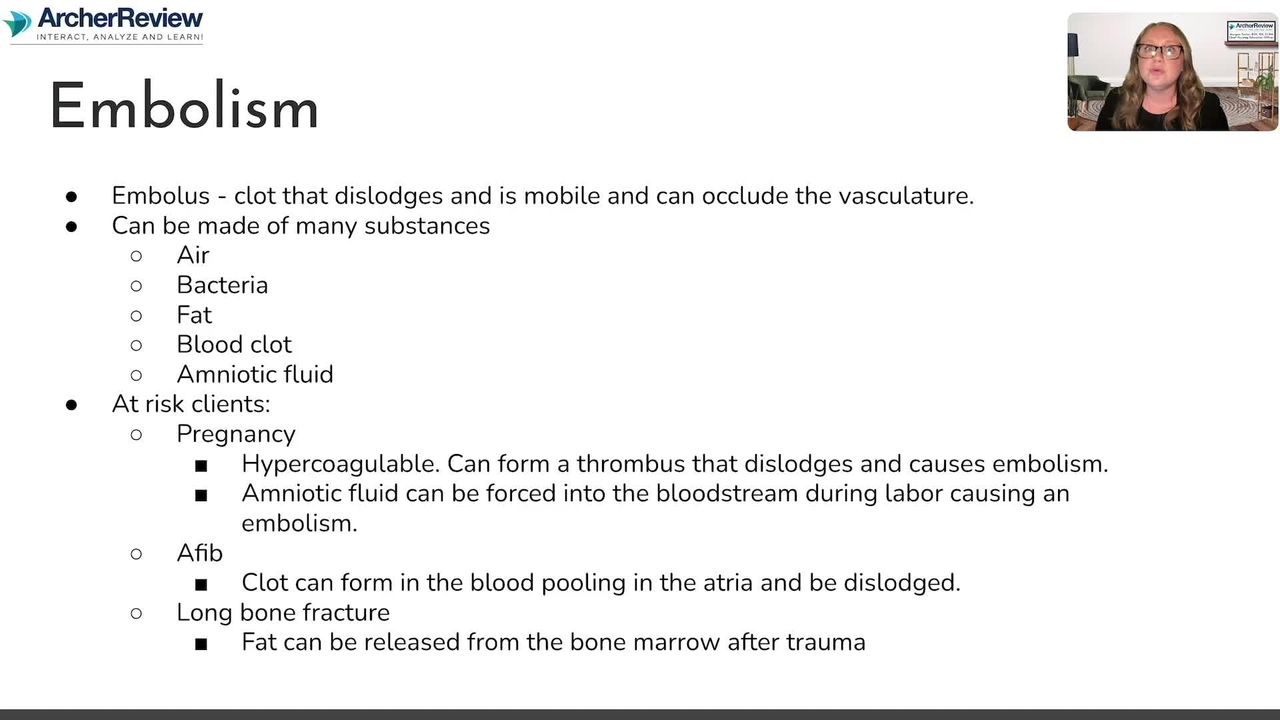
Air Embolism
18.9 Embolisms
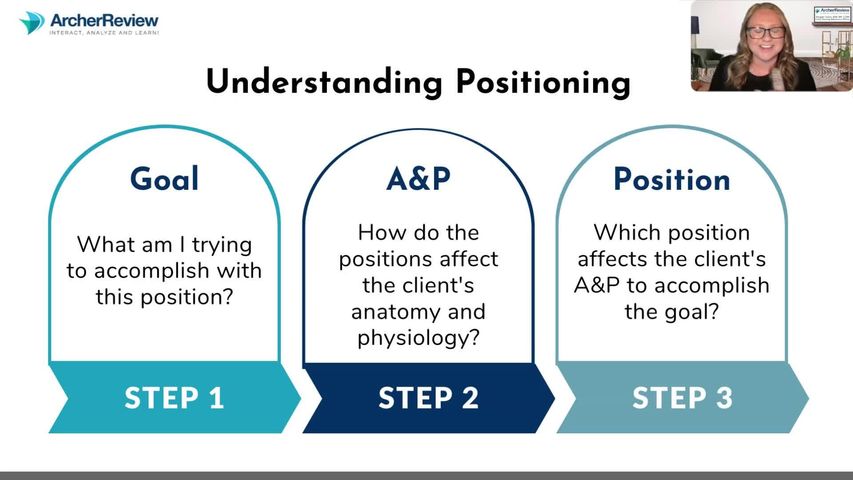
Disease Specific Positioning
9.14 Disease-Specific Positioning
Additional Info
✓ Air embolism is a rare but life-threatening complication of central venous catheter use, particularly during TPN administration, catheter removal, or tubing disconnection.
✓ Classic symptoms of air embolism include sudden onset of dyspnea, chest pain, hypotension, tachycardia, and in some cases, altered mental status.
✓ The nurse’s immediate priority is to prevent further air entry by trapping the air in the right atrium and positioning the client in the left lateral Trendelenburg position.
