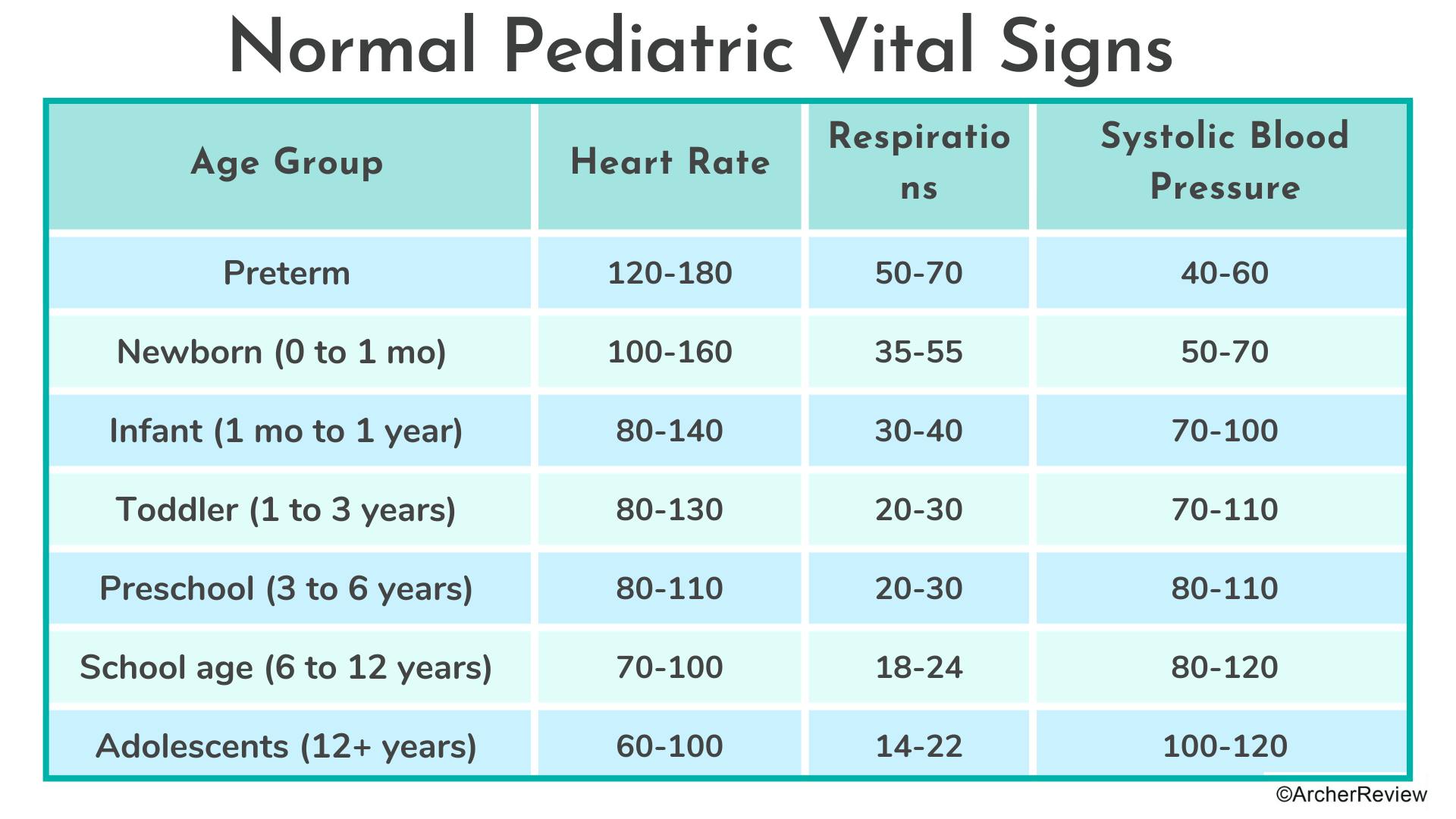
The nurse working in a pediatric unit is assessing the vital signs of a one-year-old client.
Which of the following findings requires follow-up?
The nurse working in a pediatric unit is assessing the vital signs of a one-year-old client.
Which of the following findings requires follow-up?
A. A respiratory rate of 30 breaths per minute
[12%]
B. An axillary temperature of 99.0 degrees Fahrenheit (37.2 degrees Celsius)
[11%]
C. Blood pressure of 126/90 mmHg
[69%]
D. Heart rate of 120 beats per minute
[9%]
Statistics
Subject/Lesson
Subject
Child Health
Lesson
Growth & Development
Client Need
Test Plan
Reduction of Risk Potential
Related Topic
Changes/Abnormalities in Vital Signs
Item Type
Item Type
Knowledge/Comprehension
Explanation
Choice C is correct. The finding of a blood pressure that is 126/90 mmHg is high for a one-year-old infant. The normal blood pressure of an infant this age can vary from a systolic pressure of 70-110 mmHg and a diastolic pressure of 50-70 mmHg.
Choice A is incorrect. 30 breaths per minute for an infant. The normal range for a one-year-old child is 20 to 30 breaths per minute.
Choice B is incorrect. 99.0 degrees Fahrenheit (37.2 degrees Celsius) is within normal limits. Fever can be determined if the client's temperature reaches above 38°C [101°F] orally, above 38.9°C [102°F] rectally, or above 37.8°C [100°F] or higher taken axillary [armpit].
Choice D is incorrect. 120 bpm is a typical result for a child of this age. The normal heart rate range for infants of 12 months is 80 to 130 beats per minute.
Related Videos
4 Key Topics
Pediatric Vital Signs
31.1 Immediate Newborn Evaluation
Measuring Vital Signs