During the initial assessment at a well-baby clinic, parents of a newborn ask the nurse when to begin introducing solid foods to their infant. The nurse replies that the recommended time solid foods should be introduced is:
During the initial assessment at a well-baby clinic, parents of a newborn ask the nurse when to begin introducing solid foods to their infant. The nurse replies that the recommended time solid foods should be introduced is:
A. One year
[16%]
B. Two months
[0%]
C. Three months
[3%]
D. Six months
[80%]
Statistics
Subject/Lesson
Subject
Child Health
Lesson
Growth & Development
Client Need
Test Plan
Health Promotion and Maintenance
Related Topic
Development Stages and Transitions
Item Type
Item Type
Knowledge/Comprehension
Explanation
Choice D is correct. According to the American Academy of Pediatrics (AAP), an exclusive breastfeeding diet for a minimum of six months with the introduction of appropriate solid foods occurring around six months of age while breastfeeding continues. Beyond one year, breastfeeding should ideally continue for as long as both the infant and mother desire, although after one year, breastfeeding should complement a complete diet of solid foods and fluids. Therefore, the nurse should reply that the recommended time solid foods should be introduced to their child is six months of age.
Choice A is incorrect. Infants should be introduced to solid foods well before one year of age. By twelve months, fine motor skills improve, allowing children to grasp pieces of food between two fingers.
Choice B is incorrect. According to the American Academy of Pediatrics (AAP), breastfeeding should ideally occur exclusively for the initial six months. An infant's sucking reflex remains intact at two months, and the gastrointestinal and immune systems remain immature. Due to these factors, introducing solid food at two months of age would be inappropriate.
Choice C is incorrect. According to the American Academy of Pediatrics (AAP), breastfeeding should ideally occur exclusively for the initial six months. Similar to the above answer, the infant's sucking reflex remains intact at three months of age, and the gastrointestinal and immune systems remain immature. Due to these aspects, introducing solid food at three months of age would be improper.
Learning Objective
When parents of a newborn ask when to begin introducing solid foods to their infant, identify the correct response as six months of age.
Related Videos
2 Key Topics
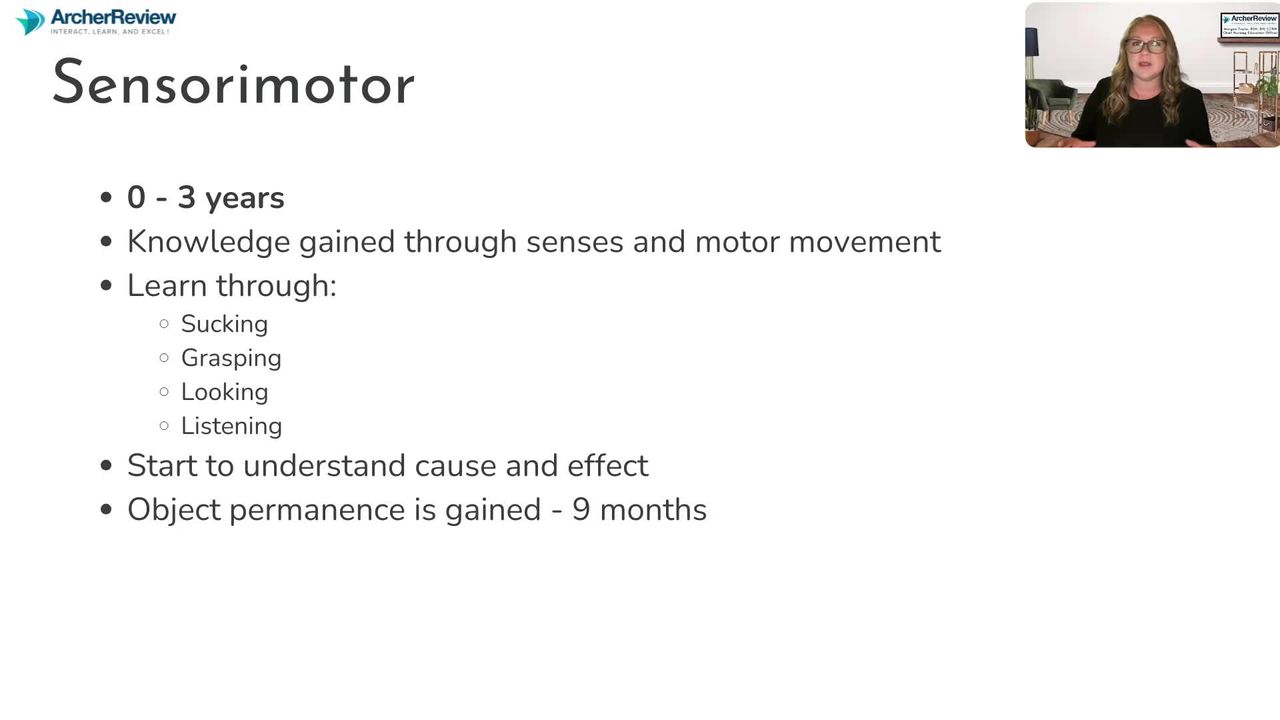
Infant Milestones
14.7 Infant Growth and Development
Additional Info
✓ Although some organizations state "four to six months" as the time to introduce foods to infants, both the American Academy of Pediatrics (AAP) and the World Health Organization (WHO) recommend that complementary foods be introduced around six months of age.
✓ According to the American Academy of Pediatrics (AAP), "introduce solid foods around six months of age."
✓ According to the World Health Organization, "Around the age of six months, an infant's need for energy and nutrients starts to exceed what is provided by breast milk, and complementary foods are necessary to meet those needs. An infant of this age is also developmentally ready for other foods."
