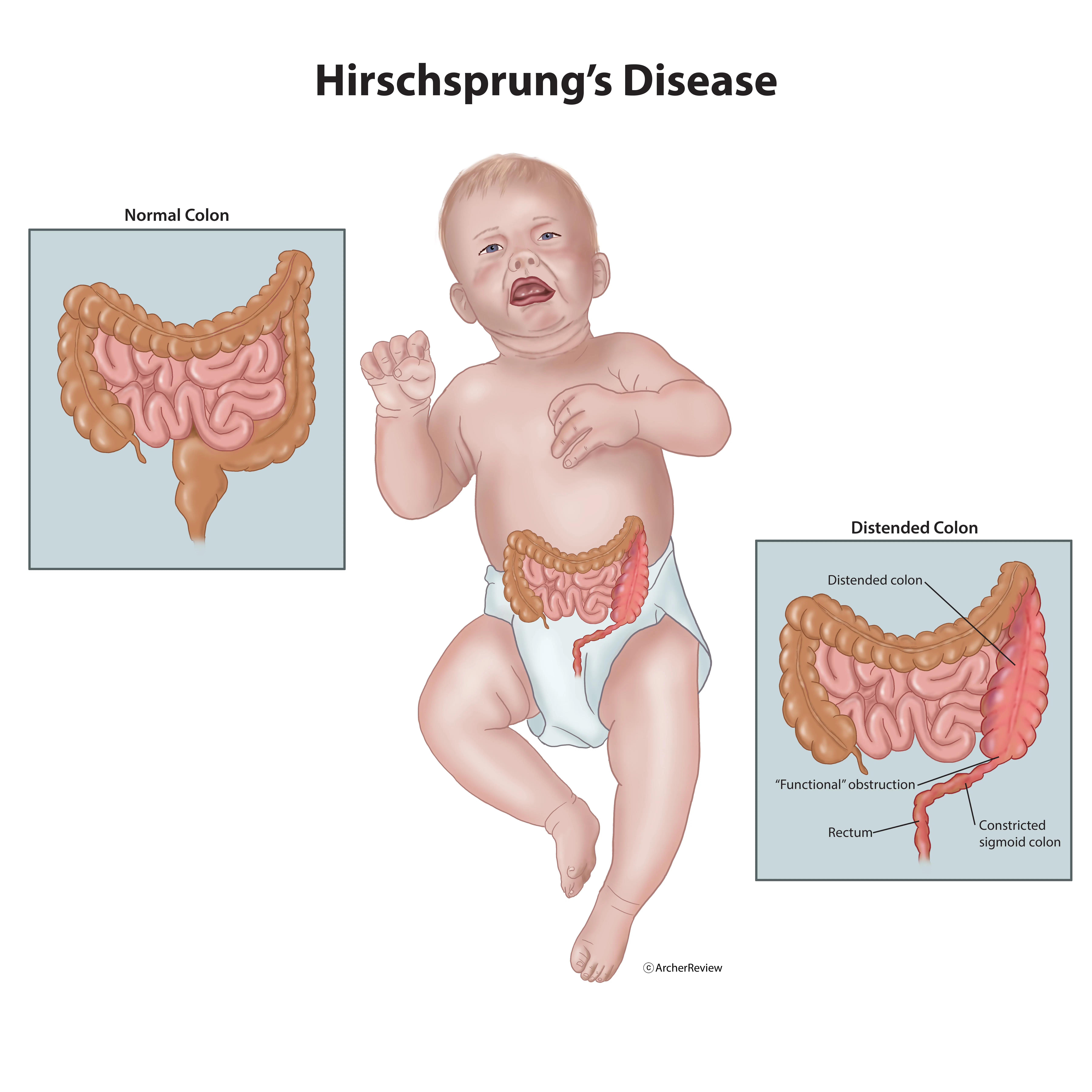
The nurse is assessing a neonate with Hirschsprung’s disease. Which of the following would be an expected finding?
The nurse is assessing a neonate with Hirschsprung’s disease. Which of the following would be an expected finding?
A. abdominal distention
[61%]
B. urinary retention
[2%]
C. hematemesis
[5%]
D. palpable abdominal mass
[31%]
Statistics
Subject/Lesson
Subject
Child Health
Lesson
Gastrointestinal
Client Need
Test Plan
Physiological Adaptation
Related Topic
Alterations in Body Systems
Item Type
Item Type
Knowledge/Comprehension
Explanation
Choice A is correct. Neonatal manifestations of Hirschsprung's disease include failure to pass meconium within the first 24 to 48 hours of life, constipation, abdominal distention, and poor feeding.
Choice B is incorrect. Urinary retention is not a manifestation consistent with Hirschsprung's disease. Urinary retention may be a finding associated with benign prostatic hyperplasia.
Choice C is incorrect. Hematemesis is not a manifestation consistent with Hirschsprung's disease. This may be a finding associated with gastrointestinal bleeding.
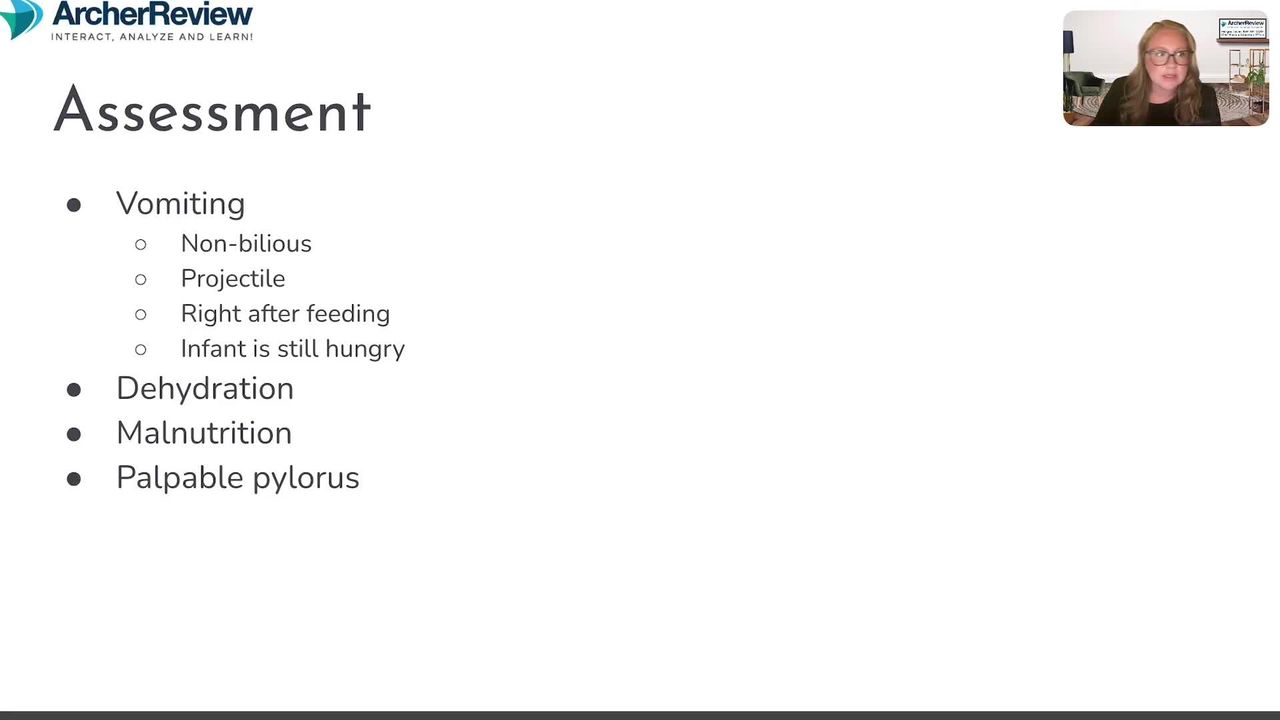
Choice D is incorrect. A palpable abdominal mass is a finding consistent with congenital pyloric stenosis. Pyloric stenosis occurs in infants under six months and often results in forceful vomiting, which can lead to metabolic alkalosis. The thickening of the circumferential muscle of the pyloric sphincter causes this vomiting and palpable abdominal mass.
Related Videos
2 Key Topics
Hirschsprung's
31.11 GI Obstructions & Abdominal Wall Defects
Additional Info
✓ Hirschsprung’s disease is a congenital gastrointestinal disorder where the distal colon does not have functional ganglionic cells; therefore, the client does not have effective peristalsis.
✓ Several complications associated with this disease include enterocolitis which may progress to toxic megacolon.
✓ Clinical features of enterocolitis (fever, explosive and foul-smelling diarrhea, abdominal pain) should be reported immediately to the PHCP.