The nurse is caring for an infant client with gastroesophageal reflux. At the beginning of the shift, a new prescription for thickened feedings was received to help decrease the infant's passive regurgitation. Which of the following signs would indicate the effectiveness of the intervention?
The nurse is caring for an infant client with gastroesophageal reflux. At the beginning of the shift, a new prescription for thickened feedings was received to help decrease the infant's passive regurgitation. Which of the following signs would indicate the effectiveness of the intervention?
A. Increased stools
[4%]
B. Decreased urine output
[0%]
C. Absence or decrease of regurgitation
[86%]
D. Weight gain
[9%]
Statistics
Subject/Lesson
Subject
Child Health
Lesson
Gastrointestinal
Client Need
Test Plan
Basic Care and Comfort
Related Topic
Nutrition and Oral Hydration
Item Type
Item Type
Application
Explanation
Choice C is correct. During infancy, passive regurgitation is the most common clinical manifestation of gastroesophageal reflux. Thickened feedings are given to the client to decrease the reflux of gastric contents back into the esophagus and subsequently prevent regurgitation. Therefore, an absence or decrease of the client's regurgitation symptoms would indicate the effectiveness of the intervention.
Choice A is incorrect. Thickened feedings will not affect the stools of the infant client.
Choice B is incorrect. The thickening agents will not affect the infant client's urinary system.
Choice D is incorrect. Since this intervention was initiated at the onset of this shift, weight gain is not anticipated. Over time, thickened feedings may result in weight gain due to a decrease in the client's gastroesophageal reflux.
Learning Objective
When caring for an infant client with gastroesophageal reflux who began receiving thickened feedings at the beginning of this shift to help decrease passive regurgitation, recognize that an absence or decrease of the client's regurgitation symptoms would indicate the effectiveness of this intervention.
Related Videos
2 Key Topics
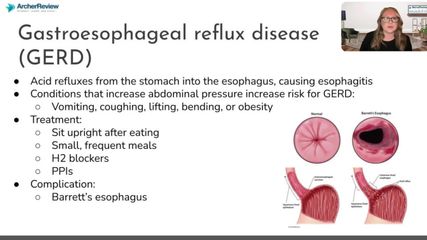
GERD
20.5 Esophageal & Gastric Disorders
Additional Info
- Gastroesophageal reflux (GER) is the transfer of gastric contents into the esophagus, occurring throughout the day, most frequently after meals and at night.
- It is important to differentiate gastroesophageal reflux (GER) from gastroesophageal reflux disease (GERD), as GERD represents symptoms or tissue damage that results from GER.
- Regurgitation generally resolves spontaneously in most infants by 12 months and almost all infants by 24 months.
- In addition to thickened feedings, upright positioning may also assist in relieving gastroesophageal reflux symptoms in infant clients.
