The nurse in the pediatric intensive care unit (PICU) is caring for 3-month old female client.
Item 1 of 1
- Progress Note
1315: The child will be admitted to the PICU from the emergency department (ED) due to multiple hypercyanotic episodes at home. Over the past three days, the child has experienced two spells per day, one of which was so severe that the parents nearly initiated CPR. Parents are concerned about the lack of weight gain. Surgical repair had been scheduled for next month; however, we will defer to cardiology for any updated recommendations regarding surgery.
- Medical History
- Fetal alcohol syndrome
- Tetralogy of Fallot
- Premature, born at 35 gestational weeks
- Weight
4.9 kilograms (10.78 pounds)
The nurse in the PICU plans care for this client.
For each potential nursing intervention, click to specify whether the intervention is indicated or not indicated for the care of the client.
Note: Each row must have one (1) response option selected.

The nurse in the PICU plans care for this client.
For each potential nursing intervention, click to specify whether the intervention is indicated or not indicated for the care of the client.
Note: Each row must have one (1) response option selected.
| Potential Interventions | Indicated | Not Indicated |
|---|---|---|
Supervise the infant's 'tummy time' | ||
Monitor serum hemoglobin and hematocrit | ||
Request an order for a low-calorie formula | ||
Feed the infant slowly and at infrequent intervals | ||
Bathe the infant more frequently | ||
Request an order for intravenous (IV) morphine sulfate | ||
Dim the lights and play soothing music | ||
Request an order for propranolol | ||
Adjust the room temperature so it is cold | ||
Position the infant prone for sleeping |
Statistics
Subject/Lesson
Subject
Child Health
Lesson
Cardiovascular
Client Need
Test Plan
Physiological Adaptation
Related Topic
Illness Management
Item Type
Item Type
GenerateSolutions
Explanation
Interventions Indicated
- Supervise the infant's 'tummy time'
'Tummy time' promotes motor development; must be supervised due to the risk of hypoxia or poor tone related to FAS and cyanotic episodes. 'Tummy time' is not contraindicated for infants with TOF and should be supervised.
- Monitor serum hemoglobin and hematocrit
Anemia can worsen TOF and trigger hypercynatonic episodes. Infants and children with TOF may have developed compensatory polycythemia.
- Request an order for intravenous (IV) morphine sulfate
The nurse should request an order for morphine sulfate, as this medication is helpful for individuals experiencing a hypercyanotic episode. Morphine sulfate reduces respiratory drive and systemic venous return, helping terminate "tet spells." Combined with position changes and oxygen, this intervention is a staple in managing hypercyanotic/'tet' spells.
- Dim the lights and play soothing music
A hypercyanotic episode can be triggered by stress and crying. This intervention reduces environmental stress that may trigger a hypercyanotic episode.
- Request an order for propranolol
Propranolol is a beta-blocker that helps prevent or manage hypercyanotic spells by reducing infundibular spasm. Beta-blockers are commonly used in the management of TOF.
Interventions Not Indicated
- Request an order for a low-calorie formula
This infant needs high-calorie formula due to poor weight gain and increased metabolic demand.
- Feed the infant slowly and at infrequent intervals
Slow feeds are helpful, but frequent, small-volume feeds are preferred to reduce fatigue and maintain caloric intake.
- Bathe the infant more frequently
Bathing can increase metabolic demand and stress, which may precipitate a hypercyanotic spell.
- Adjust the room temperature so it is cool
Infants should be kept warm to reduce oxygen demand; a neutral thermal environment is essential. Infants who get cold have an increased oxygen demand, which may trigger a hypercyanotic episode.
- Position the infant prone for sleeping
This is not indicated because of the risk of SIDS. Supine is the recommended sleep position. Prone may be used for play only under supervision
NCLEX Strategy Spotlights
Related Videos
2 Key Topics
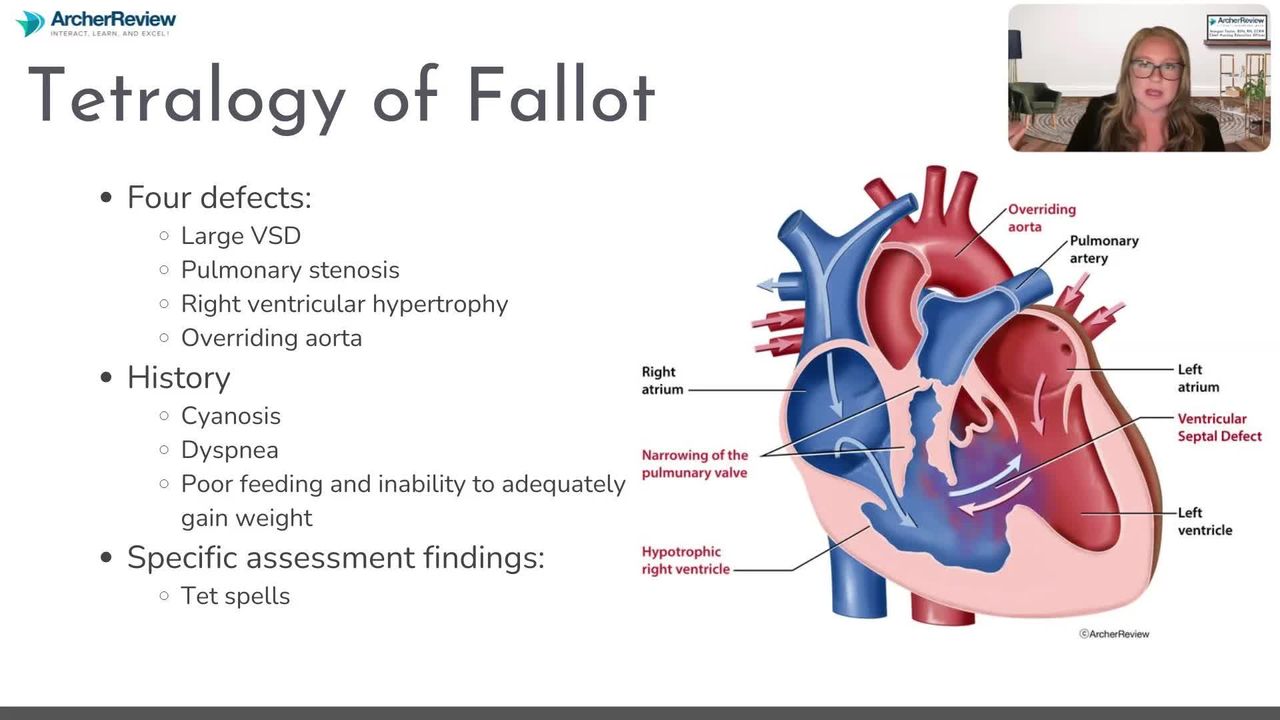
Tetralogy of Fallot (TOF)