The nurse is triaging a client who reports recent international travel. The primary healthcare provider (PHCP) suspects the client may have severe acute respiratory syndrome (SARS). The nurse should initially
The nurse is triaging a client who reports recent international travel. The primary healthcare provider (PHCP) suspects the client may have severe acute respiratory syndrome (SARS). The nurse should initially
A. place the client on contact and airborne precautions.
[79%]
B. obtain blood, urine, and sputum for culture.
[10%]
C. prepare the client for a chest radiograph (x-ray).
[7%]
D. infuse 0.9 saline at 100mL/hr.
[3%]
Statistics
Subject/Lesson
Subject
Adult Health
Lesson
Infectious Disease
Client Need
Test Plan
Physiological Adaptation
Related Topic
Illness Management
Item Type
Item Type
Application
Explanation
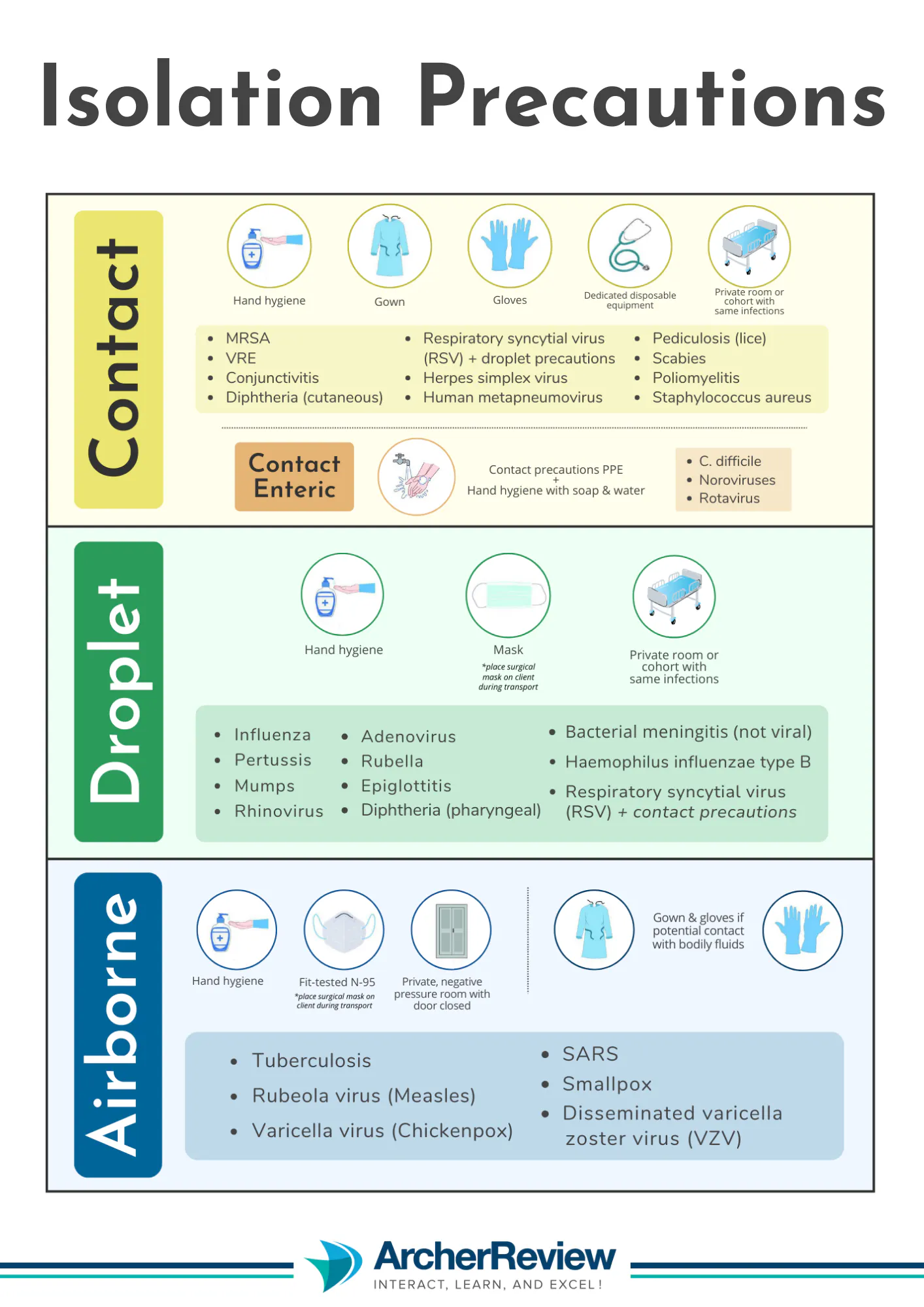
Choice A is correct. SARS can be potentially deadly, and the nurse's first action should be to initiate transmission-based precautions to protect others from infection. If an airborne isolation room is unavailable in the emergency department, droplet precautions should be commenced until the client can be moved to a negative-pressure room. SARS is spread through infected aerosolized droplets that may be transmitted when a person coughs, sneezes, or spits when they talk. Other people may get the virus by touching something that comes in contact with the droplets, then touching their nose, eyes, or mouth. Airborne and contact precautions are highly recommended for SARS over droplet isolation.
Choices B, C, and D are incorrect. The actions are appropriate for a client with SARS but do not prioritize keeping other individuals safe by implementing transmission-based precautions. Dehydration is common with SARS, and fluid replacement is a common treatment. Further, cultures will need to be obtained as well as a chest x-ray to see the extent of the infection.
Related Videos
3 Key Topics
Transmission based precautions- Immune System
23.3 Infection Control & Infectious Diseases
Additional Info