The nurse is caring for a client immediately following an abdominal paracentesis
Item 1 of 1
- Procedure Note
1845 - Emergency ultrasound-guided abdominal paracentesis was performed because the client presented with labored respirations, dyspnea, abdominal cramping, and overall discomfort. Informed consent was obtained, and the client agreed to the procedure. Prior to the procedure, the client emptied their bladder. The site was cleaned and numbed with 1% lidocaine, and using an aseptic technique and an ultrasound; a 14-gauge catheter was inserted to remove 10 mL of clear ascitic fluid. Subsequently, the fluid was drained via tubing. 6 liters of fluid were removed. The client tolerated the procedure well and reported immediate relief in the dyspnea and abdominal cramping following the procedure.
The nurse reviews the procedure note and plans care for the client
Complete the sentences below from the list of options
The nurse reviews the procedure note and plans care for the client
Complete the sentences below from the list of options
Immediately following this procedure, the nurse should monitor the client's

because the client has the risk of

If the client should experience this immediate post-procedure complication, the nurse should anticipate a prescription for

Statistics
Subject/Lesson
Subject
Adult Health
Lesson
Gastrointestinal
Client Need
Test Plan
Reduction of Risk Potential
Related Topic
Potential for Complications of Diagnostic Tests/Treatments/Procedures
Item Type
Item Type
GenerateSolutions
Explanation
The client had six liters of fluid drained from their peritoneal cavity. This is a significant volume (any volume > 5 liters is considered a large abdominal paracentesis). The rapid fluid removal could cause a fluid shift; therefore, the nurse should be prepared to monitor the client for post-procedure hypotension. This hypotension can be treated by infusing prescribed albumin, a colloid. This colloid will restore intravascular fluid volume, which shifted during the procedure. Infection is a concern associated with the procedure. However, it would not be an immediate post-procedure complication. The client emptied their bladder before this procedure, significantly decreasing the likelihood of bladder trauma.
NCLEX Strategy Spotlights
Related Videos
2 Key Topics
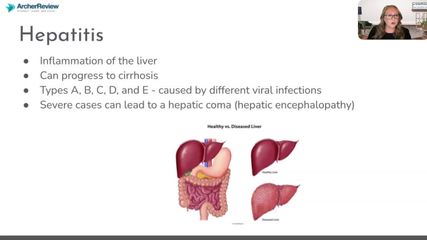
Cirrhosis
20.8 Liver Disorders & Failure
Additional Info
Abdominal paracentesis is performed for clients with gross ascitic fluid due to liver cirrhosis. Nursing care for an abdominal paracentesis includes -
➢ Witnessing informed consent that the primary healthcare provider obtains
➢ Assisting the client to void before the procedure
➢ Obtaining baseline vital signs
➢ Measure the abdominal girth
➢ Gather appropriate supplies (suction, tubing, paracentesis kit)
➢ Position the client per the physician's prescription. The positioning is likely upright to allow the fluid to settle in the lower abdominal quadrants.
➢ Monitor the client and the drainage
➢ Send the initial ascitic fluid to the lab for culture and sensitivity, as prescribed
➢ Reposition the client, as needed to facilitate better drainage
➢ Monitor the client's vital signs throughout and after the procedure
➢ Administer an infusion of albumin, as prescribed for large volume (> 5 liters) paracentesis
