The nurse is caring for a client with the following tracing on the electrocardiogram (ECG). It would be correct for the nurse to document this tracing as
See the tracing in the exhibit.
The nurse is caring for a client with the following tracing on the electrocardiogram (ECG). It would be correct for the nurse to document this tracing as
See the tracing in the exhibit.
A. sinus bradycardia.
[5%]
B. normal sinus rhythm with first degree block.
[15%]
C. atrial flutter.
[16%]
D. atrial fibrillation.
[64%]
Statistics
Subject/Lesson
Subject
Adult Health
Lesson
Cardiovascular
Client Need
Test Plan
Reduction of Risk Potential
Related Topic
Potential for Alterations in Body Systems
Item Type
Item Type
Analysis
Explanation
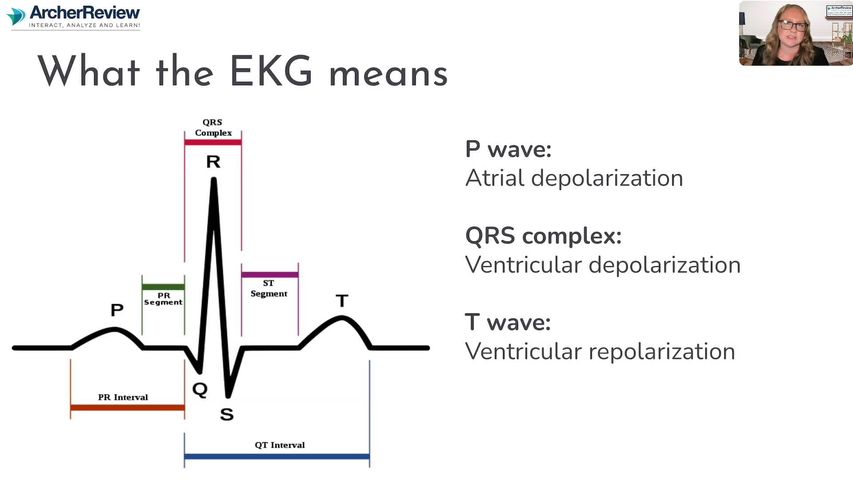
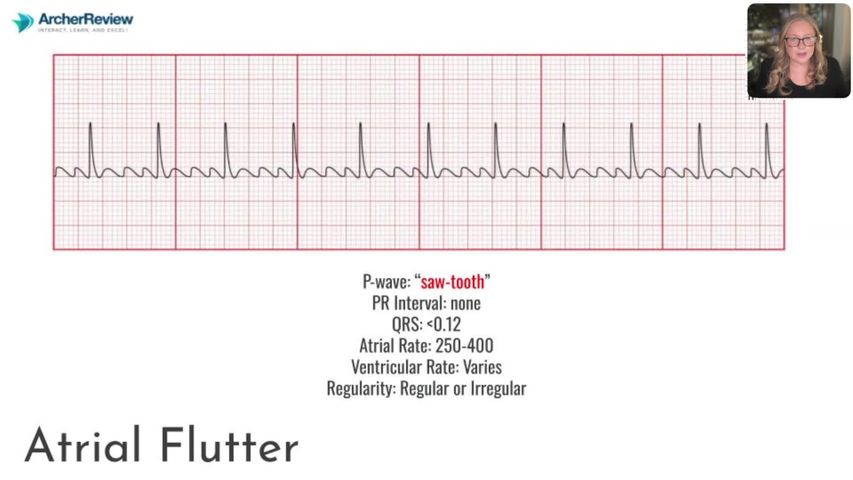
Choice D is correct. This tracing reflects atrial fibrillation. Atrial fibrillation characteristically has no definitive P-waves because fibrillatory waves replace them before each QRS.
Choices A, B, and C are incorrect. This tracing does not reflect these options because of the absence of P-waves, irregularity, and fibrillatory waves before the QRS making it atrial fibrillation.
Related Videos
6 Key Topics
EKGs
18.3 EKGs
Atrial Fibrillation
7.5 Atrial Dysrhythmias
Additional Info
✓ Atrial fibrillation is associated with atrial fibrosis and loss of muscle mass.
✓ These structural changes are common in heart diseases such as hypertension, heart failure, and coronary artery disease.
✓ Characteristically, atrial fibrillation is irregularly, irregular with no P-waves identified.
✓ The biggest complication of atrial fibrillation is stroke because of blood pooling in the atrium.
✓ Treatment options for atrial fibrillation include digoxin (not as commonly used), amiodarone, diltiazem, verapamil, or atenolol.
✓ The client may be prescribed an oral anticoagulant such as apixaban to prevent thrombosis.
✓ If medication is not desired, synchronized cardioversion may be prescribed.
