The nurse in charge of the labor and delivery department is making the client assignments for the day. Which client should the most experienced nurse receive?
The nurse in charge of the labor and delivery department is making the client assignments for the day. Which client should the most experienced nurse receive?
A. A 40-week pregnant client attached to the fetal monitor having late decelerations.
[83%]
B. A 39-week pregnant client in labor with contractions 3 minutes apart.
[7%]
C. A 33-week pregnant client with triplets who is on bed rest.
[6%]
D. A 26-week pregnant client who is having Braxton Hicks contractions.
[4%]
Statistics
Subject/Lesson
Subject
Leadership & Management
Lesson
Assignment/Delegation
Client Need
Test Plan
Management of Care
Related Topic
Assignment, Delegation and Supervision
Item Type
Item Type
Analysis
Explanation
Choice A is correct. Late decelerations are a sign of fetal distress, indicating that the life of the fetus is threatened. The most experienced nurse should be assigned to this client.
Choice B is incorrect. Labor contractions 3 minutes apart are a sign of normal progression of labor. This does not necessitate the most experienced nurse.
Choice C is incorrect. The client with triplets is not in any kind of imminent danger. This client would not need the most experienced nurse to take care of her.
Choice D is incorrect. Braxton Hicks contractions are not real contractions of labor. They are irregular and occur throughout the pregnancy. The most experienced nurse is not needed for this client.
Related Videos
4 Key Topics
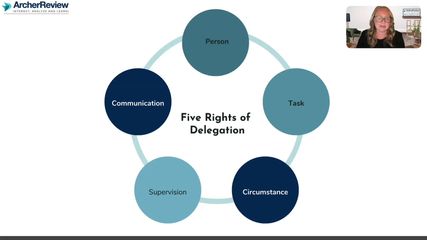
Five Rights of Delegation
15.7 Delegation
RN Delegation
15.7 Delegation
Additional Info
✓ Prioritizing client care helps ensure that clients with urgent or life-threatening conditions receive immediate attention. Promptly addressing critical situations can prevent complications, deterioration, or adverse outcomes, thereby enhancing client safety.
✓ Potential causes of Late Decelerations include:
- Uteroplacental Insufficiency
- Maternal Hypotension
- Uterine Hyperstimulation
- Maternal Hypoxemia
✓ Braxton Hicks contractions, also known as false labor contractions or practice contractions, are a common phenomenon experienced by pregnant individuals during the second and third trimesters of pregnancy.
