The charge nurse is supervising unlicensed assistive personnel (UAPs).
The charge nurse should immediately intervene when a UAP is observed
The charge nurse is supervising unlicensed assistive personnel (UAPs).
The charge nurse should immediately intervene when a UAP is observed
A. assisting a client with multiple sclerosis to shower.
[9%]
B. applying a condom catheter to a client who is incontinent.
[23%]
C. transporting a client with myocardial infarction to the cardiac catheterization lab.
[58%]
D. obtaining vital signs for a client with delirium.
[10%]
Statistics
Subject/Lesson
Subject
Leadership & Management
Lesson
Assignment/Delegation
Client Need
Test Plan
Management of Care
Related Topic
Assignment, Delegation and Supervision
Item Type
Item Type
Analysis
Explanation
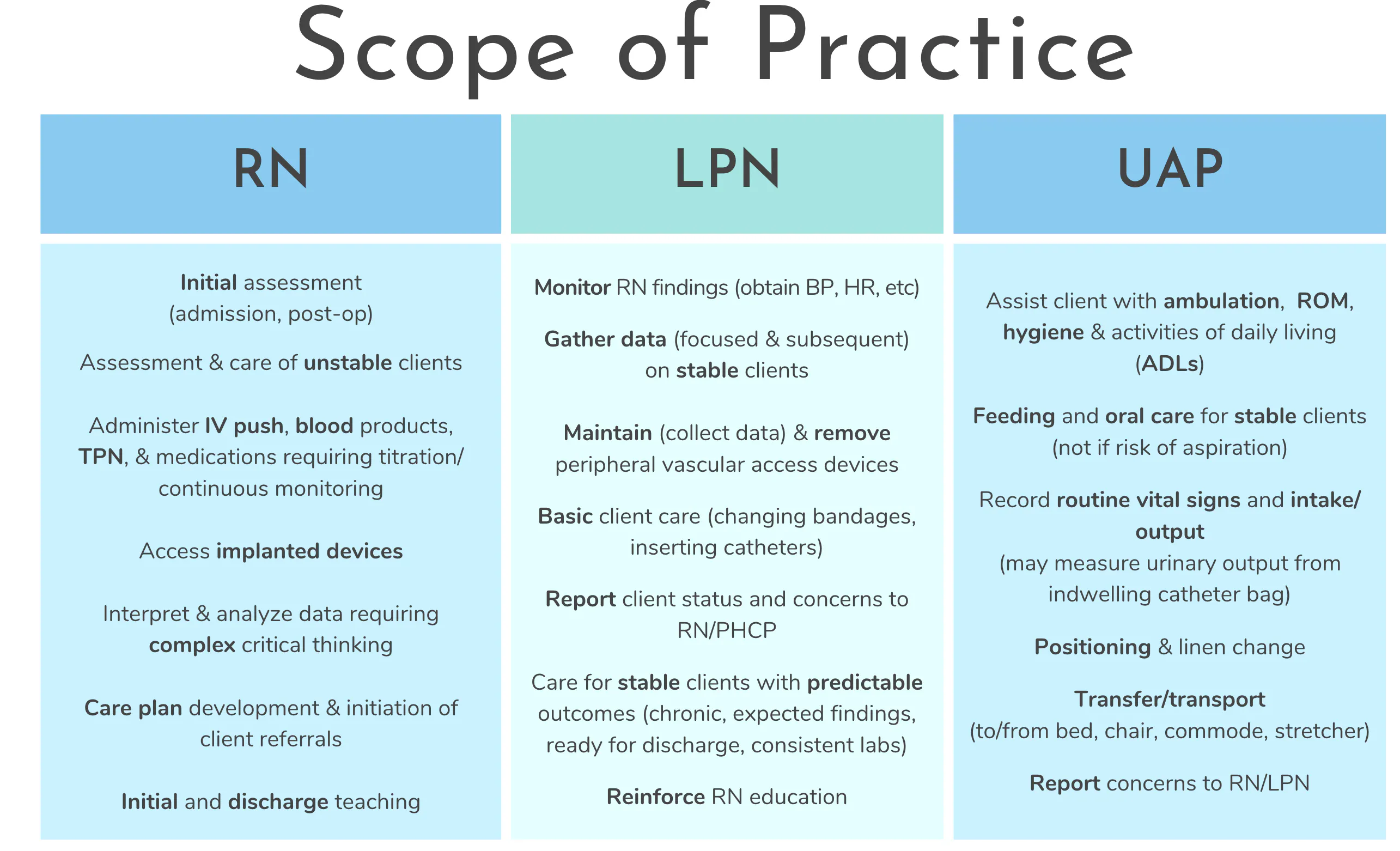
Choice C is correct. This action requires immediate intervention by the charge nurse because it involves a client with an unstable condition. UAPs are not trained to assess, monitor, or intervene in cases of acute medical conditions like MI. A registered nurse should transport the client because this client has a risk of dysrhythmias. It is appropriate for a UAP to transport a client, but not a client with an unstable medical condition such as myocardial infarction.
Choice A is incorrect. Assisting clients with activities of daily living (ADLs), such as showering, is a routine task that UAPs are typically delegated.
Choice B is incorrect. UAPs are often delegated the task of applying a condom catheter, as it involves basic care and does not require clinical decision-making. This is an appropriate task for a UAP.
Choice D is incorrect. The UAP should not be expected to manage delirium but can contribute by accurately obtaining and reporting vital signs. Vital signs are a routine task that can be delegated to a UAP.
Related Videos
2 Key Topics
UAP Delegation
15.7 Delegation
Additional Info