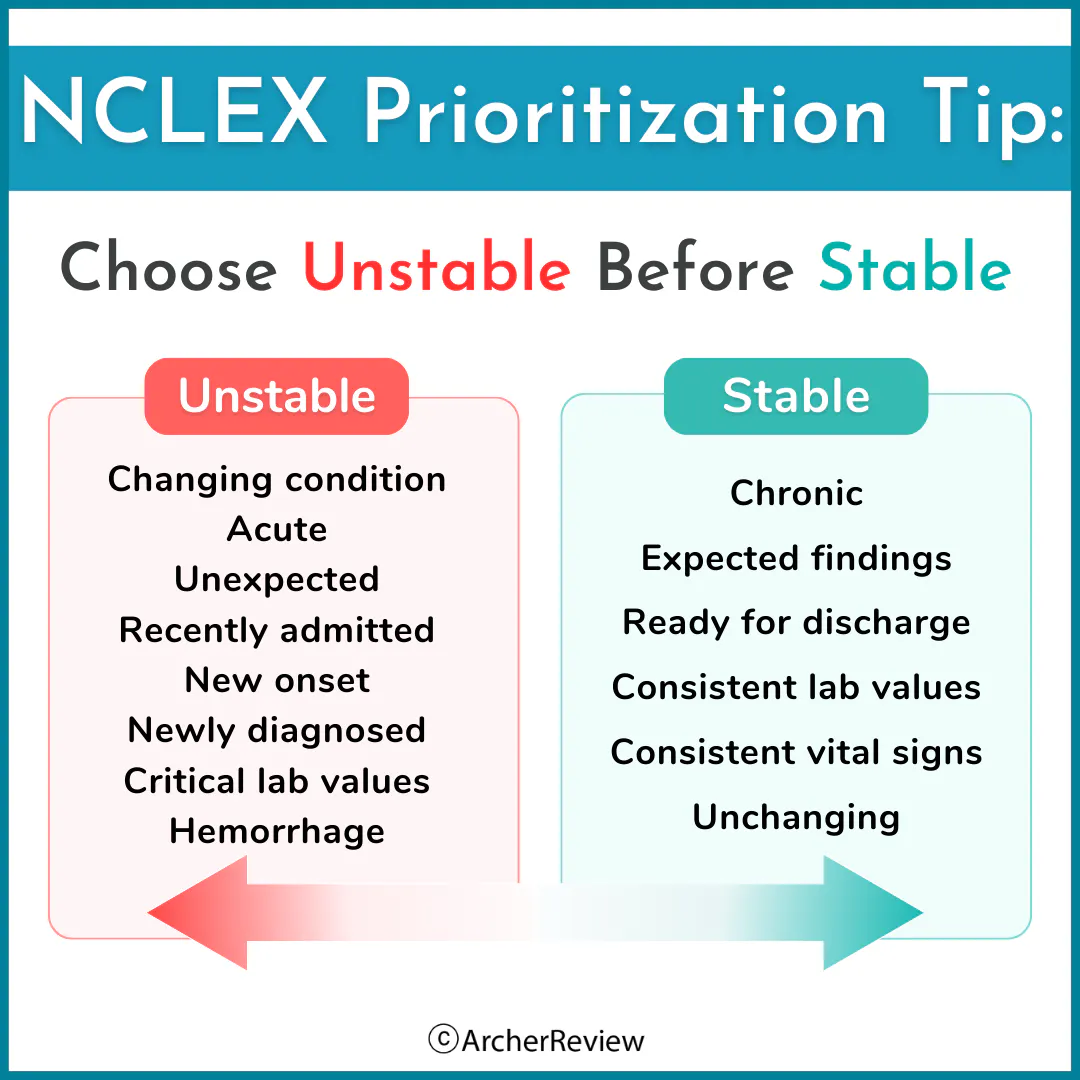
The nurse is caring for the following assigned clients. The nurse should initially follow-up with the client who is
The nurse is caring for the following assigned clients. The nurse should initially follow-up with the client who is
A. thirty minutes overdue to be ambulated in the hallway.
[12%]
B. refusing to eat their meal following an injection of glargine insulin.
[24%]
C. scheduled for discharge in three hours and needs transportation.
[1%]
D. requesting diphenhydramine after starting an intravenous antibiotic.
[63%]
Statistics
Subject/Lesson
Subject
Leadership & Management
Lesson
Management Concepts
Client Need
Test Plan
Management of Care
Related Topic
Establishing Priorities
Item Type
Item Type
Analysis
Explanation
Choice D is correct. A client requesting diphenhydramine following the initiation of an antibiotic requires immediate follow-up because the client could be experiencing an allergic reaction ranging from mild to severe. Thus, the nurse should quickly assess the client.
Choice A is incorrect. Ambulation is key to a client's recovery as this promotes good pulmonary function and lessens the risk of venous thromboembolism. However, this does not prioritize a client receiving a medication and requires diphenhydramine, which strongly implies that the client is experiencing an allergic reaction.
Choice B is incorrect. Meals are unnecessary for an individual receiving glargine insulin as this long-acting insulin does not peak.
Choice C is incorrect. Finally, arranging discharge transportation is a low-priority item for the nurse. The nurse must attend to the client requesting an antihistamine (diphenhydramine) after initiating another medication.
Related Videos
2 Key Topics

ABCs: Airway
15.5 Prioritization Part 1
Additional Info
✓ If a client is experiencing anaphylaxis, the nurse should promptly stop the antibiotic, activate the rapid response team, and administer prescribed epinephrine – not diphenhydramine, as it is ineffective for upper airway closure.
✓ Diphenhydramine is an anticholinergic medication intended for minor to moderate allergies.