You are caring for a group of psychiatric mental health clients. One of these clients, who has anger management and aggressive behavior concerns, has not yet gained telephone privileges. You notice an unlicensed assistive personnel (UAP) on the unit escorting this client to the telephone. After you speak to the client about the telephone privileges, the UAP tells you, "It is unfair for this client not to be able to use the telephone when other clients are free to do so." What should you determine about this UAP's comment?
You are caring for a group of psychiatric mental health clients. One of these clients, who has anger management and aggressive behavior concerns, has not yet gained telephone privileges. You notice an unlicensed assistive personnel (UAP) on the unit escorting this client to the telephone. After you speak to the client about the telephone privileges, the UAP tells you, "It is unfair for this client not to be able to use the telephone when other clients are free to do so." What should you determine about this UAP's comment?
A. This comment demonstrates that the unlicensed assistive personnel (UAP) favors this client.
[4%]
B. This comment indicates that the unlicensed assistive personnel (UAP) is ensuring equal rights.
[23%]
C. This comment indicates that the unlicensed assistive personnel (UAP) is preventing discrimination.
[4%]
D. This comment indicates a learning need for the unlicensed assistive personnel (UAP) relating to the therapeutic milieu.
[69%]
Statistics
Subject/Lesson
Subject
Leadership & Management
Lesson
Ethical/Legal
Client Need
Test Plan
Management of Care
Related Topic
Ethical Practice
Item Type
Item Type
Analysis
Explanation
Choice D is correct. This comment indicates a learning need for this unlicensed assistive personnel (UAP) relating to the therapeutic milieu. A therapeutic milieu has consistent boundaries that are adhered to by all members of the healthcare team. Milieu therapy takes advantage of the naturally occurring events in the client's environment to utilize these events as learning opportunities for clients. A consistent routine and structure are maintained to provide clients with predictability and trust.
Choice A is incorrect. Nothing about this comment indicates this unlicensed assistive personnel (UAP) favors this client over any other client who has not received telephone privileges at this point. Therefore, the statement should not be construed as such.
Choice B is incorrect. Although it may initially appear that the unlicensed assistive personnel (UAP) is ensuring the equal rights of all clients, this action indicates that this unlicensed assistive personnel (UAP) is not only not adhering to the client's established boundaries, but lacks a fundamental understanding of the therapeutic milieu. Of note, according to federal law, under certain instances, a mental health care provider (HCP) may restrict a client's rights to mail, telephone, and/or visitors, but only with a written order that must be periodically reviewed for renewal.
Choice C is incorrect. Nothing about the current fact pattern, the client's current telephone restriction, and/or the unlicensed assistive personnel's (UAP) actions appear to be related to the prevention of discrimination. Instead, the action by this unlicensed assistive personnel (UAP) to not adhere to the client's established boundaries demonstrates a lack of fundamental understanding of the therapeutic milieu.
Learning Objective
Recognize the unlicensed assistive personnel's (UAP) statement, "It is unfair for this client not to be able to use the telephone when other clients are free to do so," indicates a learning need relating to the therapeutic milieu.
Related Videos
2 Key Topics
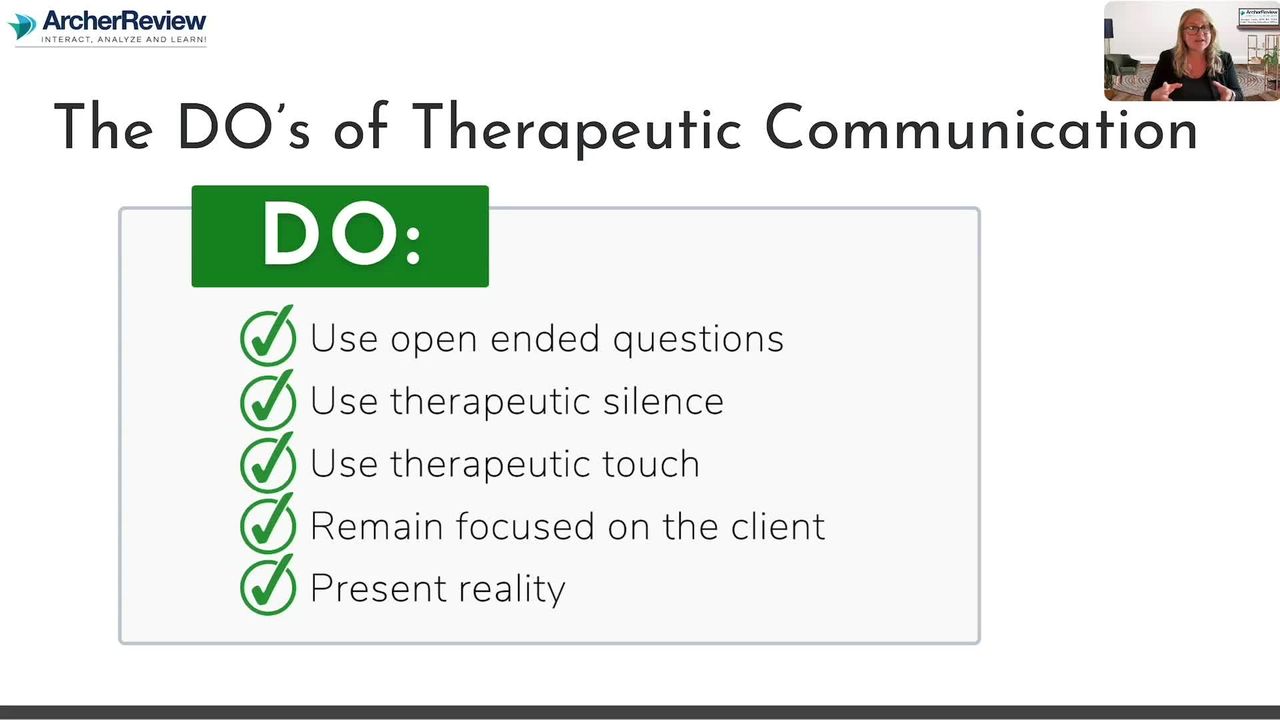
Therapeutic communication
13.3 Therapeutic Communication & Environment
Additional Info
✓ Clients in psychiatric units are generally guaranteed rights to writing materials, uncensored mail, confidential telephone calls, and visitors unless a mental health care provider (HCP) documents good cause for restricting these rights with a written order.
✓ Therapeutic milieu interventions provide a distinct, secure hospital ward/unit atmosphere where clients with mental illness receive therapeutic interactions and collaborative attentiveness.
✓ A therapeutic milieu is a nursing unit or other nursing practice setting's distinct nurse-created, nurse-led healing culture and atmosphere.
✓ Nurses working in a psychiatric ward are responsible for establishing a therapeutic environment by identifying the risks of harming oneself and others, allowing the clients to express their feelings, and providing a safe and comfortable milieu.
