The nurse is caring for a client who is asking about advanced directives. Many documents fall under the category of an advanced directive. The nurse knows that one of the most common legal papers is called 'Durable Power of Attorney for Health Care' and works to:
The nurse is caring for a client who is asking about advanced directives. Many documents fall under the category of an advanced directive. The nurse knows that one of the most common legal papers is called 'Durable Power of Attorney for Health Care' and works to:
A. Review a person’s personal preferences for medical care in the future.
[3%]
B. Authorize another person to make medical decisions for a person if they become unable to on their own.
[80%]
C. Assign a legal authority in making medical decisions while honoring the spoken word of the family.
[7%]
D. Define what care should be administered or withheld by health care professionals, no matter which medical facility the patient finds themselves in.
[10%]
Statistics
Subject/Lesson
Subject
Leadership & Management
Lesson
Ethical/Legal
Client Need
Test Plan
Management of Care
Related Topic
Advance Directives
Item Type
Item Type
Knowledge/Comprehension
Explanation
Choice B is correct. A 'Durable Power of Attorney for Health Care' authorizes a person to make medical decisions for the client if the client becomes unable to do so themselves due to a decrease in mental capacity or level of consciousness.
Choice A is incorrect. When a client and their healthcare team discuss their future medical preferences, they are creating a document known as a 'living will.'
Choice C is incorrect. If a legal authority is assigned to make medical decisions, as is the case with 'Durable Power of Attorney,' this person has full authority to make treatment decisions. If the family's opinions conflict with those of the assigned person, healthcare staff must prioritize the person with legal authority over family members.
Choice D is incorrect. This choice describes a guideline known as 'Physician Orders for Life-Sustaining Treatment' (POLST), which outlines the care that will be provided regardless of the healthcare facility where the client is located.
Related Videos
2 Key Topics
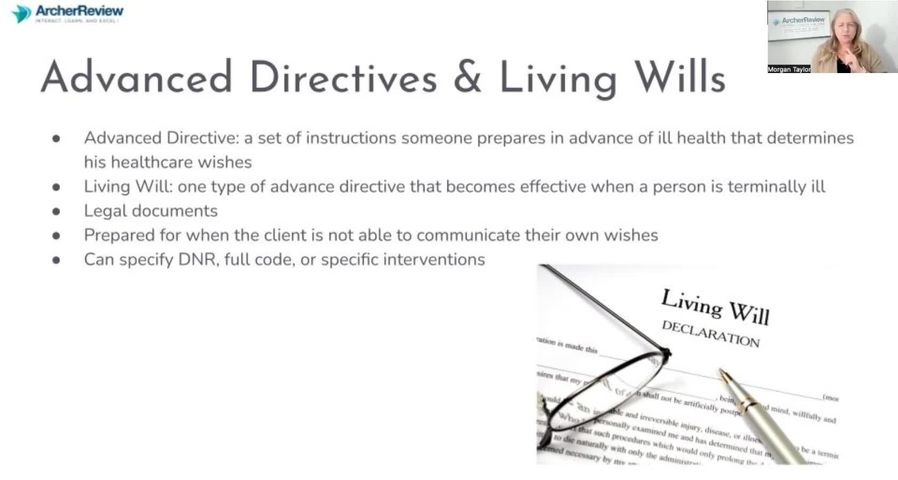
Advanced Directives & Living Wills
15.11 Legal & Ethical Decision-Making Tools
Additional Info
✓ Nurses should be culturally competent and sensitive to the client's beliefs and values. Different cultures and religions may have unique perspectives on healthcare decisions and end-of-life care. It's important to respect and incorporate these cultural and religious preferences into the client's care plan.
✓ Nurses should ensure the privacy and confidentiality of advance directive discussions and documents, respecting the client's right to confidentiality and sensitive information protection.
✓ Advance directives are not static documents. Nurses should encourage clients to review and update their advance directives periodically, especially if there are significant changes in their health status or personal preferences. This helps ensure that the directives align with the client's current wishes.
