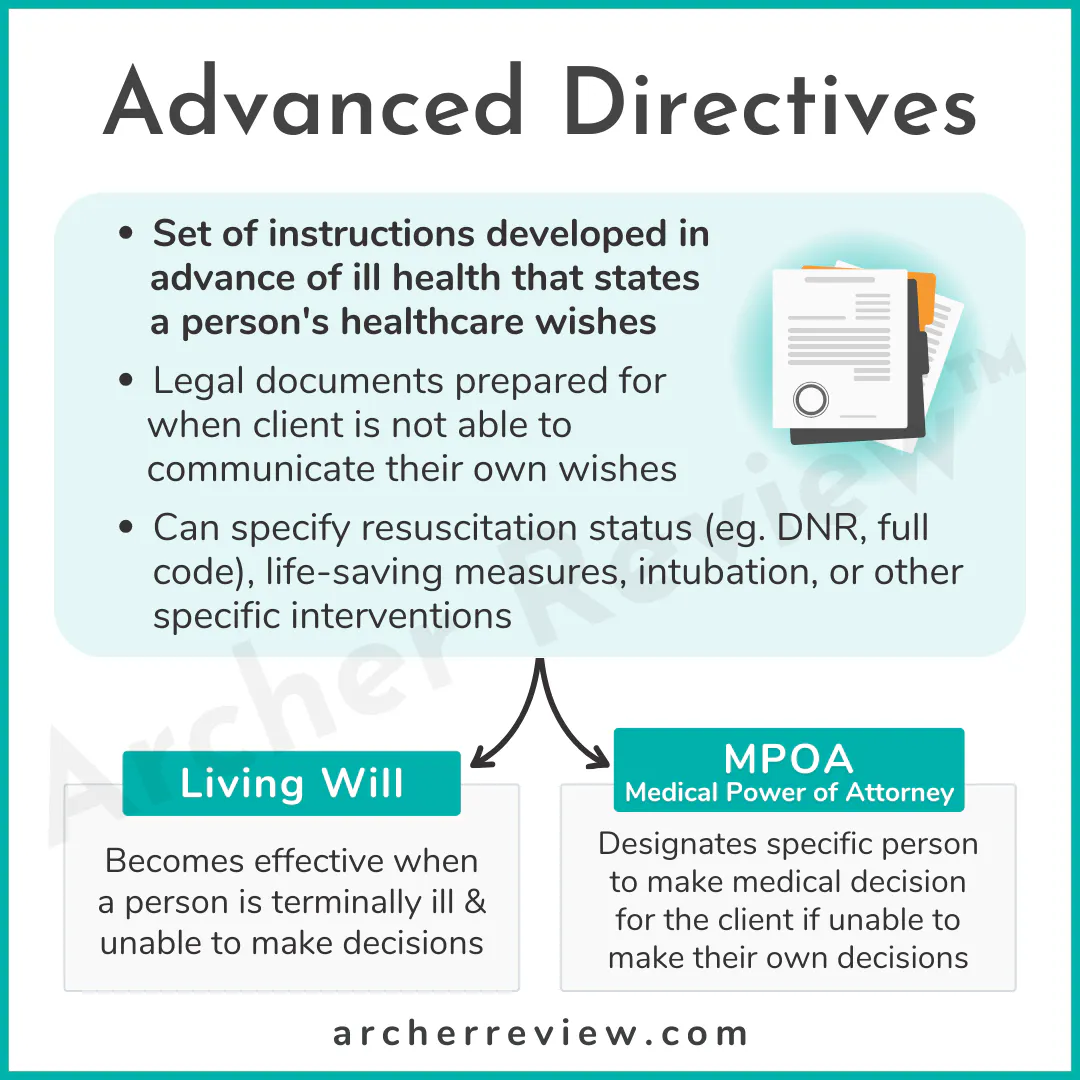
The nurse is discussing information about advanced directives with a client who expresses concerns, asking, “What if I change my mind about what I want?”
What approach would you use to respond to the client's care?
The nurse is discussing information about advanced directives with a client who expresses concerns, asking, “What if I change my mind about what I want?”
What approach would you use to respond to the client's care?
A. Explain that the client would have to file a new witnessed document in order to make any changes.
[13%]
B. Discuss the need to be very sure about his preferences, as the living will is a binding legal document.
[8%]
C. Assure the client that he can change or revoke his advanced directives at any time.
[79%]
D. Advise the client that changes could not be made during this hospital stay.
[0%]
Statistics
Subject/Lesson
Subject
Leadership & Management
Lesson
Ethical/Legal
Client Need
Test Plan
Management of Care
Related Topic
Advance Directives
Item Type
Item Type
Application
Explanation
Choice C is correct. The client may revoke either a living will or durable power of attorney at any time, and this can be done either verbally or in writing.
Choice A is incorrect. The client can revoke an advanced directive verbally; a newly written document is not required.
Choices B and D are incorrect. While the 'living will' is a legal document, advanced directives can be easily changed at any time, just by saying so verbally, or with a newly written report.
Blooms Taxonomy – Applying
Related Videos
2 Key Topics
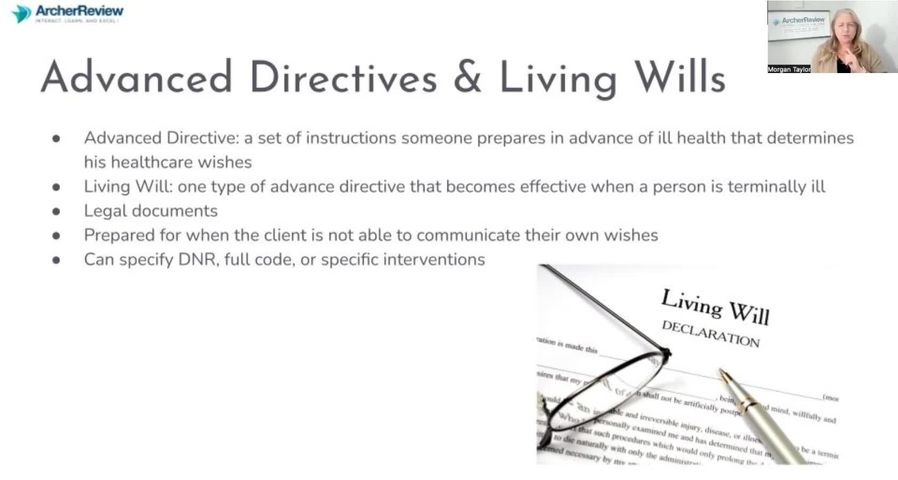
Advanced Directives & Living Wills