The nurse offers to stay late to assist the next shift because they are short-staffed.
Which ethical principle is the nurse demonstrating?
The nurse offers to stay late to assist the next shift because they are short-staffed.
Which ethical principle is the nurse demonstrating?
A. Non-maleficence
[8%]
B. Paternalism
[13%]
C. Beneficence
[68%]
D. Veracity
[10%]
Statistics
Subject/Lesson
Subject
Leadership & Management
Lesson
Ethical/Legal
Client Need
Test Plan
Management of Care
Related Topic
Ethical Practice
Item Type
Item Type
Analysis
Explanation
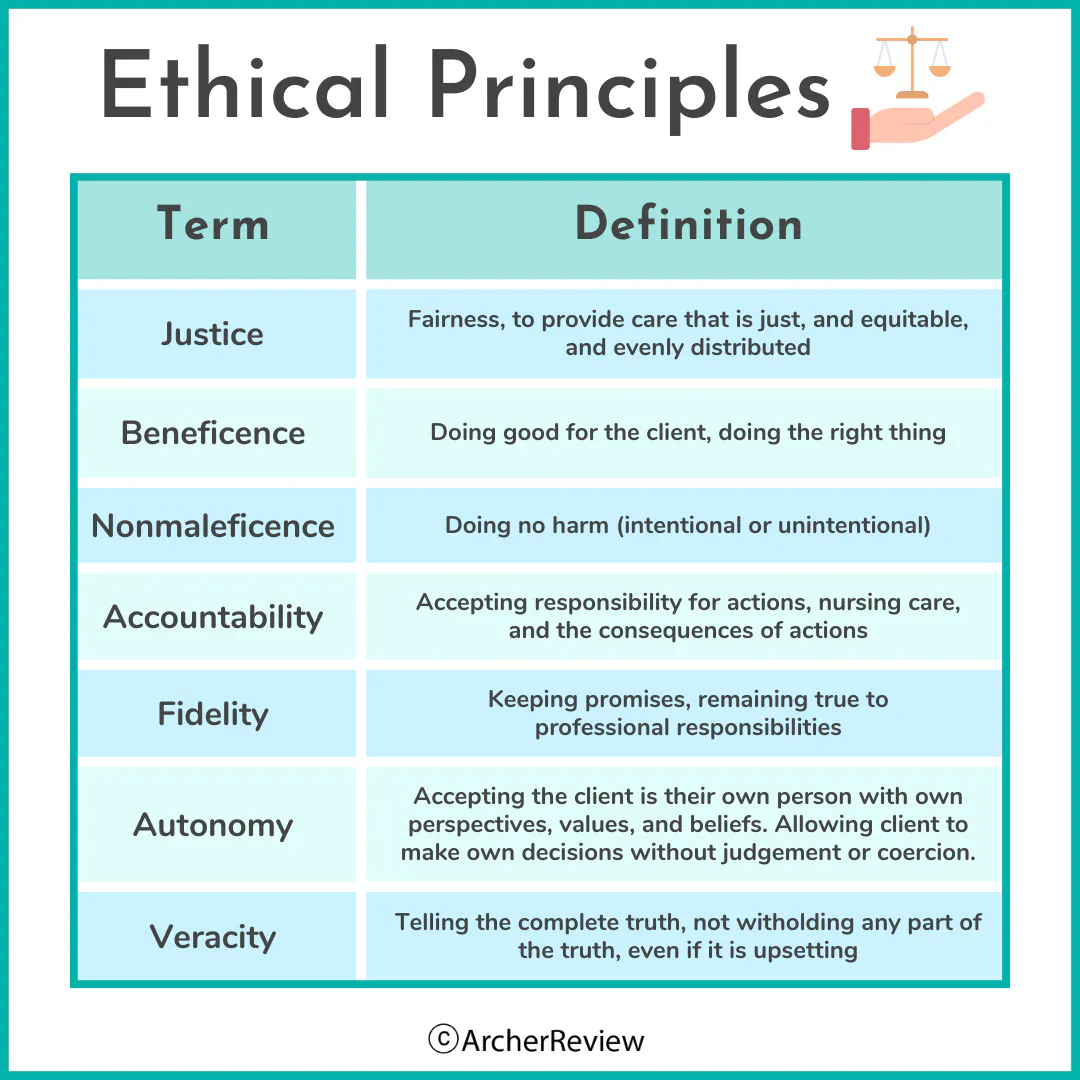
Choice C is correct. Beneficence refers to actions that promote the well-being of others and contribute to their welfare. By staying late to assist the next shift due to short staffing, the nurse is acting in a way that helps ensure patient care continues smoothly, demonstrating kindness and concern for both patients and colleagues.
Choice A is incorrect. Non-maleficence means "do no harm," ensuring that actions do not cause injury or suffering. While staying late helps the team, it is more about promoting well-being (beneficence) rather than preventing harm.
Choice B is incorrect. Paternalism occurs when a nurse or healthcare provider makes decisions for a client, believing it is in their best interest, even if it overrides the client's autonomy. In this scenario, the nurse is assisting colleagues voluntarily, not making decisions on behalf of a client.
Choice D is incorrect. Veracity refers to truthfulness and honesty in communication with clients and colleagues. The nurse's decision to stay late does not involve providing truthful information but rather an act of goodwill.
Related Videos
2 Key Topics
Beneficence
15.10 Ethical Principles in Healthcare
Additional Info