The nurse is assessing a 2-year-old client with the following symptoms: excessive drooling, stridor, difficulty swallowing, and difficulty speaking. Based on these assessment findings, which condition does the nurse suspect?
The nurse is assessing a 2-year-old client with the following symptoms: excessive drooling, stridor, difficulty swallowing, and difficulty speaking. Based on these assessment findings, which condition does the nurse suspect?
A. Croup
[6%]
B. Epiglottitis
[86%]
C. Laryngotracheal bronchitis
[7%]
D. Bronchiolitis
[1%]
Statistics
Subject/Lesson
Subject
Child Health
Lesson
Respiratory
Client Need
Test Plan
Physiological Adaptation
Related Topic
Alterations in Body Systems
Item Type
Item Type
Analysis
Explanation
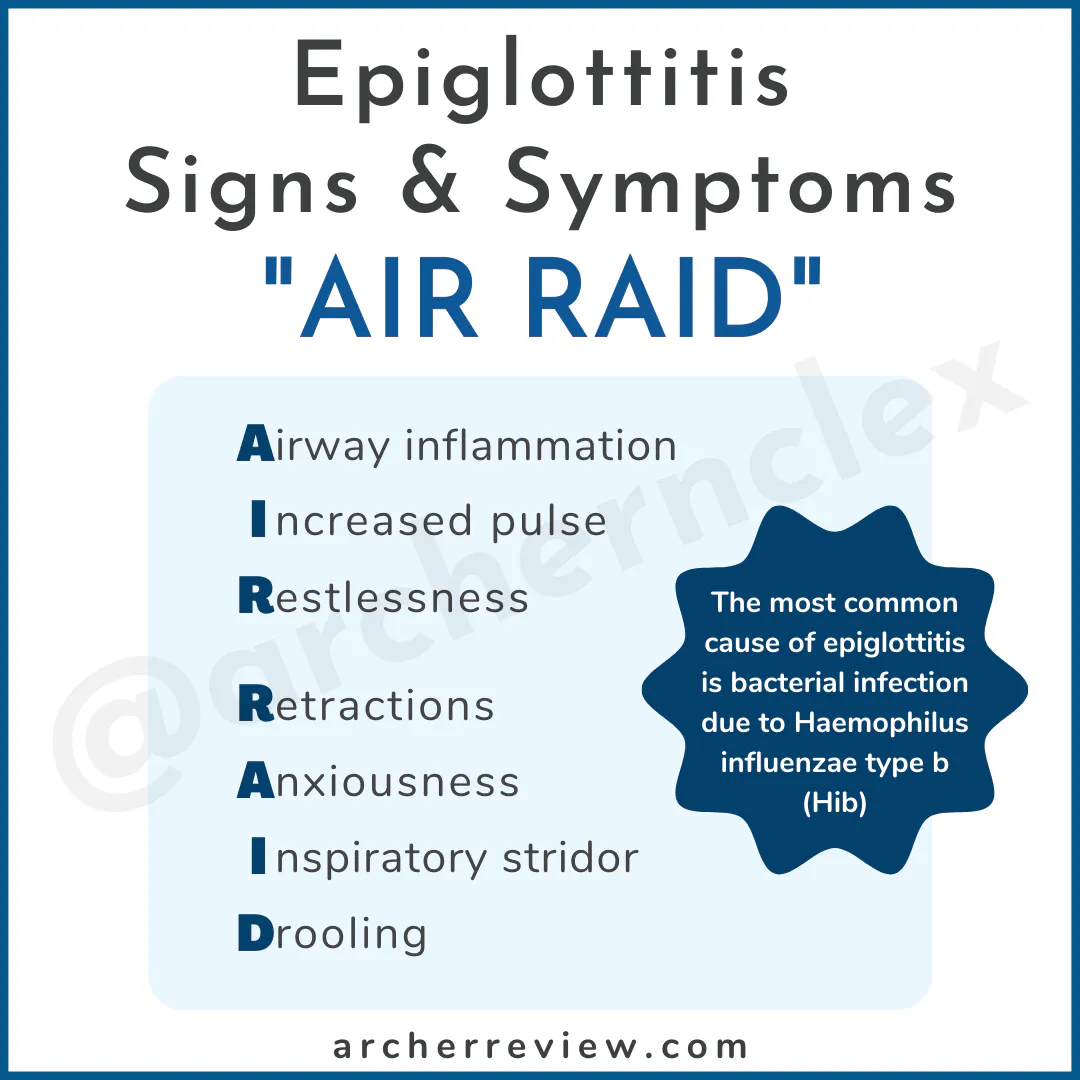
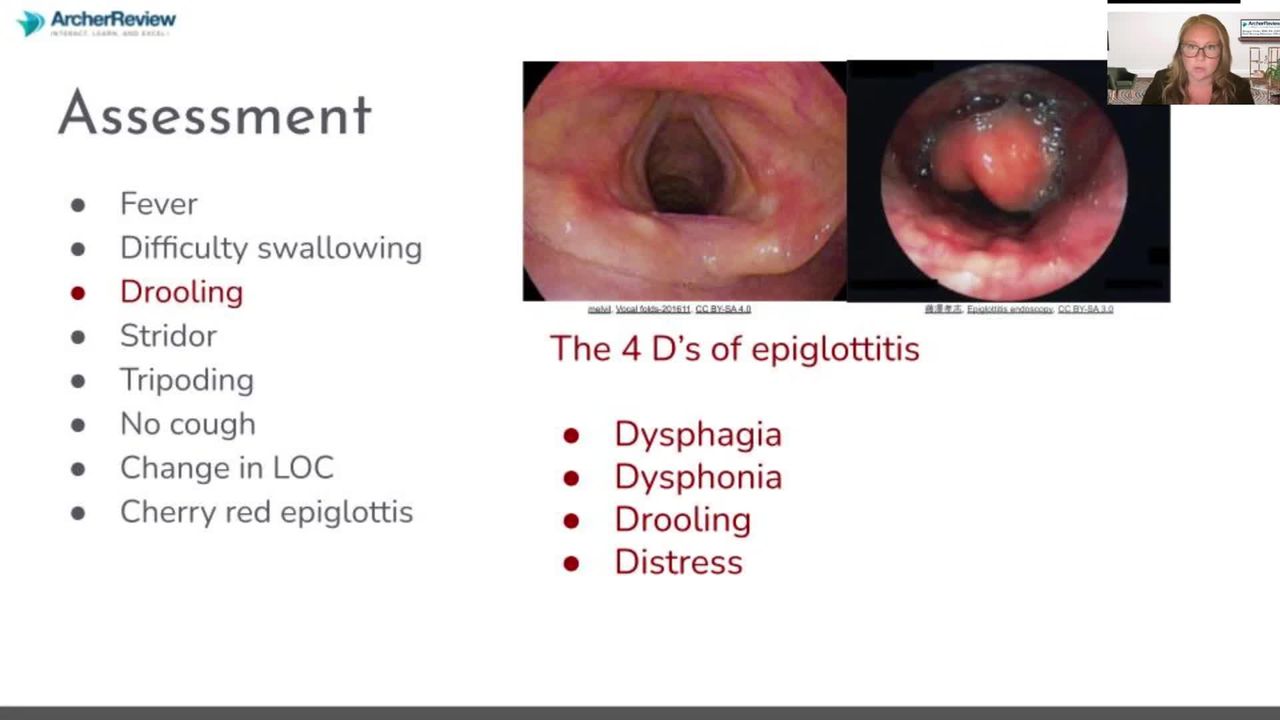
Choice B is correct. The cardinal signs of epiglottitis are the "4 Ds" - drooling, dysphonia, dysphagia, and distress. Difficulty swallowing is dysphagia and difficulty speaking is dysphonia. Stridor is a high-pitched wheezing sound caused by disrupted airflow, hence the distress. This child is presenting with all of those cardinal symptoms and is therefore highly suspicious of epiglottitis.
Choice A is incorrect. Croup is a respiratory infection presenting with a loud barking cough. It does not cause airway obstruction.
Choice C is incorrect. Laryngotracheal bronchitis is another name for croup. The cardinal sign of this disorder is a loud, barking cough. It is sometimes described as a "seal-like" barking cough. It lasts 3-5 days and the child is typically febrile.
Choice D is incorrect. Bronchiolitis is inflammation of the bronchioles or lower airway. It is characterized by a runny nose, fever, and cough. Children with bronchiolitis do not present with the signs of airway obstruction described; those are very specific to epiglottitis.
NCSBN Client Need: Topic: Physiological Integrity; Subtopic: Physiological adaptation, Pediatric - Respiratory
Related Videos
2 Key Topics
Epiglottitis