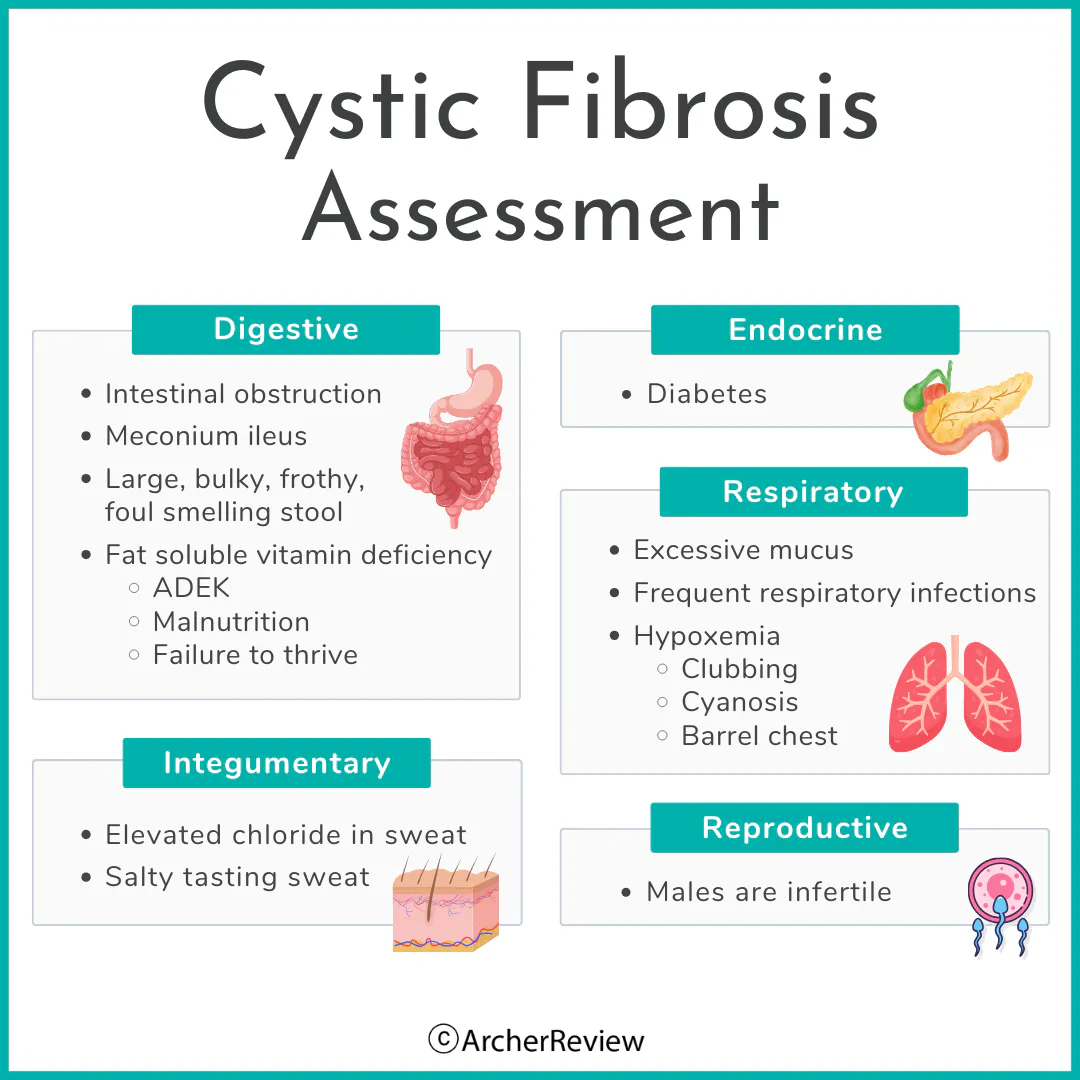
The nurse is caring for a child admitted with cystic fibrosis.
Which of the following interventions should the nurse prioritize in the client’s plan of care?
The nurse is caring for a child admitted with cystic fibrosis.
Which of the following interventions should the nurse prioritize in the client’s plan of care?
A. Monitoring serum glucose levels
[8%]
B. Educating the client on using a flutter mucus clearance device
[29%]
C. Administering replacement of pancreatic enzymes with meals
[34%]
D. Providing frequent high-calorie snacks
[28%]
Statistics
Subject/Lesson
Subject
Child Health
Lesson
Respiratory
Client Need
Test Plan
Physiological Adaptation
Related Topic
Illness Management
Item Type
Item Type
Application
Explanation
Choice B is correct. Airway clearance is the top priority in the management of cystic fibrosis. Thick, sticky mucus accumulation in the lungs leads to impaired gas exchange, chronic infections, and life-threatening respiratory complications, including pneumonia—the leading cause of morbidity and mortality in CF. The flutter device is a key pulmonary hygiene intervention that promotes mucus mobilization through positive expiratory pressure and oscillation.
Choice A is incorrect. This is an important routine therapy in CF to address malabsorption and growth failure, but it is not the priority when considering the system that poses the greatest immediate threat—the respiratory system.
Choice C is incorrect. Nutritional support is essential in CF due to increased energy expenditure and malabsorption, but this is a secondary intervention after ensuring airway patency and respiratory function.
Choice D is incorrect. CF-related diabetes (CFRD) is a chronic complication, especially in older children and adolescents, but is not the most urgent concern in early inpatient care unless symptomatic hyperglycemia is present.
Related Videos
2 Key Topics
Cystic Fibrosis