A nurse at the family clinic is educating the parent of a 13-year-old on ways to avoid acute asthma attacks for their child.
Which statement by the parent indicates effective teaching?
A nurse at the family clinic is educating the parent of a 13-year-old on ways to avoid acute asthma attacks for their child.
Which statement by the parent indicates effective teaching?
A. “Dogs and cats would be acceptable to have as family pets.”
[4%]
B. “I can take my child to the mountains to ski.”
[4%]
C. “My child should use the bronchodilator inhaler 30 minutes before exercise.”
[70%]
D. “Retractions of the neck, chest or ribs are expected findings during an asthma attack.”
[21%]
Statistics
Subject/Lesson
Subject
Child Health
Lesson
Respiratory
Client Need
Test Plan
Health Promotion and Maintenance
Related Topic
Health Promotion/Disease Prevention
Item Type
Item Type
Application
Explanation
Choice C is correct. This statement made by the mother indicates effective teaching. Clients should be instructed to use their reliever bronchodilator inhaler 30 minutes before exercise to prevent or reduce bronchospasm that may occur during exercise. Exercise is not contraindicated for those with asthma. Acceptable forms of exercise include low-intensity activities such as swimming, walking, and hiking.
Choice A is incorrect. Animal dander can trigger asthma attacks. The client must be reeducated to avoid pets, including, but not limited to, dogs, cats, and birds. Turtles, fish, and other pets without dander can be acceptable pets for children with asthma.
Choice B is incorrect. Extreme cold is considered a nonallergenic trigger for an acute asthma attack. Snow skiing exposes the child to extreme cold, placing the child at risk for a severe asthma attack.
Choice D is incorrect. The parent should seek immediate emergency care if the child experiences has retractions of the neck, chest, or ribs, difficulty breathing, walking, or talking, has gray or blue fingertips, nasal flaring, or failure of medications to control worsening symptoms. These symptoms are more severe and indicate the body is not getting enough oxygen.
Related Videos
2 Key Topics
Asthma
17.6 Airway Disorders
Additional Info
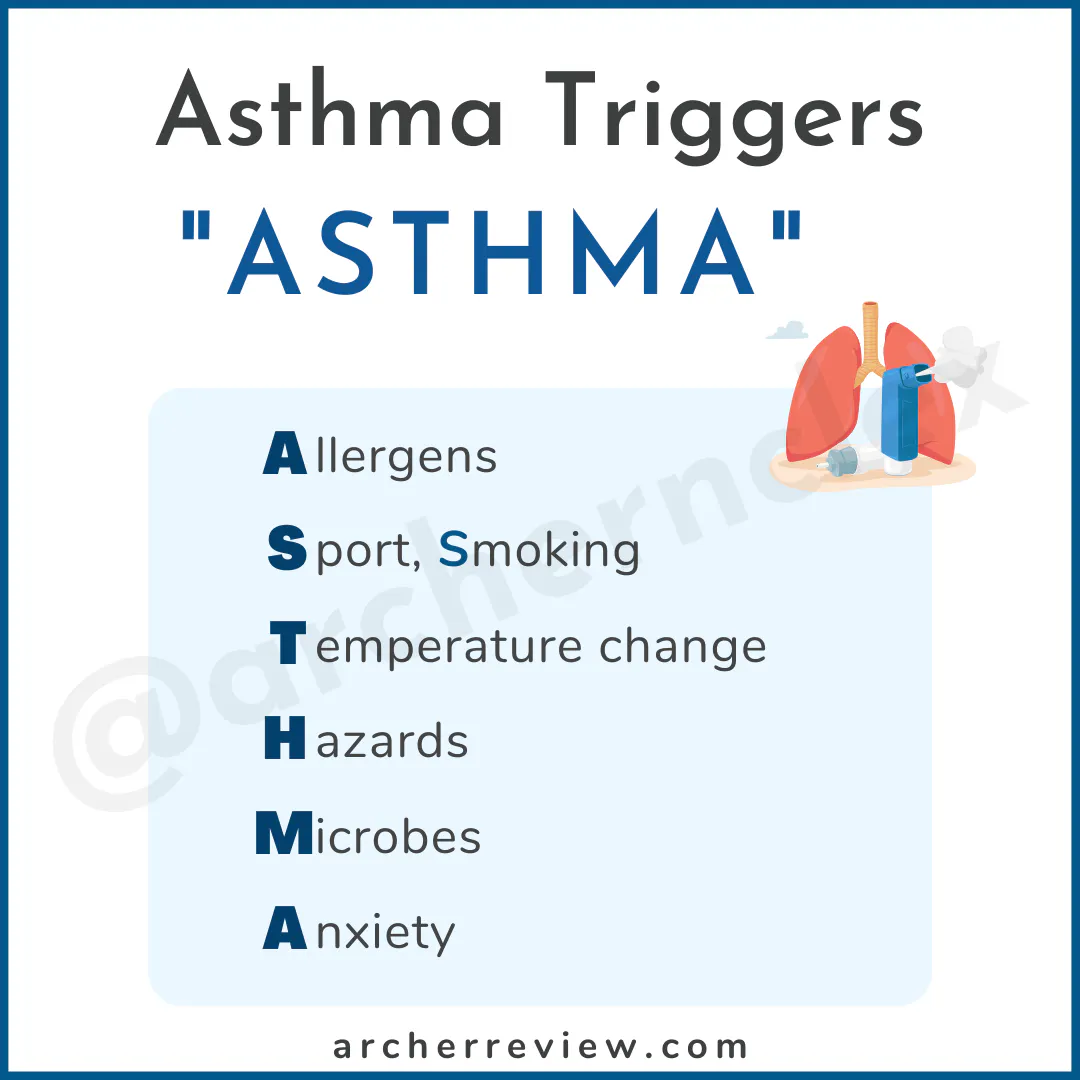
- Asthma is a disease of diffuse airway inflammation caused by a variety of triggering stimuli resulting in partially or completely reversible bronchoconstriction.
- Symptoms and signs include dyspnea, chest tightness, cough, and wheezing.
- Diagnosis is based on history, physical examination, and pulmonary function tests.
- Treatment involves controlling triggering factors and drug therapy, most commonly with inhaled beta-2 agonists and inhaled corticosteroids.
