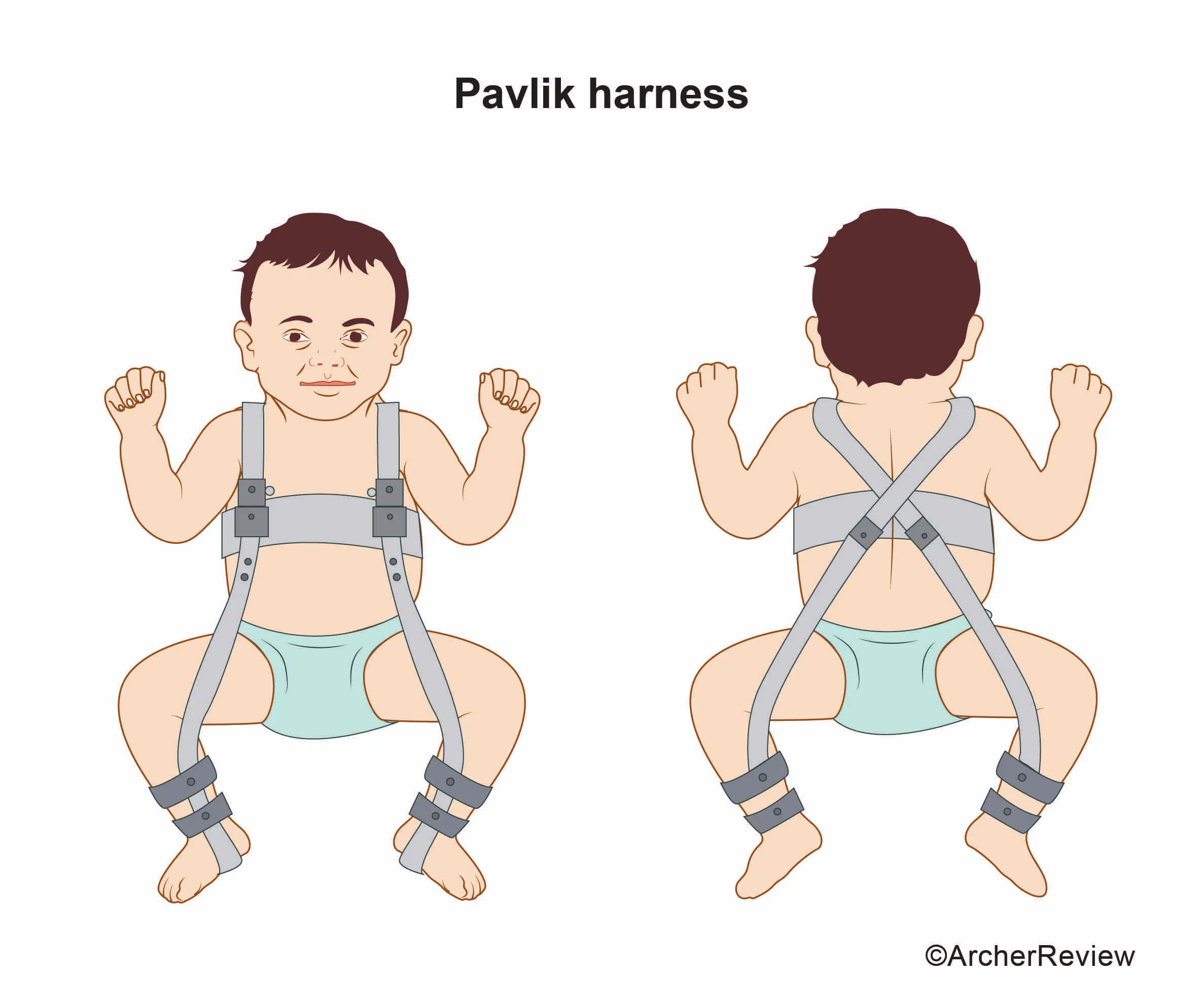
The nurse is caring for an infant with developmental dysplasia of the hip (DDH). Which of the following prescriptions would the nurse anticipate from the primary healthcare provider (PHCP)?
The nurse is caring for an infant with developmental dysplasia of the hip (DDH). Which of the following prescriptions would the nurse anticipate from the primary healthcare provider (PHCP)?
A. Pavlik harness
[87%]
B. Compression hose
[2%]
C. Knee immobilizer
[5%]
D. Continuous passive motion
[6%]
Statistics
Subject/Lesson
Subject
Child Health
Lesson
Musculoskeletal
Client Need
Test Plan
Physiological Adaptation
Related Topic
Illness Management
Item Type
Item Type
Knowledge/Comprehension
Explanation
Choice A is correct. The Pavlik harness is utilized for the treatment of DDH. The goal of the therapy is to keep the hips abducted as much as possible.
Choice B is incorrect. Compression hose is utilized in adults for the treatment of varicose veins and the prevention of venous thromboembolism.
Choice C is incorrect. A knee immobilizer is used in adults for any injuries to the knee. The client with DDH requires stabilization of the hip and the prevention of extension and adduction.
Choice D is incorrect. Continuous passive motion is used after certain orthopedic surgeries, such as a knee replacement. This is not used for DDH.
Related Videos
2 Key Topics
Hip Dysplasia
31.13 Musculoskeletal Injuries & Disorders
Additional Info
✓ A Pavlik harness is effective in treating DDH. When caring for a client with a Pavlik harness, it is important to remember the following points:
✓ The harness may be maintained for eight to twelve weeks.
✓ Frequent follow-up appointments are recommended because the straps will need to be adjusted.
✓ The parents should be taught to inspect the infant's skin for any breakdown frequently.
✓ Lotions, creams, and powders should be avoided under the straps.
✓ The diaper should be placed under the straps.