The nurse takes a phone call from a parent of an adolescent with a cast following a tibia fracture. The client's parent indicates that they have excessive itching. The nurse should recommend for the parent to
The nurse takes a phone call from a parent of an adolescent with a cast following a tibia fracture. The client's parent indicates that they have excessive itching. The nurse should recommend for the parent to
A. apply cool air under the cast with a blow-dryer.
[85%]
B. use sterile applicators to scratch the itch.
[4%]
C. apply cool water under the cast.
[1%]
D. apply hydrocortisone cream under the cast.
[9%]
Statistics
Subject/Lesson
Subject
Child Health
Lesson
Musculoskeletal
Client Need
Test Plan
Basic Care and Comfort
Related Topic
Non-Pharmacological Comfort Interventions
Item Type
Item Type
Application
Explanation
Choice A is correct. Itching underneath a cast is common and can be relieved by using a blow-dryer set to the cool setting. Instructing clients and caregivers on proper cast care will help reduce the risk of further injury or complications.
Choices B, C, and D are incorrect. Skin breakdown can occur if anything is placed under the cast. Therefore, the client should be cautioned not to put any object down the cast in an attempt to scratch. The cast should never be allowed to get wet. Nothing should be applied under the cast or inserted into the cast to prevent skin breakdown and injury.
Related Videos
2 Key Topics
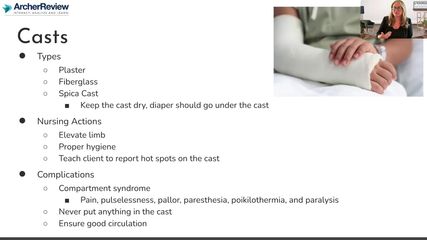
Casts
12.10 Orthopedic Care & Immobilization
Additional Info
Education regarding cast care and the "do's and don'ts" include:
✓ Keep the cast dry. Moisture weakens plaster and dampens padding next to the skin, which can be irritating.
✓ Do not submerge it or hold it under running water. A small pinhole in the cast cover can cause the injury to get soaked.
✓ Keep dirt, sand, and powder away from the inside of the cast.
✓ Do not pull out the padding from a splint or cast.
✓ Do not stick objects such as coat hangers inside the splint or cast to scratch itching skin.
✓ Do not apply powders or deodorants to itching skin. If itching persists, contact the doctor.
✓ Do not break off any rough edges of the cast or trim the cast before asking the doctor.
✓ Inspect the skin around the cast. Contact the physician if the skin becomes red or raw around the cast.
✓ Inspect the cast regularly. Contact the physician's office if it becomes cracked or develops soft spots.
