The nurse is assessing vital signs for a client diagnosed with acute lymphoblastic leukemia (ALL). The client's temperature is 101.6°F (38.7°C).
The nurse should prioritize
The nurse is assessing vital signs for a client diagnosed with acute lymphoblastic leukemia (ALL). The client's temperature is 101.6°F (38.7°C).
The nurse should prioritize
A. reviewing client's most recent hemoglobin and hematocrit.
[20%]
B. performing a tepid sponge bath.
[16%]
C. initiating a peripheral vascular access device.
[46%]
D. assessing the client for bruising.
[18%]
Statistics
Subject/Lesson
Subject
Child Health
Lesson
Hematological/Oncological
Client Need
Test Plan
Reduction of Risk Potential
Related Topic
Changes/Abnormalities in Vital Signs
Item Type
Item Type
Analysis
Explanation
Choice C is correct. The client will need a vascular access device because the client will need to have blood cultures obtained and possibly prescribed isotonic fluids and antibiotics. The client with ALL is at risk for developing an infection, and the client's fever is a concerning sign.
Choice A is incorrect. Reviewing laboratory values is not the priority, especially the client's hemoglobin and hematocrit, which does not yield pertinent information regarding the client's potential for an infection. The white blood cell count would have collateral support if the client had an infection.
Choice B is incorrect. Performing a bath with a tepid sponge bath may provide the client with comfort. However, this is not the priority. This client has ALL, and the significant fever raises a strong suspicion of sepsis. The nurse should employ measures such as initiating a peripheral vascular access device, obtaining blood cultures, and administering prescribed isotonic fluids to lower the client's fever.
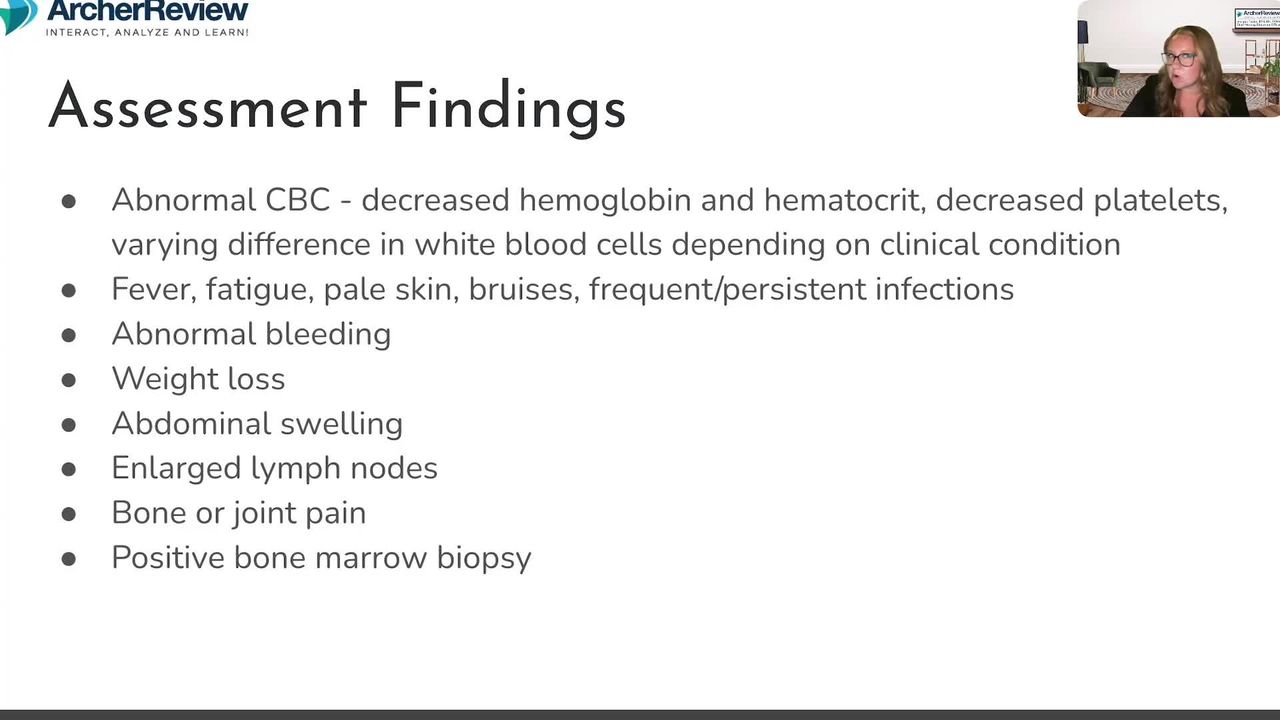
Choice D is incorrect. Bruising is a consistent finding with ALL. This is not an action the nurse should prioritize over intervening for a cancer client with a fever. The nurse must intervene by executing actions that treat the fever, such as administering prescribed isotonic fluids and antipyretics such as acetaminophen.
Related Videos
2 Key Topics
Acute Lymphocytic Leukemia
33.7 Acute Lymphocytic Leukemia
Additional Info
✓ Clients with ALL are often immunocompromised due to the disease itself and its treatment (chemotherapy). Infection control is a top priority. Nurses should practice strict hand hygiene and ensure that all healthcare providers and visitors do the same. Isolation precautions may be necessary when the client has a fever to prevent the spread of infection.
✓ Regularly monitor the client's temperature. Fever is often the first sign of infection in immunocompromised clients. The threshold for considering a fever may be lower than in non-immunocompromised individuals.
✓ As mentioned in the scenario, early intervention with broad-spectrum antibiotics is crucial when there's a high suspicion of infection. Promptly establish intravenous access to administer antibiotics and other necessary medications.
