The nurse is preparing to assess a child with cystic fibrosis at the outpatient clinic.
The nurse anticipates that the primary healthcare provider (PHCP) will order which routine laboratory test?
The nurse is preparing to assess a child with cystic fibrosis at the outpatient clinic.
The nurse anticipates that the primary healthcare provider (PHCP) will order which routine laboratory test?
A. Blood glucose
[28%]
B. Total cholesterol
[19%]
C. 24-hour urine
[13%]
D. Blood cultures
[40%]
Statistics
Subject/Lesson
Subject
Child Health
Lesson
Endocrine
Client Need
Test Plan
Reduction of Risk Potential
Related Topic
Potential for Alterations in Body Systems
Item Type
Item Type
Knowledge/Comprehension
Explanation
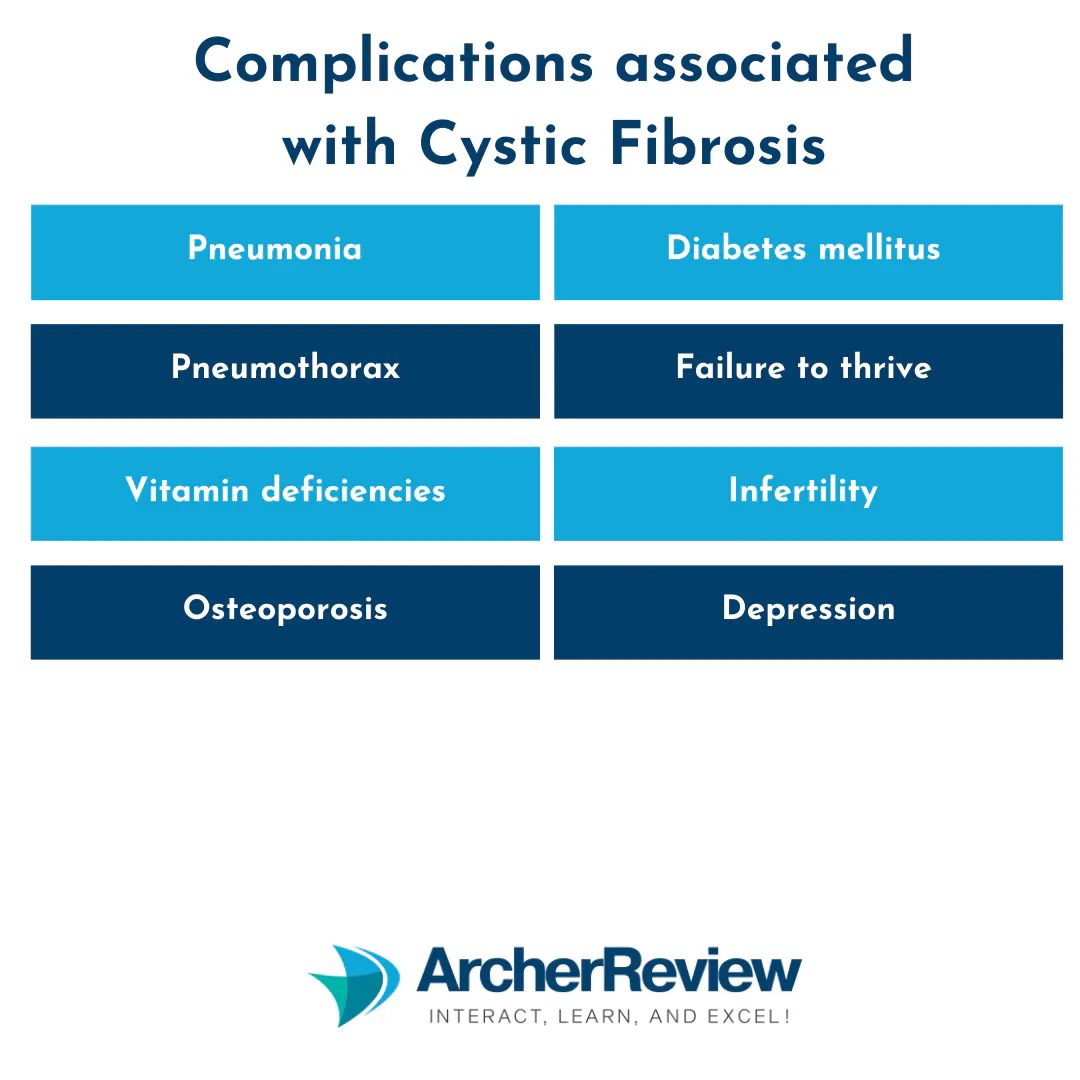
Choice A is correct. Diabetes mellitus is a common co-morbidity associated with cystic fibrosis (CF). The damage that CF may cause to the pancreas may induce diabetes. Thus, random blood glucose levels and quarterly hemoglobin A1C levels are commonly ordered throughout the course of the illness. A random blood glucose level greater than 200 mg/dL (11.1 mmol/L) [70-110 mg/dL, 4.0–11.0 mmol/L]may suggest the presence of diabetes.
Choice B is incorrect. Total cholesterol levels are important for monitoring nutritional status in CF clients but are not typically a routine test ordered specifically for cystic fibrosis.
Choice C is incorrect. 24-hour urine tests are used for various purposes, such as assessing kidney function, and are not specific routine assessments for CF. Monitoring kidney function may be important in CF clients, but it is not typically done through 24-hour urine tests as part of routine assessments for CF.
Choice D is incorrect. Blood cultures are not part of routine assessments for cystic fibrosis clients. They are ordered if bacteremia is suspected and are not part of routine monitoring for CF-related conditions.
Related Videos
2 Key Topics
Cystic Fibrosis
31.8 Pediatric Respiratory Conditions
Additional Info