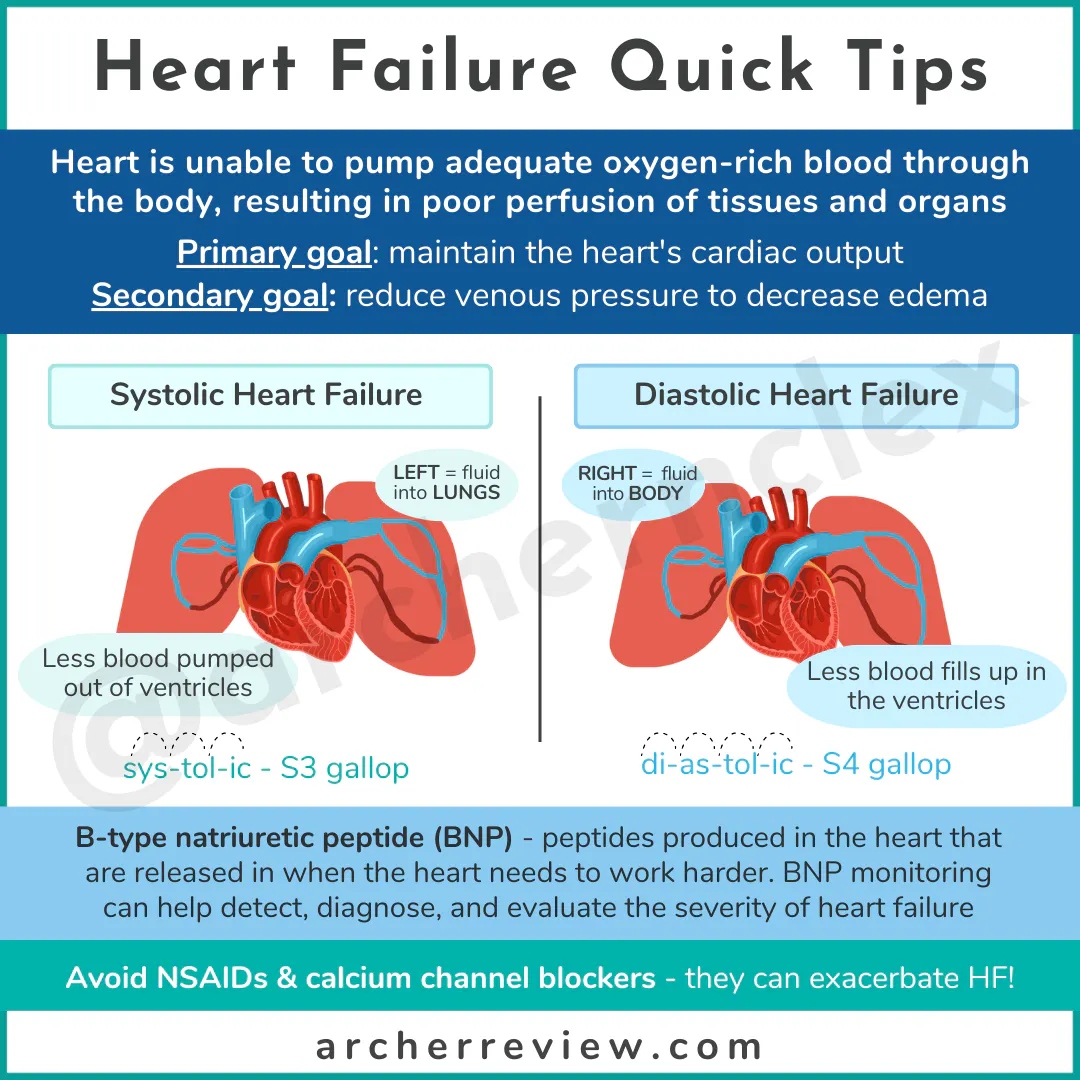
The nurse is caring for a child admitted with congestive heart failure. Which of the following assessment findings would be expected?
The nurse is caring for a child admitted with congestive heart failure. Which of the following assessment findings would be expected?
A. Pulse deficit
[19%]
B. Exercise intolerance
[62%]
C. Bradypnea
[14%]
D. Flattened neck veins
[6%]
Statistics
Subject/Lesson
Subject
Child Health
Lesson
Cardiovascular
Client Need
Test Plan
Physiological Adaptation
Related Topic
Alterations in Body Systems
Item Type
Item Type
Knowledge/Comprehension
Explanation
Choice B is correct. Exercise intolerance is common for a child with heart failure because the cardiac output cannot keep up with the demands of exercise. Fatigue may develop and irritability from the child's inability to participate in exercise-related activities.
Choice A is incorrect. A pulse deficit is the difference between the apical and peripheral pulses. It is abnormal to have a pulse deficit (for example, an apical pulse of 75; a radial pulse of 68) as this would be a common finding with an irregular heart rhythm, not heart failure. In CHF, the pulse may be rapid due to the heart's attempt to compensate for its decreased efficiency.
Choice C is incorrect. Bradypnea, or abnormally slow breathing, is not a typical finding in congestive heart failure. Tachypnea is a common feature of heart failure because of decreasing lung compliance; this is often seen with tachycardia.
Choice D is incorrect. Flattened neck veins are unexpected in heart failure, whereas distended neck veins are common because of increased venous pressure.
Related Videos
2 Key Topics
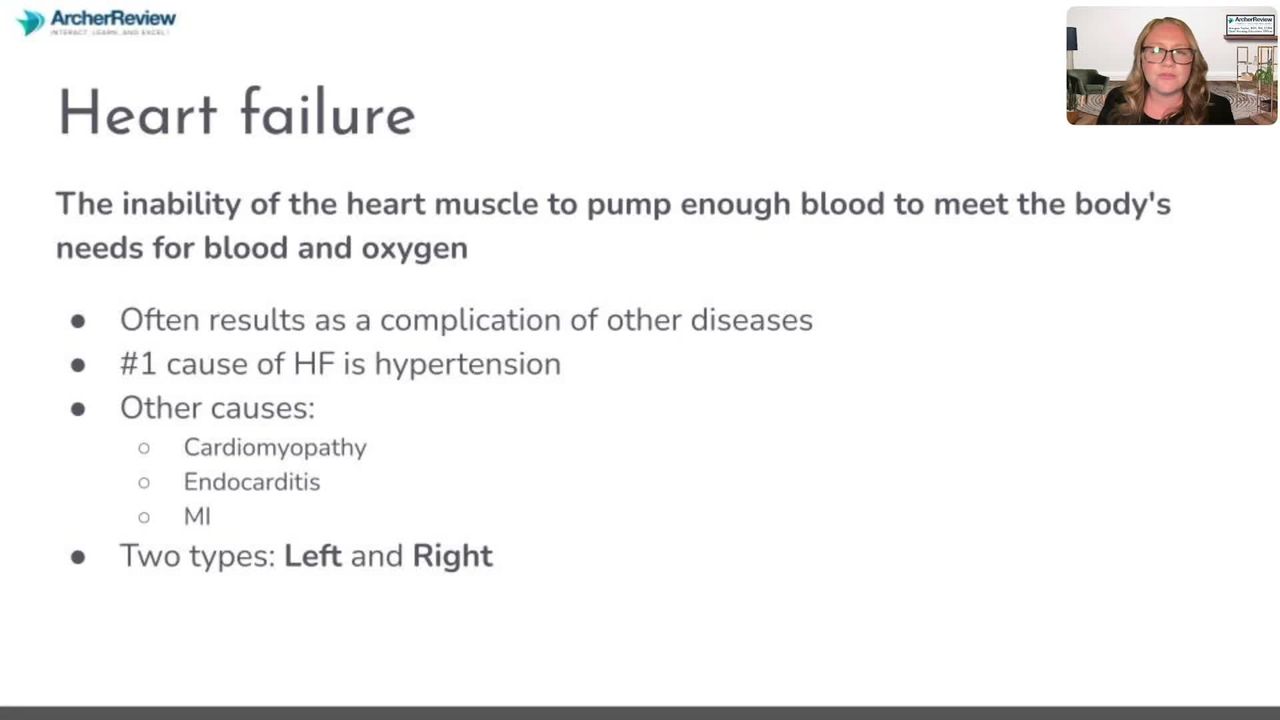
Heart Failure
18.13 Complications of Heart Disease
Additional Info
✓ Congestive heart failure manifestations in children are similar to those in adults. These clinical features include -
- Abnormal heart tones (S3/S4)
- Exercise intolerance
- Fatigue
- Orthopnea
- Weight gain
- Adventitious lung sounds
- Neck vein distention (this cannot be observed in infants because of their short necks)
✓ Implement strict intake and output monitoring to evaluate fluid balance. Accurate documentation of fluid intake (including medications with fluid components) and output (urine, vomitus) is essential.
✓ Weigh the child daily at the same time and under consistent conditions. Sudden weight gain can indicate fluid retention, a common sign of worsening heart failure.