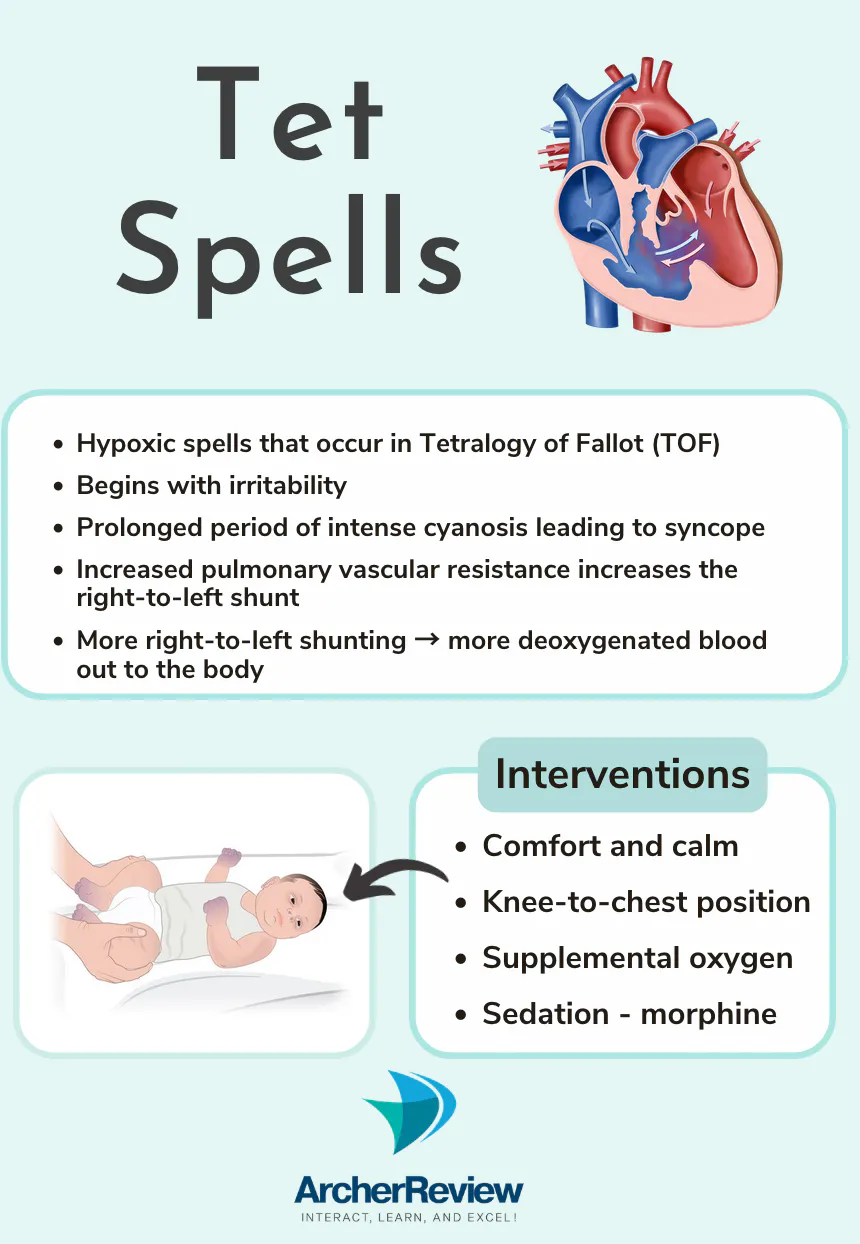
The nurse is caring for an infant experiencing a hypercyanotic episode associated with Tetralogy of Fallot.
The nurse places the infant in a knees-chest position because this position
The nurse is caring for an infant experiencing a hypercyanotic episode associated with Tetralogy of Fallot.
The nurse places the infant in a knees-chest position because this position
A. reduces venous return to the heart.
[17%]
B. increases systemic vascular resistance.
[39%]
C. decreases intracardiac pressure.
[25%]
D. dilates the pulmonary artery.
[18%]
Statistics
Subject/Lesson
Subject
Child Health
Lesson
Cardiovascular
Client Need
Test Plan
Physiological Adaptation
Related Topic
Pathophysiology
Item Type
Item Type
Knowledge/Comprehension
Explanation
Choice B is correct. The knee-chest position increases systemic vascular resistance (SVR) by compressing the femoral arteries, especially in infants. This increased SVR opposes the right-to-left shunting of blood through the ventricular septal defect (VSD), forcing more blood to flow into the pulmonary circulation rather than bypassing it. This improves systemic oxygenation.
Choice A is incorrect. While squatting or knee-chest positioning may slightly reduce venous return from the legs due to mechanical compression, this is not the primary therapeutic mechanism. Maintaining preload (venous return) is essential for adequate cardiac output.
Choice C is incorrect. The knee-chest position does not significantly lower intracardiac pressures. The intracardiac pressure changes in Tetralogy of Fallot are due to the anatomical defects, particularly right ventricular outflow obstruction and VSD.
Choice D is incorrect. There is no direct vasodilatory effect on the pulmonary artery with the knee-chest position. Pulmonary blood flow may increase indirectly due to altered shunting, but not because the pulmonary artery dilates. The position’s effect is on vascular resistance, not pulmonary artery anatomy.
Related Videos
2 Key Topics
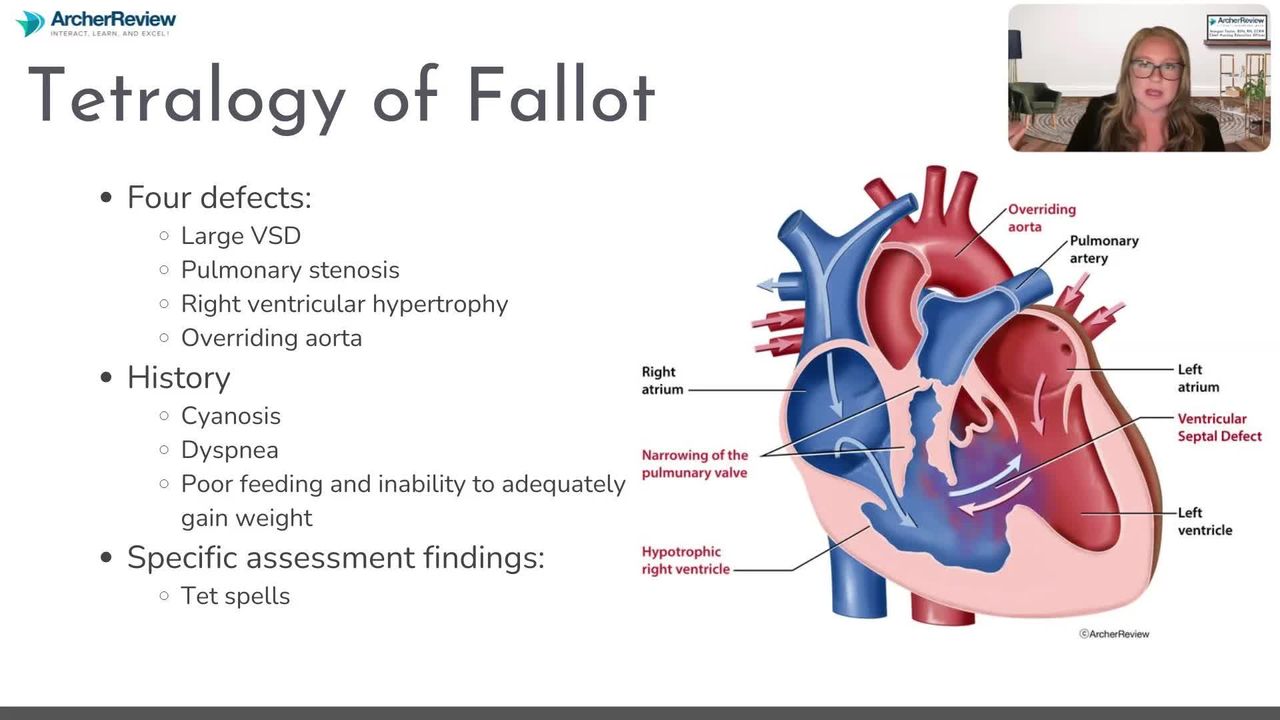
Tetralogy of Fallot (TOF)