The nurse is caring for a client who has been newly prescribed salmeterol.
Which of the following prescribed medications should be reported to the primary healthcare provider (PHCP)?
The nurse is caring for a client who has been newly prescribed salmeterol.
Which of the following prescribed medications should be reported to the primary healthcare provider (PHCP)?
A. lithium
[39%]
B. captopril
[11%]
C. labetalol
[40%]
D. clonidine
[9%]
Statistics
Subject/Lesson
Subject
Pharmacology
Lesson
Respiratory
Client Need
Test Plan
Pharmacological and Parenteral Therapies
Related Topic
Adverse Effects/Contraindications/Side Effects/Interactions
Item Type
Item Type
Analysis
Explanation
Choice C is correct. Salmeterol is a long-acting beta-agonist indicated in the maintenance treatment of chronic respiratory illnesses. This medication causes bronchodilation by stimulating the beta-adrenergic receptors. Blocking these receptors by beta-adrenergic blockers is contraindicated because it may lead to bronchospasm. Labetalol is a combined alpha and beta-adrenergic receptor blocker, therefore antagonizing salmeterol's therapeutic effect. Thus, labetalol would be contraindicated because of this adverse action.
Choice A is incorrect. Lithium is a mood stabilizer and is used in bipolar disorder—no known significant interaction with salmeterol.
Choice D is incorrect. Clonidine is a centrally acting alpha-2 agonist for hypertension; it does not interfere with salmeterol’s bronchodilatory action.
Choice B is incorrect. Captopril is an ACE inhibitor used for hypertension and heart failure—no direct interaction with salmeterol.
Learning Objective
Avoid nonselective beta-adrenergic receptor blockers in clients with asthma and those on treatment with beta-2 agonists. Understand that beta-blockers decrease the therapeutic response to beta-agonist drugs.
Related Videos
4 Key Topics
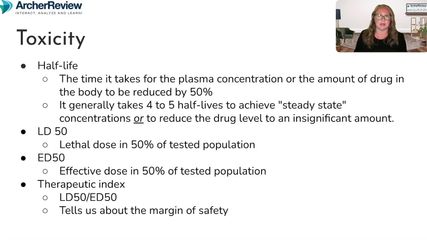
Drug Interactions
6.2 Medication Safety & Interactions
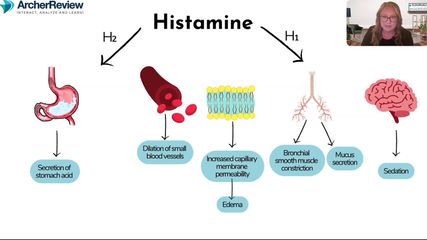
Bronchodilators
6.5 Respiratory System Drugs
Additional Info
✓ Long-acting beta-agonists (LABAs) are indicated in the maintenance treatment of asthma.
✓ The client should be taught that this medication is not meant for acute exacerbations.
✓ Contraindications for salmeterol include beta-blockers, which may cause bronchospasm.
