The nurse is caring for a client following a large volume paracentesis. To prevent hypovolemic shock, the nurse anticipates the primary healthcare provider (PHCP) to prescribe an infusion of
The nurse is caring for a client following a large volume paracentesis. To prevent hypovolemic shock, the nurse anticipates the primary healthcare provider (PHCP) to prescribe an infusion of
A. 0.9% saline.
[65%]
B. Albumin.
[27%]
C. Mannitol.
[2%]
D. 0.45% saline.
[5%]
Statistics
Subject/Lesson
Subject
Pharmacology
Lesson
Gastrointestinal
Client Need
Test Plan
Pharmacological and Parenteral Therapies
Related Topic
Parenteral/IV Therapies
Item Type
Item Type
Knowledge/Comprehension
Explanation
Choice B is correct. Albumin is a colloid commonly used to prevent post-procedure hypotension after a large-volume paracentesis. Large-volume paracentesis is when at least five liters or more of ascitic fluid is removed. This large amount of removal may cause a fluid shift creating an intravascular fluid deficit. Albumin would be helpful because of its ability to assist in restoring fluid balance without causing fluid volume overload.
Choices A, C, and D are incorrect. 0.9% saline is isotonic and would help restore intravascular volume. However, it could lead to further fluid accumulation. Thus, albumin is the better choice because it is a colloid. Mannitol is a hypertonic solution used in cerebral edema. 0.45% saline would be unhelpful as this fluid choice is hypotonic and would be indicated in intracellular rehydration.
Related Videos
2 Key Topics
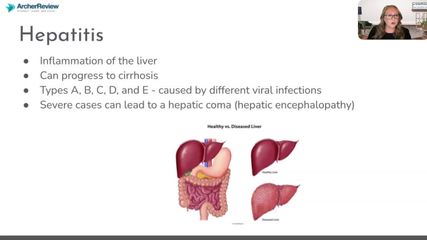
Cirrhosis
20.8 Liver Disorders & Failure
Additional Info
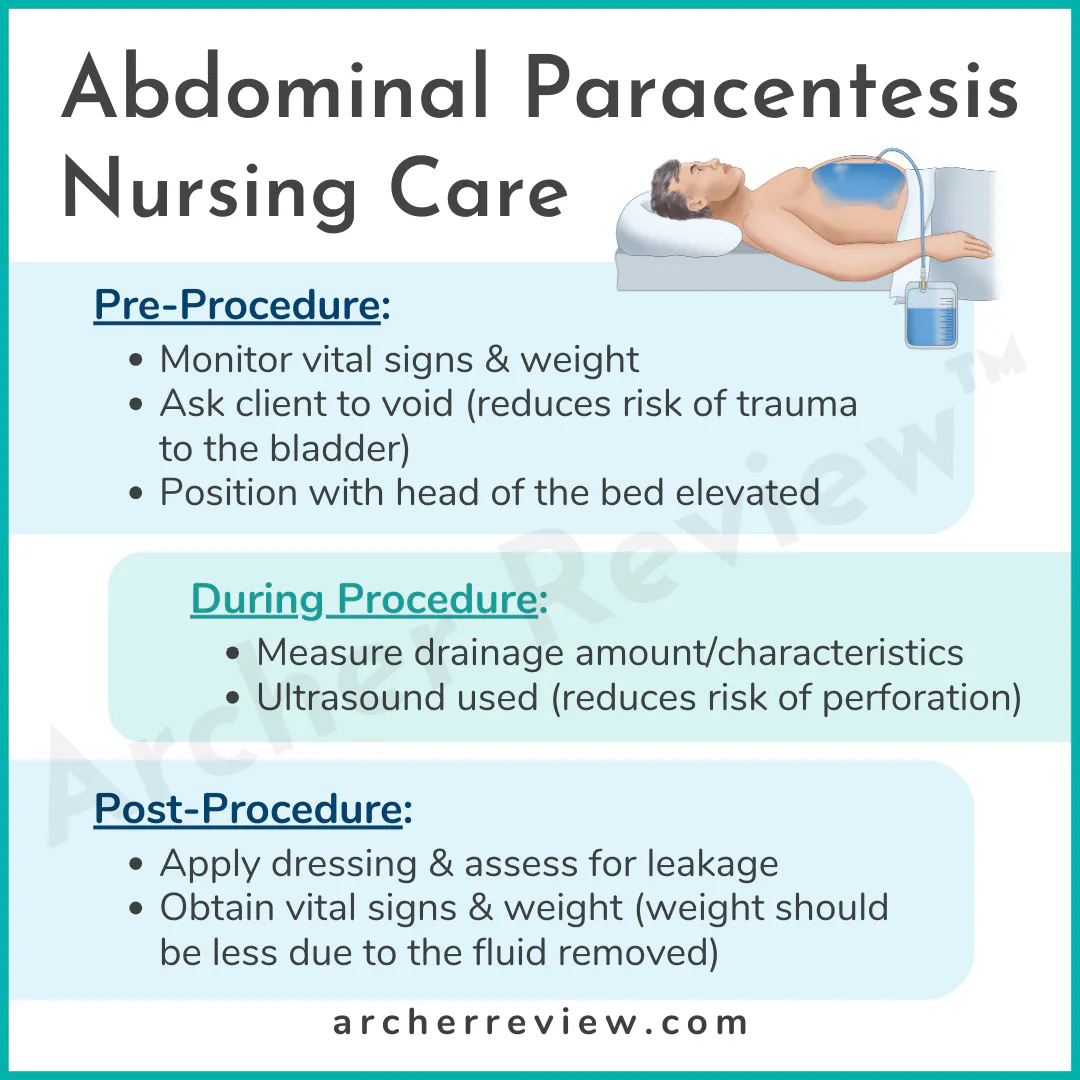
Abdominal paracentesis is performed for clients with gross ascitic fluid due to liver cirrhosis. Nursing care for an abdominal paracentesis includes -
➢ Witnessing informed consent that the primary healthcare provider obtains
➢ Assisting the client to void before the procedure
➢ Obtaining baseline vital signs
➢ Measure the abdominal girth
➢ Gather appropriate supplies (suction, tubing, paracentesis kit)
➢ Position the client per the physician's prescription. The positioning is likely upright to allow the fluid to settle in the lower abdominal quadrants.
➢ Monitor the client and the drainage
➢ Send the initial ascitic fluid to the lab for culture and sensitivity, as prescribed
➢ Reposition the client, as needed to facilitate better drainage
➢ Monitor the client's vital signs throughout and after the procedure
➢ Administer an infusion of albumin, as prescribed for large volume (> 5 liters) paracentesis
https://app.archerreview.com/test-screen/MjQzMzczNDk=/MTAyODM=
