The nurse is teaching a client about storing their prescribed insulin.
Which statement, if made by the client, would indicate a correct understanding of the teaching?
The nurse is teaching a client about storing their prescribed insulin.
Which statement, if made by the client, would indicate a correct understanding of the teaching?
A. "Opened vials of insulin may be kept in the freezer."
[6%]
B. “My opened vial of insulin is good for 45 days.”
[12%]
C. “If I travel, I can keep a vial of insulin in my car.”
[3%]
D. “Unopened vials of insulin should be stored in the refrigerator.”
[79%]
Statistics
Subject/Lesson
Subject
Pharmacology
Lesson
Endocrine
Client Need
Test Plan
Pharmacological and Parenteral Therapies
Related Topic
Expected Actions/Outcomes
Item Type
Item Type
Knowledge/Comprehension
Explanation
Choice D is correct. Unopened vials of insulin should be stored in the refrigerator to maintain their potency and effectiveness until the expiration date indicated on the package. Refrigeration helps preserve the stability of the insulin formulation. Insulin should never be frozen or administered cold.
Choice A is incorrect. Freezing insulin can cause it to denature and lose its effectiveness. Opened vials of insulin should not be stored in the freezer. Insulin may be kept on ice if needed but should not be allowed to freeze.
Choice B is incorrect. Once a vial of insulin is opened, it typically has a shorter duration of use, usually around 28 to 30 days, as indicated by the manufacturer. This ensures the potency and effectiveness of the insulin.
Choice C is incorrect. Insulin should not be exposed to extreme temperatures, including the high temperatures that can occur inside a car, as it can degrade and lose potency.
Related Videos
2 Key Topics
Insulin
19.5 Pancreatic Hormones & Antidiabetic Medications
Additional Info
✓ When counseling a client about insulin storage, the nurse should emphasize the following points:
- Refrigerate insulin that is not in use to maintain potency
- Prevent exposure to sunlight, and inhibit bacterial growth
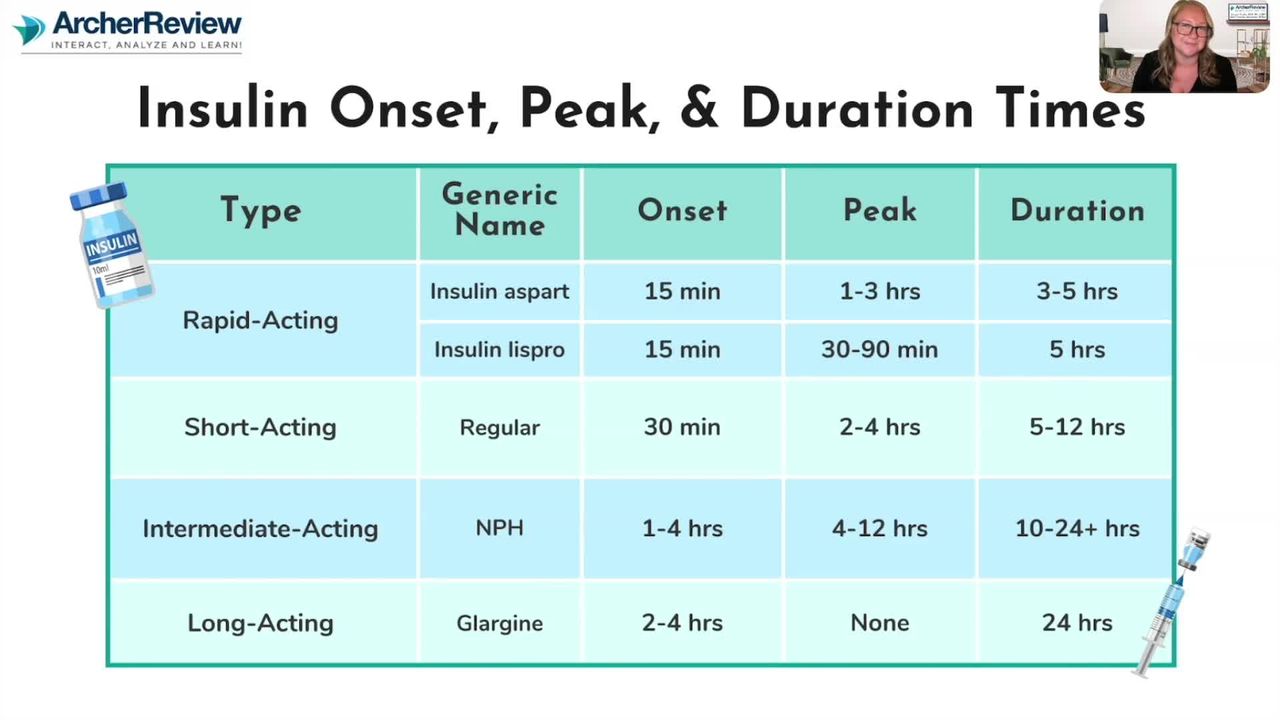
- Insulin in use may be kept at room temperature for up to 28 days
- To prevent loss of drug potency, avoid exposing insulin to temperatures below 36°F (2.2°C) or above 86°F (30°C)
- Avoid excessive shaking, and protect insulin from direct heat and light
- Insulin should not be allowed to freeze
- Do not inject cold insulin
✓ Encourage the client to plan when traveling with insulin to ensure proper storage during transit. Suggest using insulated cooler bags or travel packs with ice packs to keep insulin at the appropriate temperature, especially during long trips.
✓ Recommend that the client carry extra insulin supplies, including syringes or pen needles, glucose monitoring supplies, and fast-acting carbohydrates, in case of unexpected delays or emergencies while traveling.
✓ Educate the client about checking the expiration date on insulin vials and pens and discarding them if expired. Using expired insulin can result in reduced efficacy and potentially harm the client's health.
