A nurse is caring for a client who has developed bradycardia. Which prescription should the nurse question?
A nurse is caring for a client who has developed bradycardia. Which prescription should the nurse question?
A. Propranolol
[77%]
B. Furosemide
[8%]
C. Spironolactone
[5%]
D. Valsartan
[10%]
Statistics
Subject/Lesson
Subject
Pharmacology
Lesson
Cardiovascular
Client Need
Test Plan
Reduction of Risk Potential
Related Topic
Potential for Alterations in Body Systems
Item Type
Item Type
Application
Explanation
Choice A is correct. Propranolol is a non-selective beta-blocker. Propranolol is used in the management of hypertension and migraine prevention. While it reduces blood pressure, it can also decrease heart rate (bradycardia) by blocking beta-1 receptors. Therefore, if a client is experiencing bradycardia, the client should not receive any medications that can lower the heart rate further.
Choice B is incorrect. Furosemide is a loop diuretic medication used to treat fluid retention and edema by promoting diuresis. It is not typically contraindicated in clients with bradycardia, so the nurse would not need to question this prescription solely based on the presence of bradycardia.
Choice C is incorrect. Spironolactone is a potassium-sparing diuretic often used in combination with other diuretics to manage fluid retention. Like furosemide, spironolactone does not directly affect heart rate.
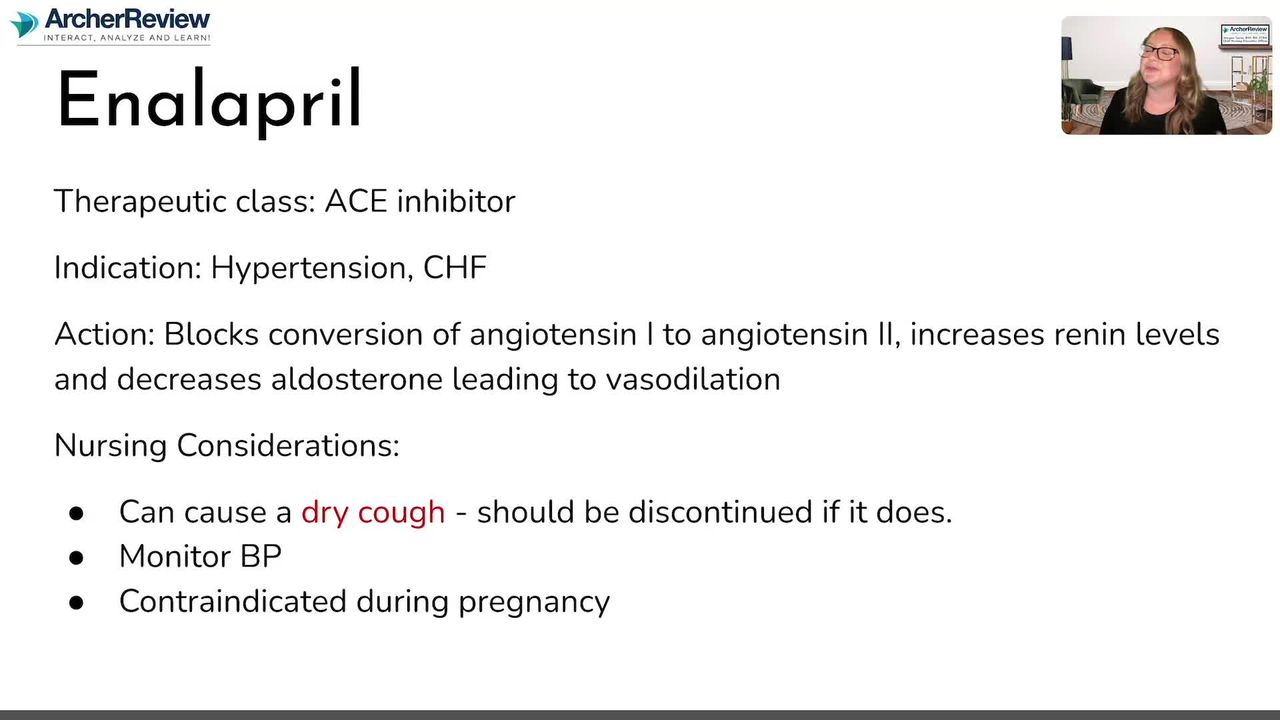
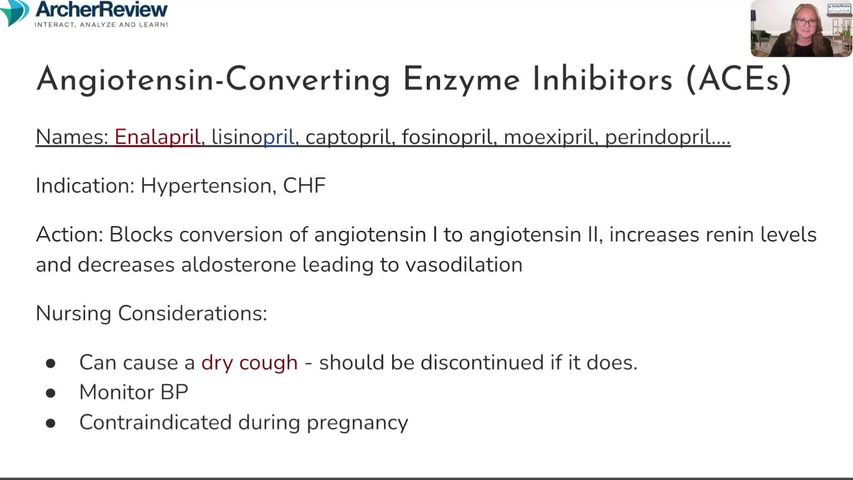
Choice D is incorrect. Valsartan is an angiotensin II receptor blocker (ARB) medication used to treat hypertension and heart failure by dilating blood vessels and reducing blood pressure. It does not directly affect heart rate and is not contraindicated in clients with bradycardia.
Related Videos
4 Key Topics
Antihypertensives
18.5 Cardiovascular Medications
Antiarrhythmic Medications
6.4 Cardiovascular System Drugs
Additional Info
✓ Assess the client's vital signs, including heart rate, blood pressure, and rhythm, to determine the severity of bradycardia and any associated symptoms.
✓ Beta-blockers competitively block beta-adrenergic receptors, leading to decreased sympathetic nervous system activity. This results in reduced heart rate, myocardial contractility, and blood pressure.
✓ Beta-blockers are among the most commonly prescribed medications for cardiovascular conditions. According to one study, beta-blockers were prescribed in approximately 25% of ambulatory visits for hypertension management in the United States.
https://app.archerreview.com/test-screen/MjQyNzUxNDE=/Mzg1Nw==
