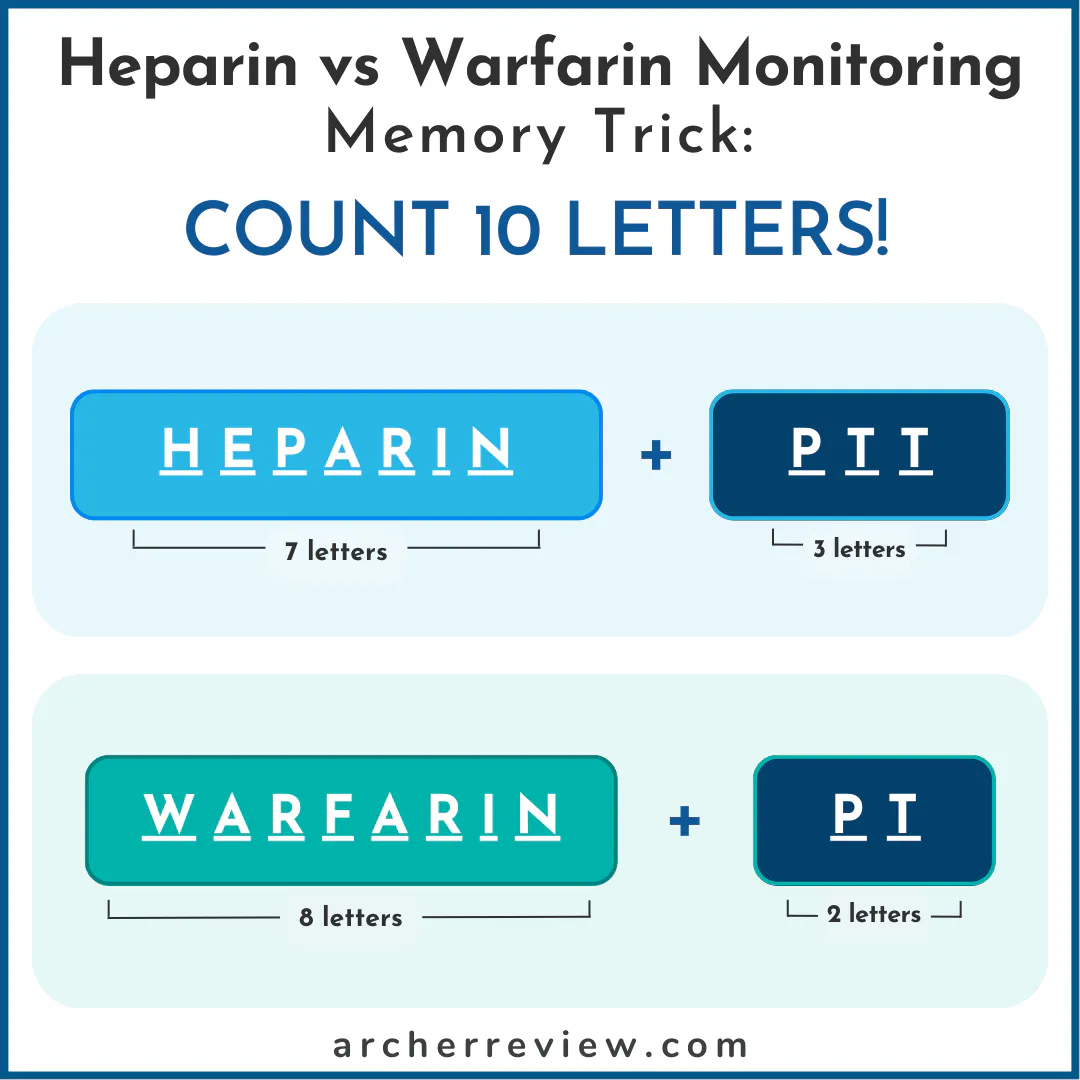
The nurse is caring for a client receiving a continuous infusion of heparin and warfarin. Based on the client's laboratory data, the nurse should take which action? See the image below.

The nurse is caring for a client receiving a continuous infusion of heparin and warfarin. Based on the client's laboratory data, the nurse should take which action? See the image below.
A. Document the findings
[16%]
B. Stop the heparin infusion
[69%]
C. Hold future doses of the warfarin
[6%]
D. Obtain a prescription of Vitamin K
[9%]
Statistics
Subject/Lesson
Subject
Pharmacology
Lesson
Cardiovascular
Client Need
Test Plan
Pharmacological and Parenteral Therapies
Related Topic
Adverse Effects/Contraindications/Side Effects/Interactions
Item Type
Item Type
Analysis
Explanation
Choice B is Correct. The heparin infusion should be stopped because the aPTT is too prolonged. The goal for a client receiving a continuous infusion of heparin is to prolong the control (baseline) aPTT 1.5 to 2.5 times. The normal aPTT is 30-40 seconds. Heparin has a short half-life, so even if the heparin infusion were paused for thirty minutes, this would lower the aPTT. The nurse should refer to the PHCP's order to determine the next course of action after the infusion is paused/stopped.
Choices A, C, and D are incorrect. The INR is therapeutic and requires no action on the nurses' part. The aPTT is not within normal limits and requires the nurse to act and not document the findings.
Related Videos
5 Key Topics
Anticoagulants
6.10 Hematology Drugs
Coagulation Panel- Lab Values
2.1 Hematology & Coagulation Labs
Additional Info
➢ Intravenous heparin is typically administered as a bolus dose first, then as a continuous infusion to achieve therapeutic aPTT. A baseline aPTT should be collected 6 hours after the first dose and 6 hours following any dose adjustments. The goal is to prolong the aPTT from 1.5 to 2.5 times the control value. The normal aPTT value is 30-40.
➢ The normal INR is 0.9-1.2. The goal INR for a client taking warfarin is 2-3 for VTE prevention/treatment and 3-4 for an artificial heart valve.