The nurse is preparing an educational in-service about valsartan.
Which of the following information should the nurse include?
The nurse is preparing an educational in-service about valsartan.
Which of the following information should the nurse include?
A. “Valsartan blocks the conversion of angiotensin I to angiotensin II.”
[41%]
B. "Valsartan antagonizes angiotensin II receptors."
[39%]
C. "Valsartan stimulates alpha-2 adrenoceptors in the brainstem."
[7%]
D. "Valsartan blocks response to beta1- and beta2-adrenergic stimulation."
[13%]
Statistics
Subject/Lesson
Subject
Pharmacology
Lesson
Cardiovascular
Client Need
Test Plan
Pharmacological and Parenteral Therapies
Related Topic
Expected Actions/Outcomes
Item Type
Item Type
Knowledge/Comprehension
Explanation
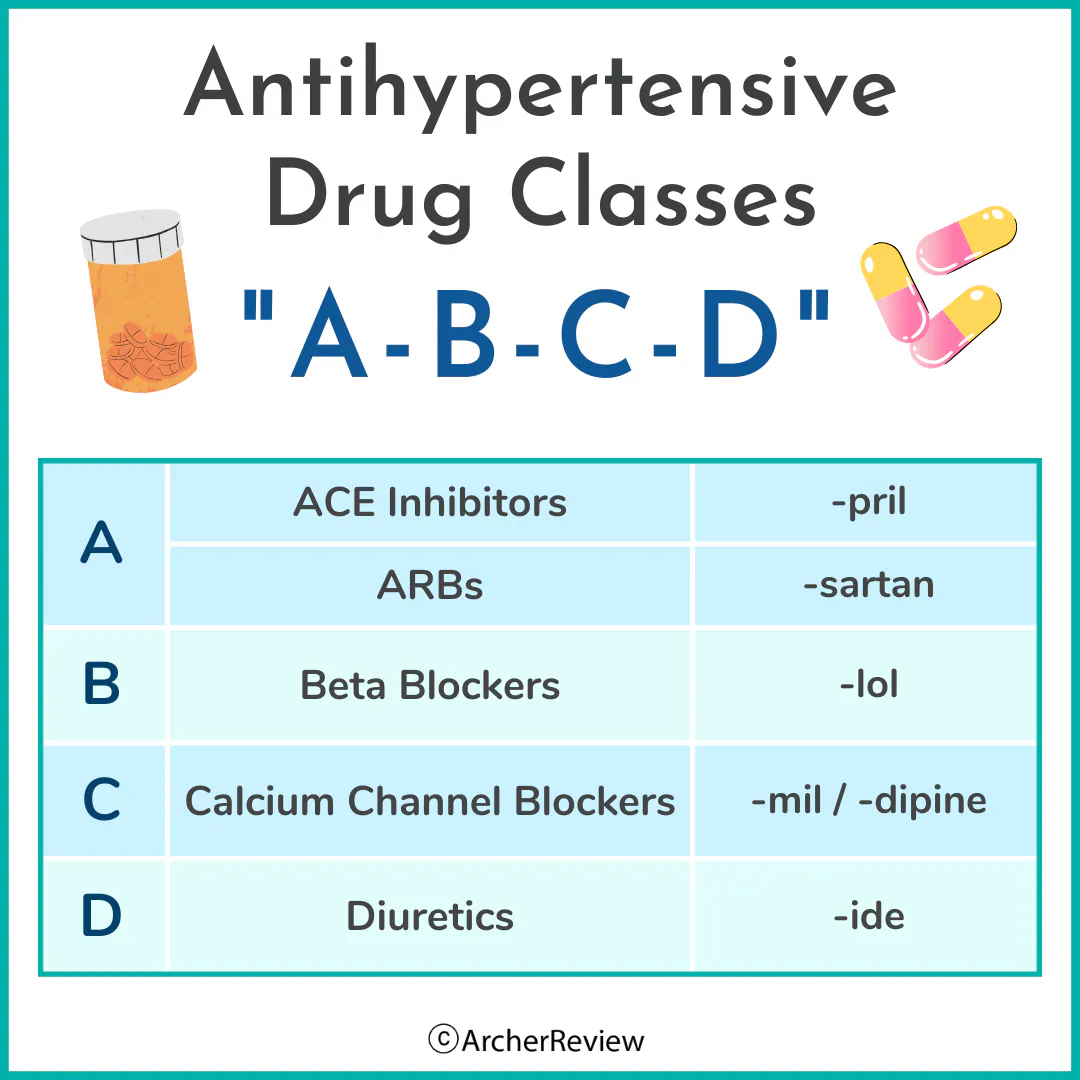
Choice B is correct. Valsartan is an angiotensin-receptor blocker. The medication is prescribed for conditions such as congestive heart failure and hypertension. Valsartan antagonizes angiotensin II receptors, preventing the binding of angiotensin II to the receptors, reducing blood pressure and cardiomegaly.
Choice A is incorrect. ACE inhibitors such as enalapril prevent the conversion of angiotensin I to angiotensin II.
Choice C is incorrect. Valsartan does not stimulate alpha-2 adrenoceptors in the brainstem. Clonidine has this mechanism of action. Clonidine is another antihypertensive and is used off-label for alcohol withdrawal.
Choice D is incorrect. Beta-blockers (non-selective) block the response to beta1- and beta2-adrenergic stimulation. Non-selective beta-blockers include propranolol and labetalol.
Related Videos
2 Key Topics
Antihypertensives & Kidneys
21.2 Renal & Blood Pressure Pharmacology
Additional Info
✓ Angiotensin renin blockers (ARBs) are a drug class comprised of medications such as losartan, valsartan, and olmesartan.
✓ ARBs are similar to ACE inhibitors in that they may cause a client to develop hyperkalemia.
✓ ARBs have a lower risk of angioedema and cough compared to ACE inhibitors.
https://app.archerreview.com/test-screen/MjQyNzUxNDE=/MjAxODE=
