A nurse in the emergency department is assessing a client who presents with agitation, anxiety, hypertension, mydriasis, and diaphoresis.
Based on these findings, the nurse suspects intoxication with which substance?
A nurse in the emergency department is assessing a client who presents with agitation, anxiety, hypertension, mydriasis, and diaphoresis.
Based on these findings, the nurse suspects intoxication with which substance?
A. opioids
[24%]
B. barbiturates
[11%]
C. amphetamines
[54%]
D. cannabis
[11%]
Statistics
Subject/Lesson
Subject
Mental Health
Lesson
Substance Abuse and other dependencies
Client Need
Test Plan
Psychosocial Integrity
Related Topic
Chemical and Other Dependencies/Substance Abuse Disorder
Item Type
Item Type
Analysis
Explanation
Choice C is correct. Fever, mydriasis, agitation, paranoia, hypertension, and tachycardia are all manifestations of amphetamine intoxication. Substances producing this type of intoxication include amphetamines, methamphetamines, and cocaine, a central nervous stimulant. When a client experiences amphetamine withdrawal, they are likely to experience hypersomnia, fatigue, increased appetite, and dysphoria.
Choice A is incorrect. Opioid intoxication typically presents with symptoms such as respiratory depression, pinpoint (constricted) pupils, sedation, and a decreased level of consciousness.
Choice B is incorrect. Barbiturate intoxication is associated with symptoms such as central nervous system depression, sedation, and a decreased level of consciousness.
Choice D is incorrect. Cannabis use can lead to symptoms such as anxiety, paranoia, and altered perception, but it typically does not cause mydriasis (dilated pupils) or diaphoresis (excessive sweating) to the extent seen in the scenario.
Related Videos
2 Key Topics
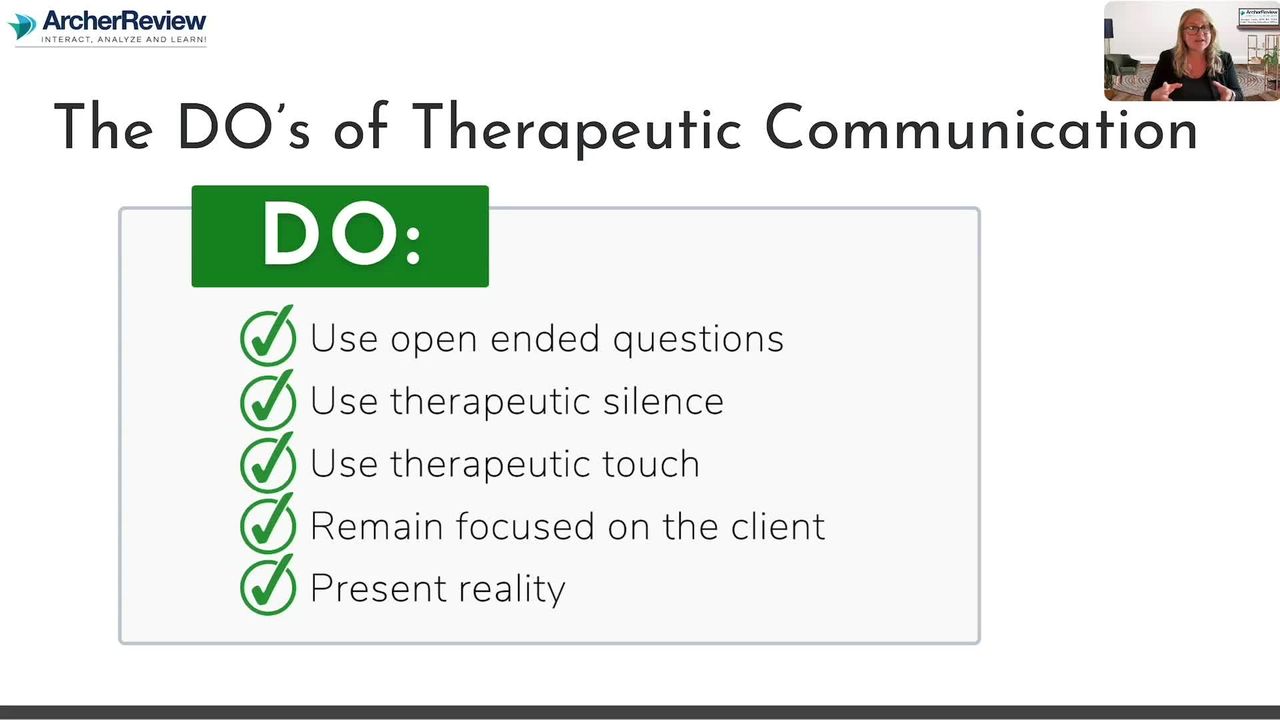
Therapeutic environment
13.3 Therapeutic Communication & Environment
Additional Info
✓ Amphetamine intoxication can produce severe hypertension and tachycardia
✓ Cardiovascular monitoring is recommended in severe cases, along with medications such as lorazepam to decrease hyperactivity and paranoia
✓ Assess the client's safety and the safety of others in the immediate environment. Clients intoxicated with amphetamines may be agitated, impulsive, and potentially aggressive. Ensure a safe environment by removing any potential hazards and providing appropriate supervision.
