The nurse is performing an assessment on a client. The client tells the nurse, "You people are part of the government plotting to destroy me." The nurse should document this statement as a
The nurse is performing an assessment on a client. The client tells the nurse, "You people are part of the government plotting to destroy me." The nurse should document this statement as a
A. Delusion of grandeur
[11%]
B. Somatic delusion
[4%]
C. Delusion of persecution
[74%]
D. Delusion of reference
[11%]
Statistics
Subject/Lesson
Subject
Mental Health
Lesson
Mental Health
Client Need
Test Plan
Psychosocial Integrity
Related Topic
Therapeutic Communication
Item Type
Item Type
Application
Explanation
Choice C is correct. Exploring the content of the client's delusion is important because this assessment will determine if the delusion has any logic (unlikely) and will help foster a therapeutic relationship with the client. This client expressing that they are being falsely targeted is a persecutory delusion. This is when a client believes they are being threatened or harassed by some sort of force.
Choice A is incorrect. Delusions of grandeur involve an exaggerated sense of one's importance, power, knowledge, or identity. The client's statement does not reflect an inflated sense of self-importance; instead, it involves a belief about external forces plotting against them.
Choice B is incorrect. A somatic delusion is when the client falsely believes they are having their body manipulated. The client's statement does not pertain to the body or health but rather focuses on a perceived threat from others.
Choice D is incorrect. Delusions of reference involve the belief that ordinary events, objects, or people have a specific and unusual significance to the individual.
Related Videos
2 Key Topics
Schizophrenia
32.3 Major Psychiatric Disorders
Additional Info
✓ Key interventions for a client experiencing a delusion include -
- Build trust by being open, honest, genuine, and reliable.
- Respond to suspicion in a matter-of-fact, empathic, supportive, and calm manner.
- Ask the client to describe their beliefs.
- Do not use avoidance. Inquire about the delusion and its content.
- Never debate the delusional content.
- Validate if part of the delusion is real. Example - “Yes, there was a package at the nurses' station, but it did not contain a recording device."
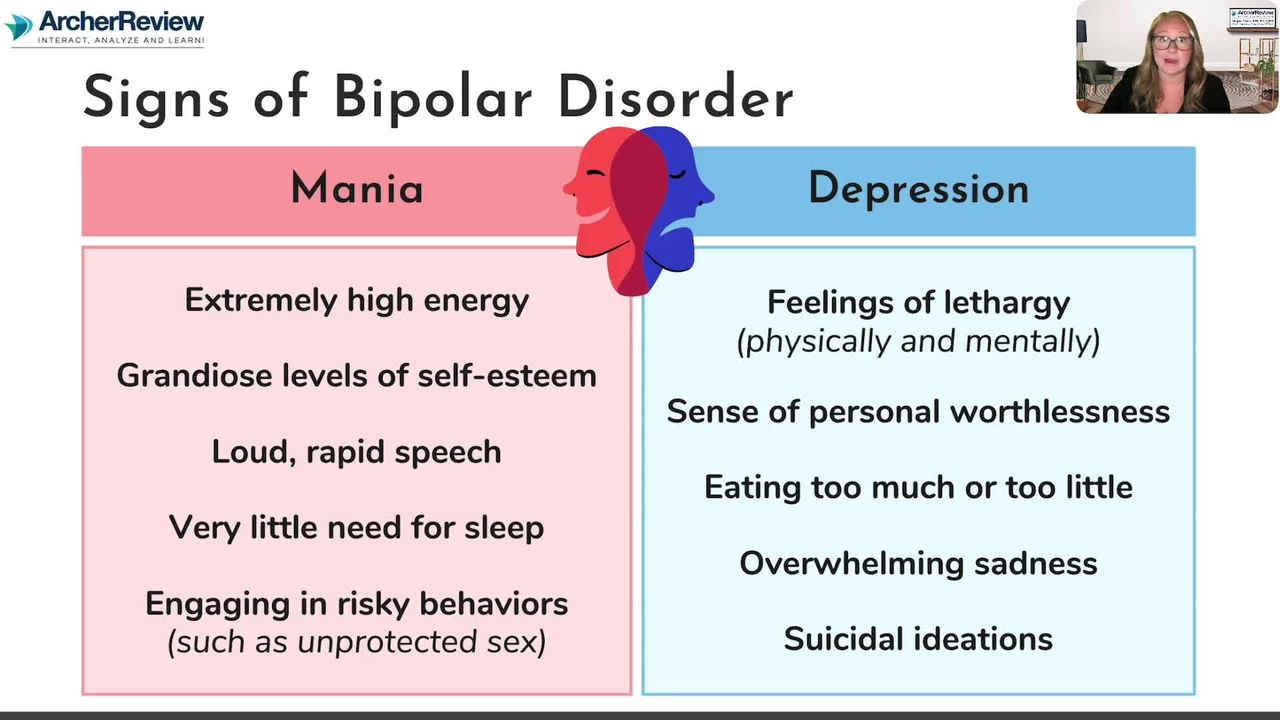
✓ Delusions of persecution can be present in a range of mental health disorders, including but not limited to schizophrenia, schizoaffective disorder, bipolar disorder with psychotic features, and severe forms of major depressive disorder with psychotic features.
✓ Understanding the prevalence and impact of these delusions is essential for accurate diagnosis, treatment planning, and providing targeted support.
