The nurse is assessing a client suspected of having the early stages of dementia. Which defense mechanism would the nurse expect?
The nurse is assessing a client suspected of having the early stages of dementia. Which defense mechanism would the nurse expect?
A. Identification
[9%]
B. Projection
[5%]
C. Denial
[81%]
D. Conversion
[5%]
Statistics
Subject/Lesson
Subject
Mental Health
Lesson
Mental Health
Client Need
Test Plan
Psychosocial Integrity
Related Topic
Coping Mechanisms
Item Type
Item Type
Knowledge/Comprehension
Explanation
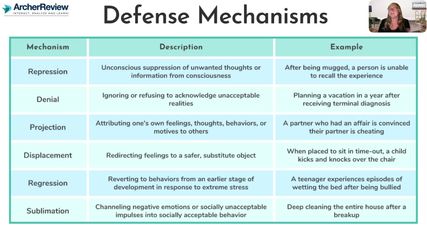
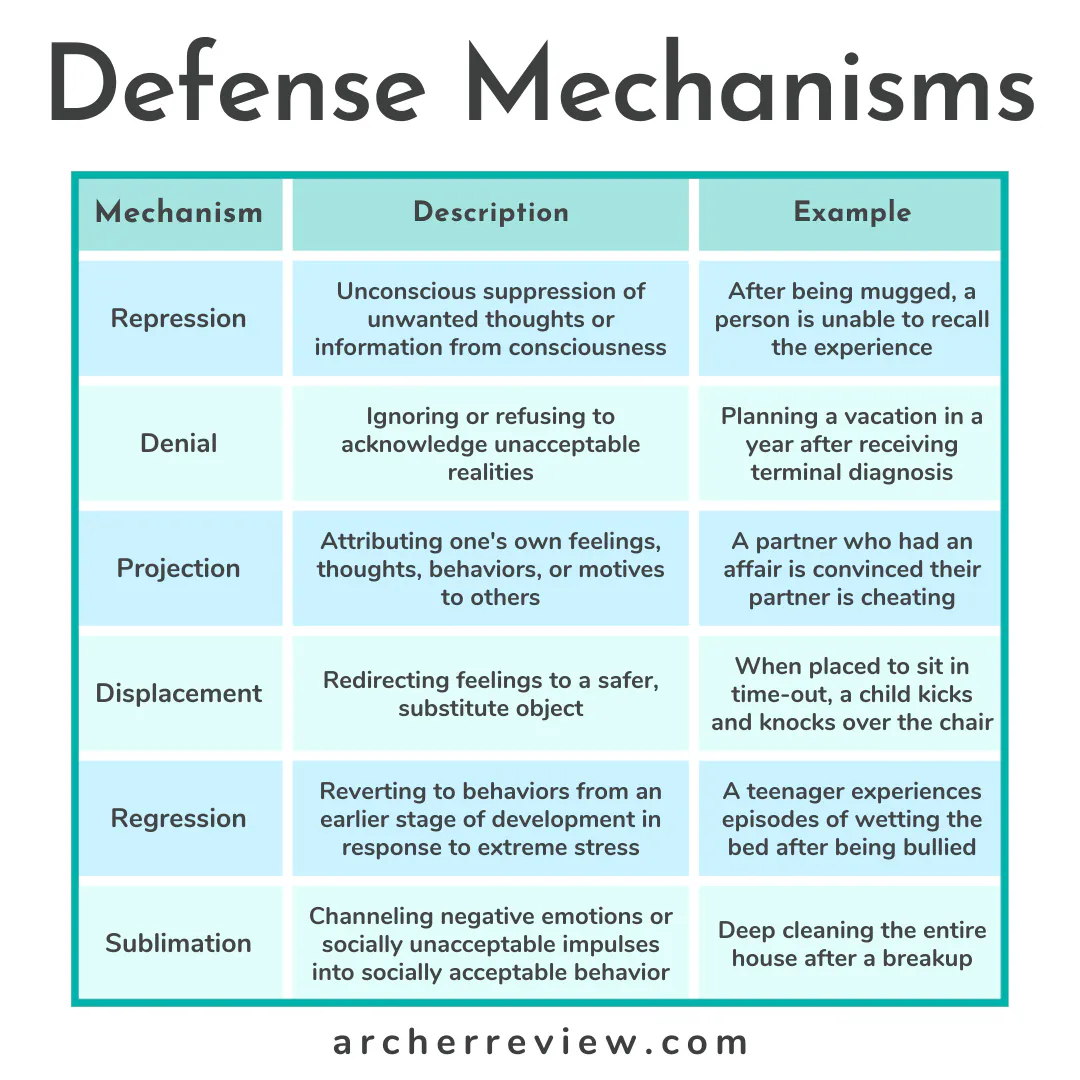
Choice C is correct. In the early stages of dementia, it is quite common for family members and the client to exhibit denial. Denial is utilized to avert the unpleasant emotions surrounding the diagnosis of dementia which is progressive in terms of its symptom intensity. Typically, symptoms that may be concerning for dementia are noticed by family or friends. This individual (an informant) usually brings this concern forward to the primary healthcare provider (PHCP).
Choice A is incorrect. Identification is attributing to oneself the characteristics of another person or group. This is not seen in the early part of dementia, as complete avoidance of memory loss is exhibited.
Choice B is incorrect. Projection is unconsciously rejecting emotionally unacceptable features and attributing them to others. This is not seen in dementia as the client rarely projects their memory impairments onto others.
Choice D is incorrect. Conversion is not a feature of this disorder because the client is not taking their psychological symptoms and putting them into physical ones that cannot be explained organically.
Related Videos
4 Key Topics
Defense Mechanisms in Mental Health
32.2 Psychological Concepts & Safety
Defense Mechanisms
13.1 Psychosocial Stressors & Coping
Additional Info
✓ Clinical Features of Dementia
- The incidence and prevalence of dementia increase exponentially with age, essentially doubling in prevalence every 5 years after the age of 65 years.
- Insidious onset
- Poor prognosis as the disease is progressive.
- Idiopathic; however, uncontrolled hypertension and diabetes contribute to vascular dementia.
- Attention is unimpaired in the early part of the disease process
- Memory impairments start with recent memory and then impact remote memory
- Difficulty with judgment and executive functioning
- No alteration in consciousness
- The flat affect that may progress to behavioral disturbances such as agitation
