The nurse is caring for a client with a history of aggressive and violent behavior. When caring for this client, the nurse should initially take which action?
The nurse is caring for a client with a history of aggressive and violent behavior. When caring for this client, the nurse should initially take which action?
A. Restrain the client
[6%]
B. Place the client in seclusion
[10%]
C. Get an order for a sedating medication
[4%]
D. Establish trust with the client
[80%]
Statistics
Subject/Lesson
Subject
Mental Health
Lesson
Mental Health
Client Need
Test Plan
Psychosocial Integrity
Related Topic
Crisis Intervention
Item Type
Item Type
Application
Explanation
Choice D is correct. When caring for a client with a history of aggressive and violent behavior, the initial action should focus on de-escalation and establishing rapport. Building trust with the client creates a therapeutic environment and promotes cooperation, reducing the risk of aggressive outbursts and enhancing safety for all involved. This approach is proactive and prioritizes the well-being of both the client and healthcare providers.
Choice A is incorrect. Restraint should only be used when there is an immediate threat to the safety of the client or others, and all other de-escalation techniques have failed. However, restraint can escalate aggression and should be avoided unless absolutely necessary to prevent harm.
Choice B is incorrect. Seclusion should only be used as a last resort intervention when all other de-escalation techniques have failed and there is an immediate threat to the safety of the client or others.
Choice C is incorrect. Administering sedating medication should be based on the client's individualized care plan and prescribed by the healthcare provider. However, sedating medication should not be the initial intervention without proper orders, as it may not address the underlying cause of the aggression and could have adverse effects.
Related Videos
4 Key Topics
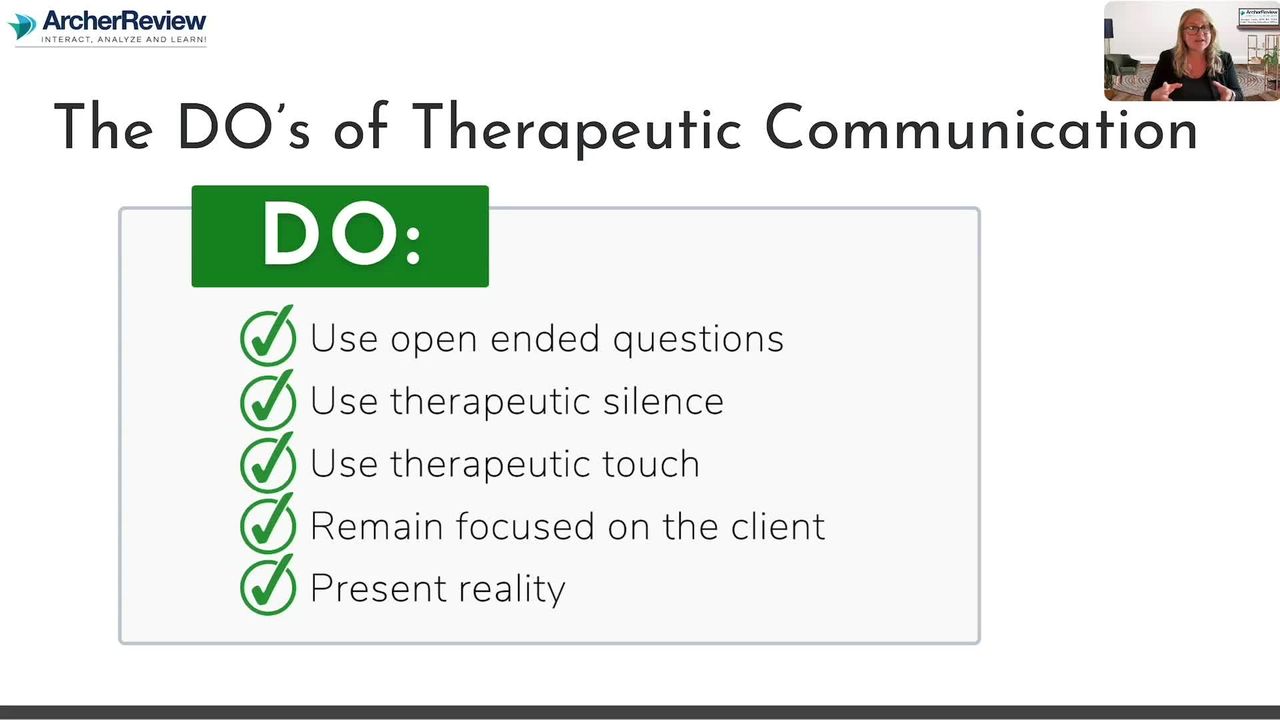
Therapeutic communication
13.3 Therapeutic Communication & Environment
Therapeutic environment
13.3 Therapeutic Communication & Environment
Additional Info
✓ De-escalation Techniques: Practice Principles
- Maintain the client's self-esteem and dignity
- Maintain calmness (your own and the clients)
- Assess the client and the situation
- Identify stressors and stress indicators
- Respond as early as possible
- Use a calm, clear tone of voice
- Invest time
- Remain honest
- Determine what the client considers to be needed
- Identify goals
- Avoid invading personal space; in times of high anxiety, personal space increases
- Avoid arguing
- Give several clear options
- Use genuineness and empathy
- Be assertive (not aggressive)
- Do not take chances; maintain personal safety
✓ Implement appropriate safety protocols to ensure the safety of both the client and healthcare providers. This may include having a sufficient number of staff present during interactions with the client, maintaining clear communication channels for assistance, and identifying potential triggers for aggressive behavior.
✓ A study published in the Journal of Emergency Nursing found that approximately one in four emergency department nurses reported experiencing physical violence at work within the past year. This highlights the prevalence of violence in healthcare settings and the need for effective prevention and intervention strategies.
